Skip to content
You can now search across every topic, entity and event.What's new
Autonomous Systems: Land & Sea
12AUG

RAF Typhoons fire APKWS in Gulf combat

3 min read
14:17UTC

RAF 9 Squadron Typhoons deployed the APKWS laser-guided rocket in counter-drone operations in the Middle East from 17 May, going from first ground test in March to combat use in under two months at GBP 20,000 per shot.

TechnologyDeveloping
Key takeaway

Britain deployed a counter-drone rocket from first test to combat in under two months.

RAF Typhoons of 9 Squadron deployed the APKWS laser-guided rocket system for counter-drone missions in the Middle East from approximately 17 May, flying from RAF Akrotiri in Cyprus and Al Udeid Airbase in Qatar. APKWS is a laser-guidance conversion kit that turns unguided rockets into precision counter-drone munitions at roughly GBP 20,000 per shot, a fraction of the millions a Patriot-class interceptor costs. Suppliers are BAE Systems and QinetiQ.

The system went from first ground-target test in March to air-to-air trial in April to combat deployment in May: less than two months from initial testing to operational use. That timeline is faster than any Western weapons integration since the Urgent Operational Requirement process during Iraq and Afghanistan, and signals a deliberate MoD decision to accept integration risk for speed.

At GBP 20,000 per shot, APKWS fills the cost gap between the LOCUST X3 laser (not yet fielded) and million-pound Patriot-class interceptors. The Pentagon's DAWG line at USD 54.6 billion reflects the same pressure to find affordable counter-drone solutions at scale. The Gulf counter-drone requirement driving this acceleration connects directly to the Hormuz mission and the broader UK commitment of GBP 752 million to the Ukraine drone package .

Deep Analysis

In plain English

British Typhoon fighter jets in the Middle East are now shooting down drones with laser-guided rockets called APKWS. Each rocket costs about GBP 20,000, which sounds expensive, but it is cheap compared to the Patriot missiles the US uses, which cost over a million pounds each. The RAF went from testing this weapon for the first time to using it in combat in less than two months, which is extraordinarily fast for military equipment. It works against Iranian-type drones in the Gulf. It would not work cost-effectively against cheap Ukrainian-style FPV drones in Europe.

Deep Analysis
Root Causes

The APKWS deployment reflects three pressures: the Gulf drone threat from Iranian-aligned groups grew faster than dedicated counter-drone systems could be procured.

The MoD's political commitment to show operational drone-defence capability as part of the GBP 4 billion autonomous-systems agenda; and BAE Systems' APKWS integration work (which already had RAF Typhoon compatibility in development) being available for acceleration.

What could happen next?
  • Consequence

    APKWS' combat debut will accelerate RAF allies' interest in the same integration on their own Typhoon fleets. Germany, Spain, and Kuwait all operate Typhoons; if the RAF shares its APKWS integration work through the Eurofighter consortium, the deployment multiplies across the alliance without additional development cost.

First Reported In

Update #10 · NATO shoots down drone over Estonia

FlightGlobal· 29 May 2026
Read original
Causes and effects
This Event
RAF Typhoons fire APKWS in Gulf combat
The two-month test-to-combat timeline is faster than any Western weapons integration in recent memory, and APKWS fills the cost gap between directed-energy prototypes and million-pound Patriot-class interceptors.
Different Perspectives
Conservative opposition
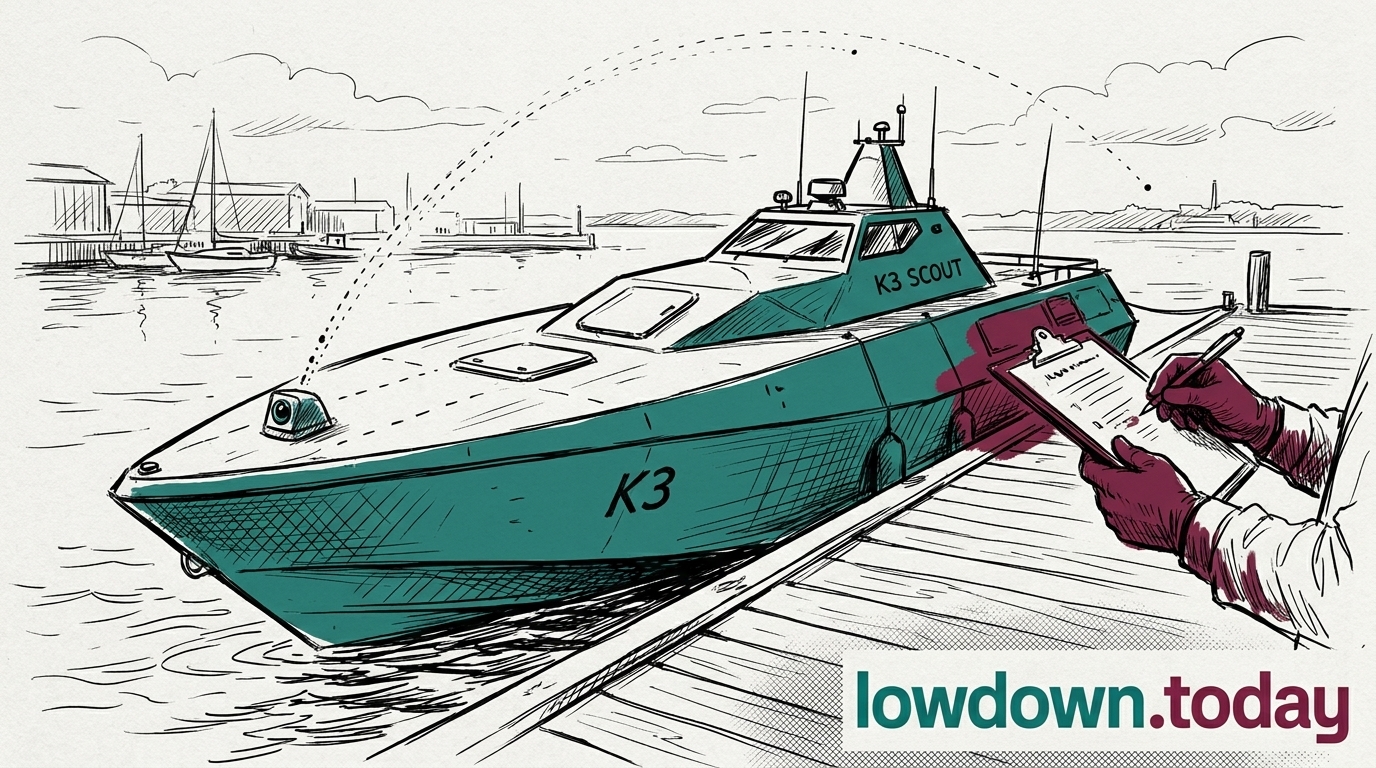
The Conservative opposition called on the Government on 9 August to 'urgently audit' equipment for hidden Chinese components, after the Telegraph's K3 SCOUT report. No named MP has been quoted on the record; the call came at party level, alongside the Ministry of Defence's own 10 August statement that no data had been compromised.
Netherlands Ministry of Defence
The Netherlands Ministry of Defence authorised Dutch Naval Design on 4 August to design 12-metre anti-submarine warfare uncrewed vessels for the Dutch-Belgian frigate programme, and to buy an adapted Compact FLASH dipping sonar from Thales Underwater Systems France. The order commits money and a named supplier while Britain's own certification body remains at the market-engagement stage.
Kraken Technology Group
Kraken Technology Group is a UK maritime-defence company based in Portsmouth that builds the K3 SCOUT, and crossed a $1bn valuation in July on a single-sourced $175m raise. The camera components reached the fleet under a third party's written security assurance, which the Platform Authority, which does not yet exist, was never positioned to check.
Navy Commercial
Navy Commercial
Navy Commercial at Whale Island published two notices on 5 August: 074032-2026, asking industry how to build a Platform Authority to certify uncrewed vessels, and 074351-2026, a GBP10m multi-role USV testbed for the Defence Chief Technology Officer. Responses on the Platform Authority close 19 August, ten days after the cameras were found transmitting to China.
Ministry of Defence
Ministry of Defence
The Ministry of Defence said on 10 August that a routine cyber vulnerability assessment found the camera fault, and a thorough investigation found no evidence that MoD data or systems had been accessed, compromised or transmitted externally. It stripped the cameras of internet connectivity but did not say whether it acted against the supplier.
Thales
Thales
Thales converted its 6 July engaging accord with Exail into a definitive combination agreement on 30-31 July, but the tender offer for Exail's remaining shares now closes by early 2028, later than July's timetable implied. Thales integrates its new undersea prime while still bidding against Kongsberg and DRASS's 2027 target for the AUKUS Pillar II contest.
