Skip to content
You can now search across every topic, entity and event.What's new
Autonomous Systems: Land & Sea
12AUG

Tekever commits GBP 400M to UK expansion

3 min read
14:17UTC

Tekever committed to a GBP 400 million five-year UK investment programme and opened a US office in Fayetteville, North Carolina, adjacent to JSOC, targeting SOCOM procurement.

TechnologyDeveloping
Key takeaway

Tekever is building a two-market prime using Ukraine combat hours as its entry credential.

Tekever committed to a five-year GBP 400 million UK investment programme covering infrastructure, technology, and skills, and is opening a Bristol Centre for Autonomy in June 2026. That sits alongside its 254,000 sq ft Swindon factory and a new US office in Fayetteville, North Carolina, adjacent to JSOC, where it exhibited at SOF Week in Tampa.

The dual expansion exploits Tekever's Ukraine operational record on both sides of the Atlantic. In the UK, the investment builds on GBP 270 million in existing MoD contracts from the Berlin package and moves Tekever from supplier to near-prime scale. In the US, combat-proven drone hours from Ukraine are a direct differentiator against American competitors with no peer-conflict experience. The Fayetteville location, at JSOC's doorstep, makes the SOCOM targeting explicit.

Tekever is simultaneously a Project NYX competitor, a Berlin package supplier, and a SOCOM aspirant. Few European defence companies operate at that geographic spread and programme breadth at Tekever's scale. The GBP 400 million commitment signals confidence that the UK defence-industrial relationship will persist beyond the current procurement cycle.

Deep Analysis

In plain English

Tekever is a Portuguese drone company that became one of Britain's biggest drone suppliers by proving its technology works in Ukraine. It now has more than a billion pounds in UK contracts and is building a new research centre in Bristol. At the same time, it opened an office in North Carolina next to the US military's most secretive special-operations command, hoping to win US contracts too. It is expanding on two continents simultaneously by using the same sales pitch: our drones have worked in the hardest conditions on earth, in a real war.

Deep Analysis
Root Causes

Three structural factors explain Tekever's expansion pace. First, the GBP 752 million Ukraine drone package placed Tekever in a position where rapid expansion was necessary to execute the contract, creating a snowball effect: scale justifies more contracts, more contracts justify more scale.

Second, SOCOM's demand for combat-proven ISR capability created a specific market for which Tekever's Ukraine hours are uniquely qualifying. Third, the UK government's GBP 4 billion autonomous-systems commitment created a politically receptive environment for a GBP 400 million investment announcement.

What could happen next?
  • Consequence

    If Tekever wins Project Corvus (Watchkeeper replacement) while also advancing in Project NYX, it will hold the two largest British Army drone programmes simultaneously. That concentration creates both a revenue anchor and a reputational dependency: any performance failure in one programme contaminates the other.

First Reported In

Update #10 · NATO shoots down drone over Estonia

UK Ministry of Defence· 29 May 2026
Read original
Different Perspectives
Conservative opposition
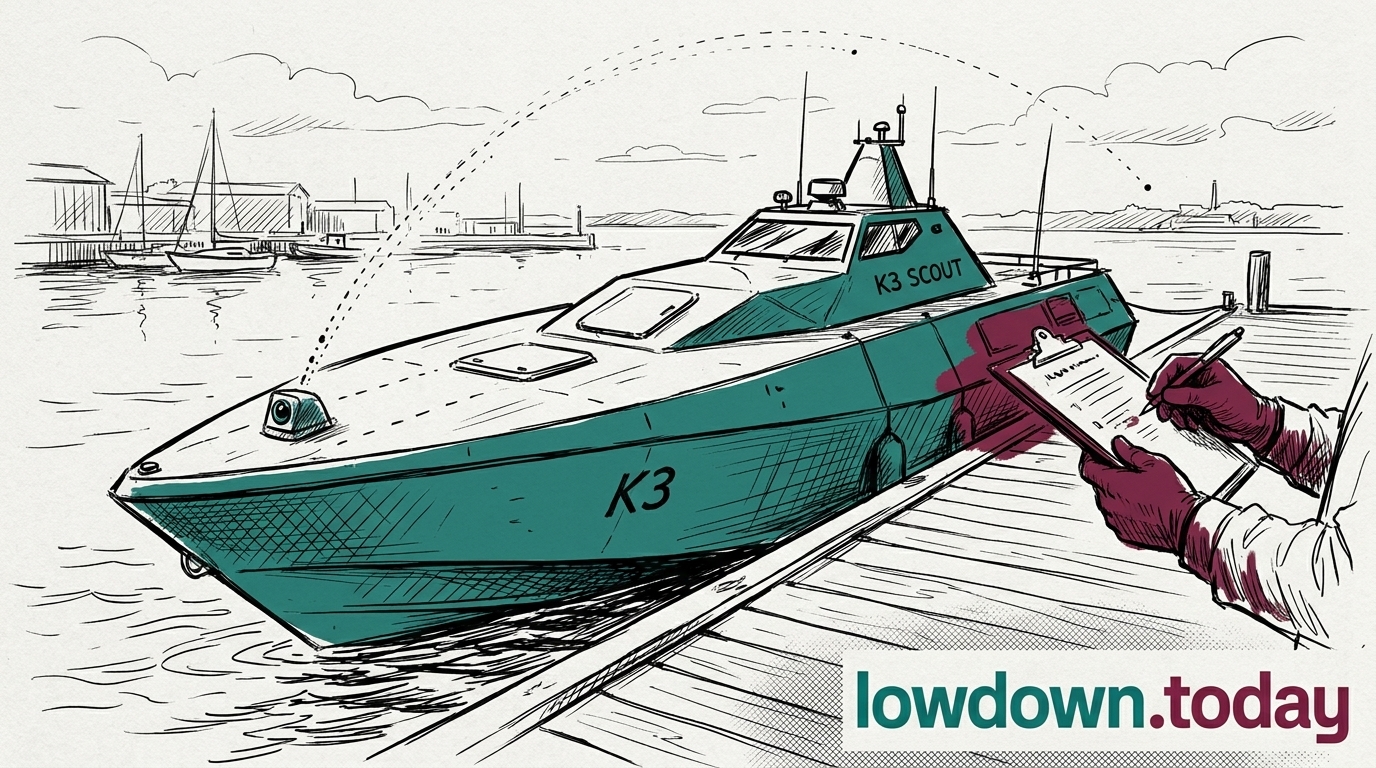
The Conservative opposition called on the Government on 9 August to 'urgently audit' equipment for hidden Chinese components, after the Telegraph's K3 SCOUT report. No named MP has been quoted on the record; the call came at party level, alongside the Ministry of Defence's own 10 August statement that no data had been compromised.
Netherlands Ministry of Defence
The Netherlands Ministry of Defence authorised Dutch Naval Design on 4 August to design 12-metre anti-submarine warfare uncrewed vessels for the Dutch-Belgian frigate programme, and to buy an adapted Compact FLASH dipping sonar from Thales Underwater Systems France. The order commits money and a named supplier while Britain's own certification body remains at the market-engagement stage.
Kraken Technology Group
Kraken Technology Group is a UK maritime-defence company based in Portsmouth that builds the K3 SCOUT, and crossed a $1bn valuation in July on a single-sourced $175m raise. The camera components reached the fleet under a third party's written security assurance, which the Platform Authority, which does not yet exist, was never positioned to check.
Navy Commercial
Navy Commercial
Navy Commercial at Whale Island published two notices on 5 August: 074032-2026, asking industry how to build a Platform Authority to certify uncrewed vessels, and 074351-2026, a GBP10m multi-role USV testbed for the Defence Chief Technology Officer. Responses on the Platform Authority close 19 August, ten days after the cameras were found transmitting to China.
Ministry of Defence
Ministry of Defence
The Ministry of Defence said on 10 August that a routine cyber vulnerability assessment found the camera fault, and a thorough investigation found no evidence that MoD data or systems had been accessed, compromised or transmitted externally. It stripped the cameras of internet connectivity but did not say whether it acted against the supplier.
Thales
Thales
Thales converted its 6 July engaging accord with Exail into a definitive combination agreement on 30-31 July, but the tender offer for Exail's remaining shares now closes by early 2028, later than July's timetable implied. Thales integrates its new undersea prime while still bidding against Kongsberg and DRASS's 2027 target for the AUKUS Pillar II contest.
