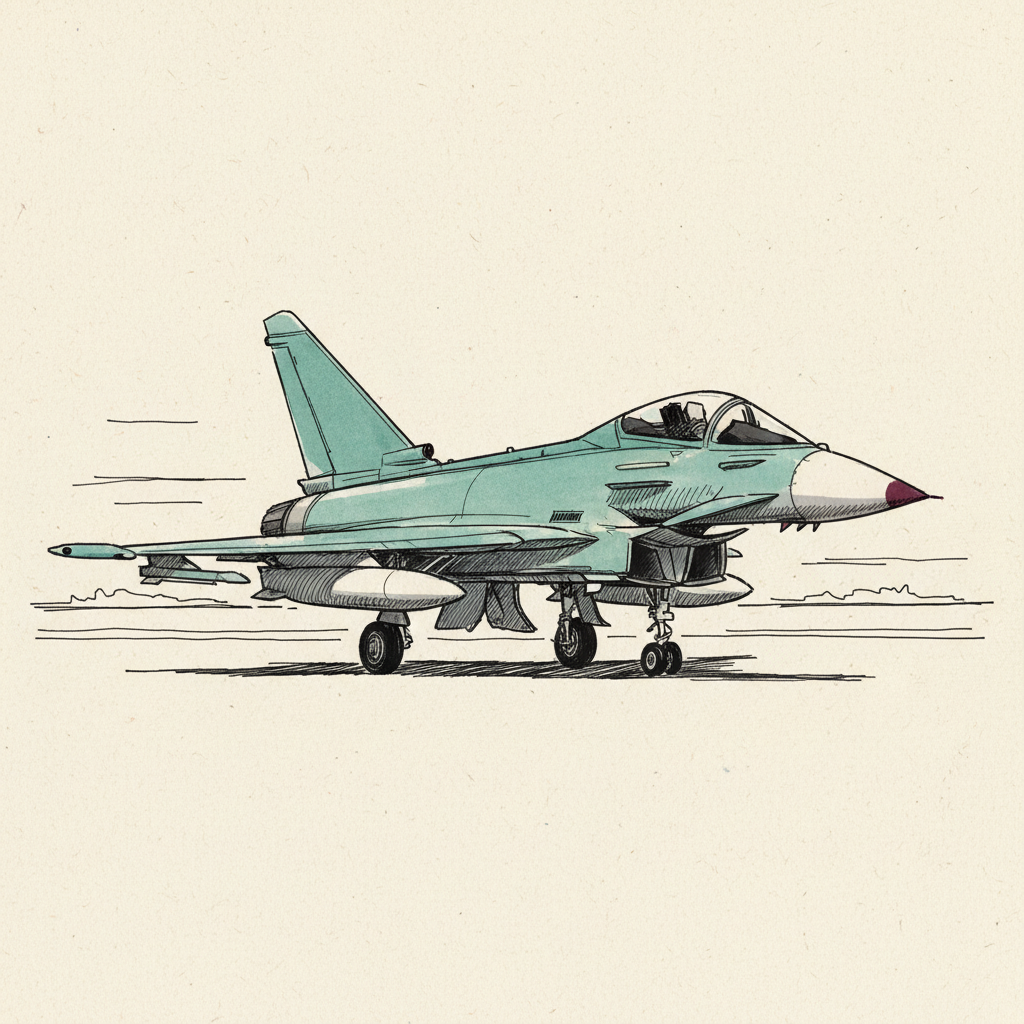
Eurofighter Typhoon
TWIN-engine multi-role NATO fighter; UK's primary combat aircraft deployed to the Hormuz Coalition.
Last refreshed: 22 September 2026 · Appears in 1 active topic
Can the RAF sustain 107 Typhoons across Hormuz, Cyprus, and Eastern Europe QRA simultaneously?
Timeline for Eurofighter Typhoon
Designated to direct Brontanax from the cockpit
Drones: Industry & Defence: Britain unveils its first sovereign combat droneRAF Typhoons fire APKWS in Gulf combat
Drones: Industry & DefenceBackground
The UK Ministry of Defence committed Eurofighter Typhoon fighters to the 40-nation Hormuz Coalition on 13 May 2026, confirming deployment alongside HMS Dragon and autonomous mine-clearance vessels — the first multi-platform European force announcement for the strait. RAF Typhoons had already been prepositioned across the region from January 2026, before the war began on 28 February, and four additional airframes were dispatched to Qatar in March under a Starmer government statement describing the situation as 'serious'. A small drone struck RAF Akrotiri in Cyprus, where Typhoons are based, as early as Day 3 of the conflict — the first confirmed impact on a UK sovereign base since the Falklands.
The Eurofighter Typhoon is a TWIN-engine multi-role fighter built by a four-nation consortium — BAE Systems (UK), Airbus (Germany/Spain), and Leonardo (Italy) — under the Eurofighter GmbH umbrella since 1994. The EJ200 engine delivers a thrust-to-weight ratio of approximately 1.0, giving supersonic cruise capability without reheat. The RAF operates approximately 107 Typhoons across Tranche 1-3 variants as of 2025. A mid-life upgrade programme, ECRS Mk2, introduces a new active electronically scanned array radar with enhanced electronic warfare and maritime strike capability; the first upgraded aircraft entered RAF service in 2025 under a BAE Systems contract.
The Hormuz deployment is the Typhoon's first sustained out-of-area combat patrol role since Libya (2011) and its highest operational tempo since the Iraqi Freedom support operations. It also has cross-topic relevance: RAF Typhoons conduct Quick Reaction Alert sorties over UK and Eastern Europe under NATO commitments, overlapping with the Russia-Ukraine theatre, while the ECRS Mk2 contract anchors BAE's position in EU defence industrial debates over next-generation fighter procurement.
How many RAF Typhoons are deployed to the Hormuz mission?
What is the ECRS Mk2 radar upgrade for the Typhoon?
Was RAF Akrotiri attacked during the Iran war?
Which countries built the Eurofighter Typhoon?
Can the Typhoon fly faster than sound without using its afterburner?



