Telegram
Cloud messaging platform; key channel for war reporting, dissident communication, and state censorship battles.
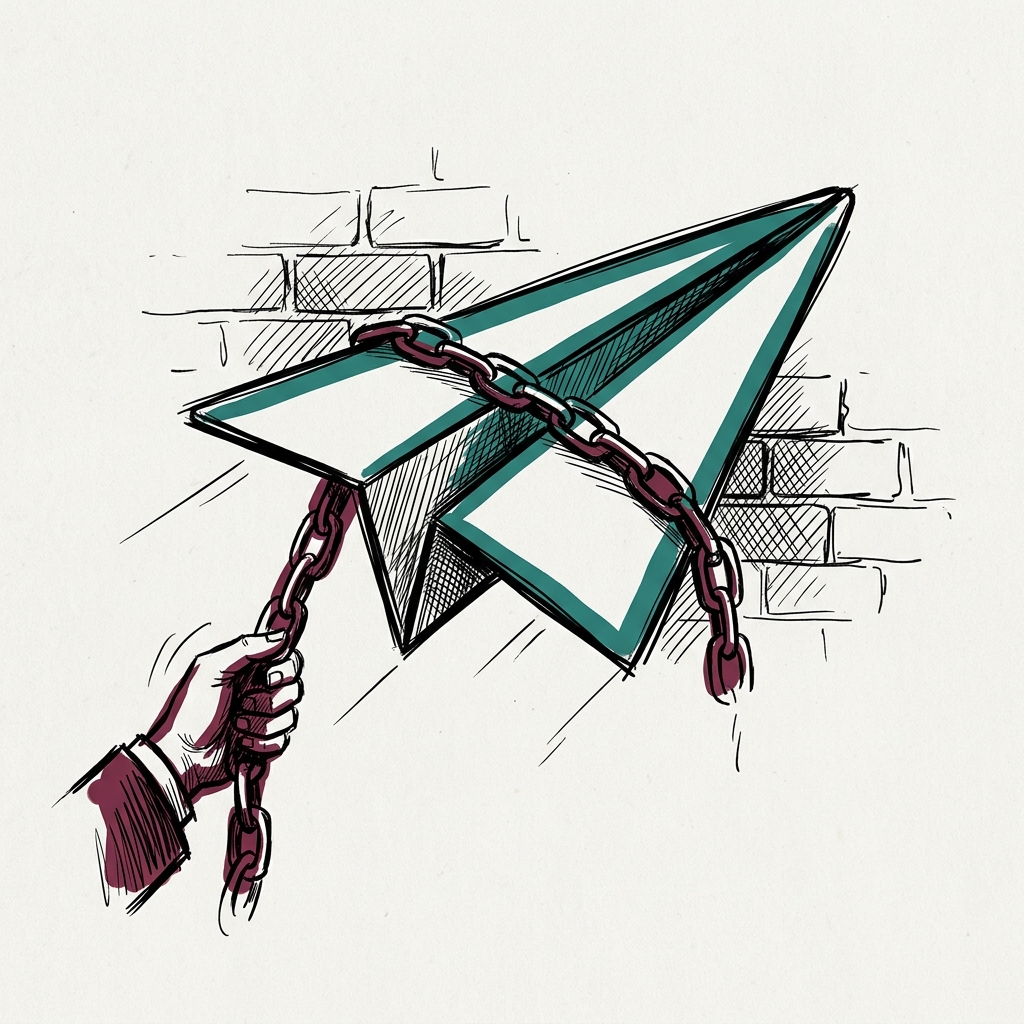
Telegram's server-hosted channels put every takedown in the company's hands, which is why governments fight it: Russia blocked the app on 1 April 2026, and Iran took delivery in May of Chinese hardware built to block encrypted messaging without a full shutdown.
Last refreshed: 12 October 2026 · Appears in 2 active topics
Why do authoritarian governments struggle to effectively block Telegram?
Timeline for Telegram
Mentioned in: ASOS app pushes rogue alert to customers
Cybersecurity: Threats and DefencesUK, US and Dutch expose Iranian spyware
Cybersecurity: Threats and DefencesMentioned in: Duolingo bars any Iranian ID, anywhere
Iran Conflict 2026Mentioned in: Airdropped mine robot named as the ARK-1
Autonomous Systems: Land & SeaMentioned in: Medvedev likens Hormuz to nuclear arms
Iran Conflict 2026Background
Telegram is a cloud messaging platform founded in 2013 by Pavel and Nikolai Durov, first in Saint Petersburg and now nominally headquartered in Dubai. It combines direct messages, groups and large public broadcast channels, with end-to-end encryption optional rather than default, and has more than 900 million monthly active users. Because channels live on Telegram's servers rather than on users' devices, removing content depends on the company's cooperation, which Pavel Durov has historically refused.
That design has made it the default wartime channel and a standing censorship target. Russia blocked Telegram on 1 April 2026 and ordered users to the state-run alternative Max; the Institute for the Study of War assessed that the ban backfired, with prominent pro-war bloggers turning openly critical and one declaring the war could run for 100 years at its current pace. In Iran, Mohammad Sarafraz of the Supreme Council of Cyberspace confirmed on 23 May that Chinese Deep Packet Inspection hardware had arrived, designed to block encrypted messaging and bypass tools while leaving banking online.
The same reach serves recruiters and spies. Russia's Alabuga Polytech used Telegram to recruit a drone brigade, targeting young gamers. Britain, the US and the Netherlands reported on 15 September that Iranian state hackers befriend dissidents on WhatsApp and Telegram before sending CHOSEN BRICK spyware.
Reference
Who founded Telegram and where is it based?
Is Telegram actually encrypted?
Where did the footage of a drone dropping a ground robot in Ukraine come from?
How is Iran trying to censor Telegram?
Why did Russia ban Telegram in 2026?
Who are the Russian war bloggers criticising the war on Telegram?
What is Max, the Russian platform replacing Telegram?


