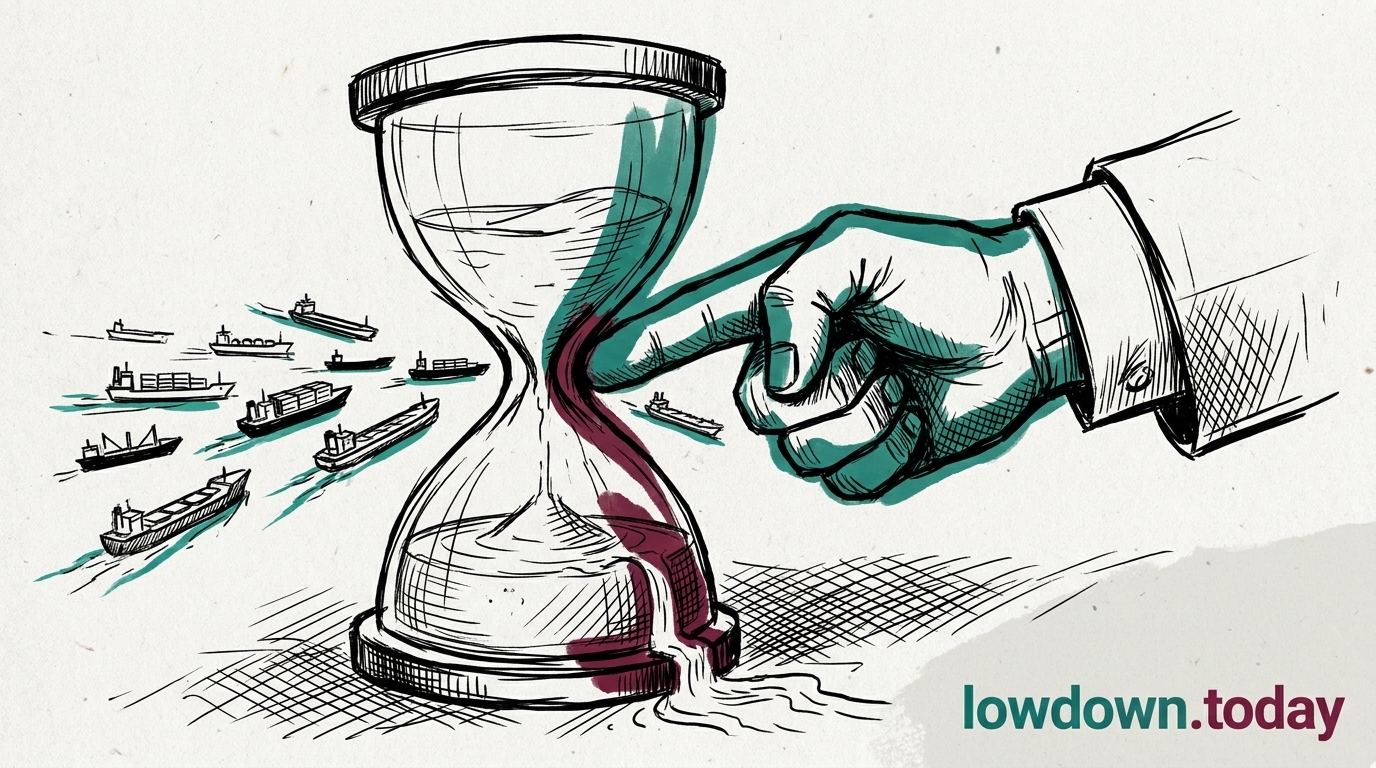
The IRGC Navy posted an order to its official Telegram channel on 11 June declaring the strait of Hormuz "closed to all vessels, including oil tankers and commercial ships" and warning that "any vessel attempting to transit will be targeted." The Navy claimed two ships had been struck for defying the order, naming none and confirming no casualties, so the only account of enforcement comes from the party that declared the closure. CENTCOM rejected it within hours, saying commercial shipping was continuing to transit normally and no US warship had been hit.
For the length of this war the chokepoint ran one way: CENTCOM blockaded from outside Iranian waters while the corps levied tolls from within. On 11 June the IRGC inverted that, and in doing so negated the first operative clause of the late-May MoU framework, under which Hormuz was to reopen and the tolls to end. the strait the corps declared shut also carries the China-bound crude that keeps Iran's economy breathing after exports fell below 300,000 barrels a day, which makes the order a cost to Tehran as much as a threat to anyone else.
No independent source has verified that the 33-kilometre passage is physically sealed, which leaves a closure that exists in a Telegram post but not in the transit data as a legal and insurance event before it is a naval one. The military wing chose escalation over the deal its government is still pursuing through Pakistani mediation, and announced the choice itself.


