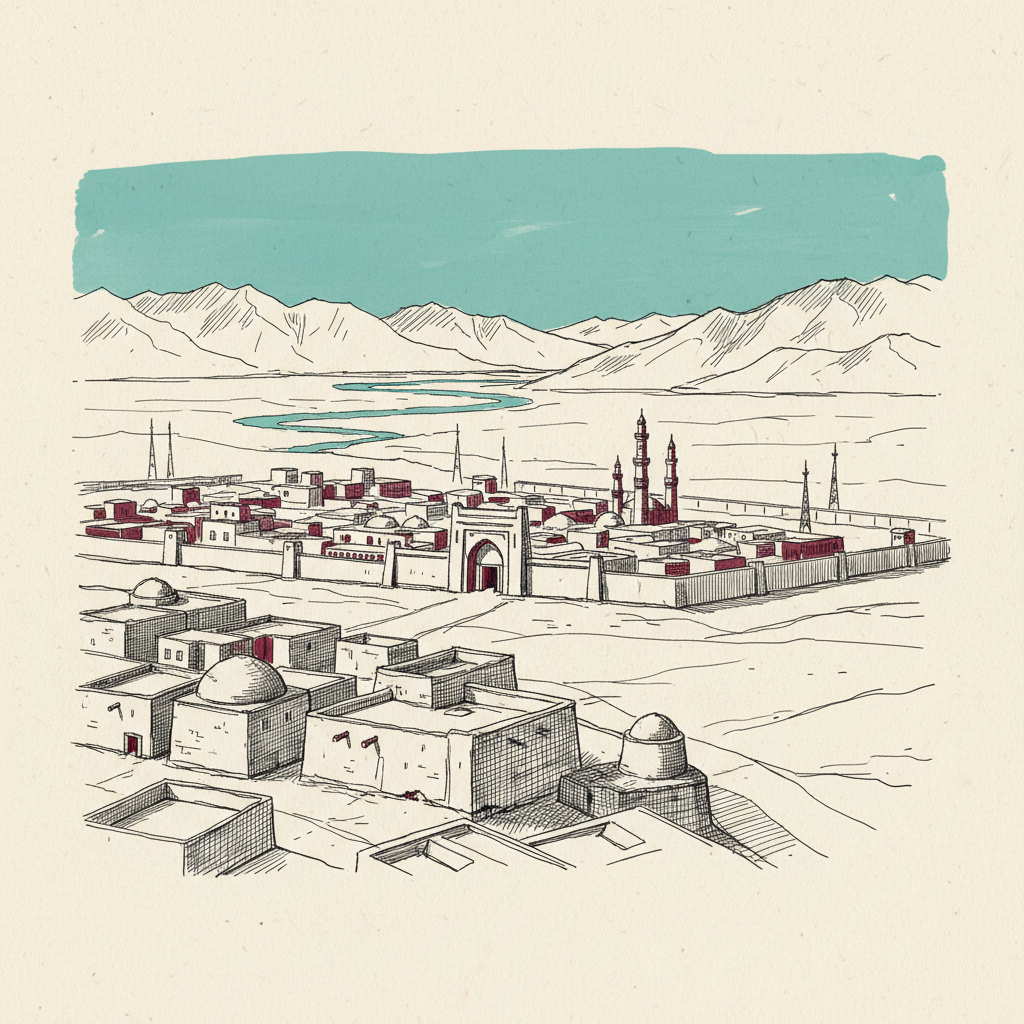
Xinjiang
Autonomous region in north-west China; site of mass surveillance, Uyghur detention, and the 2009 ten-month internet isolation.
Xinjiang, China's largest and most heavily surveilled region, is the model Iran now cites for its own censorship: Chinese DPI hardware reached Iran in May 2026, built on the architecture of Xinjiang's 2009, ten-month internet blackout.
Last refreshed: 26 July 2026 · Appears in 1 active topic
Why is Iran modelling its internet censorship on what China did to Xinjiang in 2009?
Timeline for Xinjiang
Mentioned in: US forced-labour tariff hits 60 economies, EU named
European Tech SovereigntyMentioned in: Iran's internet returns at 40%, by design
Iran Conflict 2026Mentioned in: Iran lifts record blackout, 2,093 hours
Iran Conflict 2026Mentioned in: Iran buys China's internet control dial
Iran Conflict 2026Background
Xinjiang (officially the Xinjiang Uyghur Autonomous Region) is China's largest administrative division by area, covering roughly 1.66 million square kilometres in the country's north-west and bordering eight countries including Russia, Mongolia, Kazakhstan and Afghanistan. It is home to approximately 25 million people, including the Turkic-speaking Uyghur population, alongside Han Chinese, Kazakhs and other groups. The region holds significant oil, gas and coal reserves and sits on the overland routes of China's Belt and Road Initiative.
From around 2017, Chinese authorities constructed a network of detention facilities holding an estimated one million or more Uyghurs and other Muslim minorities, documented through satellite imagery, leaked government documents and survivor testimony. The United States has designated the programme as forced Labour and, since 2022, has enforced the Uyghur Forced Labor Prevention Act, creating a rebuttable presumption that goods made wholly or partly in Xinjiang involve forced Labour.
In 2009, following ethnic unrest in Ürümqi, China imposed an almost total internet blackout on Xinjiang lasting roughly ten months. That blackout has since become the reference model cited by other authoritarian states building their own censorship infrastructure, and Xinjiang-linked supply chains remain a live reference point in Western forced-labour enforcement.
What happened to Xinjiang's internet in 2009?
Why is Iran copying Xinjiang's internet model?
How many Uyghurs are detained in Xinjiang?
What is Xinjiang's role in China's Belt and Road Initiative?
What is the Uyghur Forced Labor Prevention Act?
Why did the US name the EU in its 2026 forced-labour tariff action?

