Islamic State
Insurgent movement with affiliates from Iraq to Central Africa, still an active 2026 security threat.
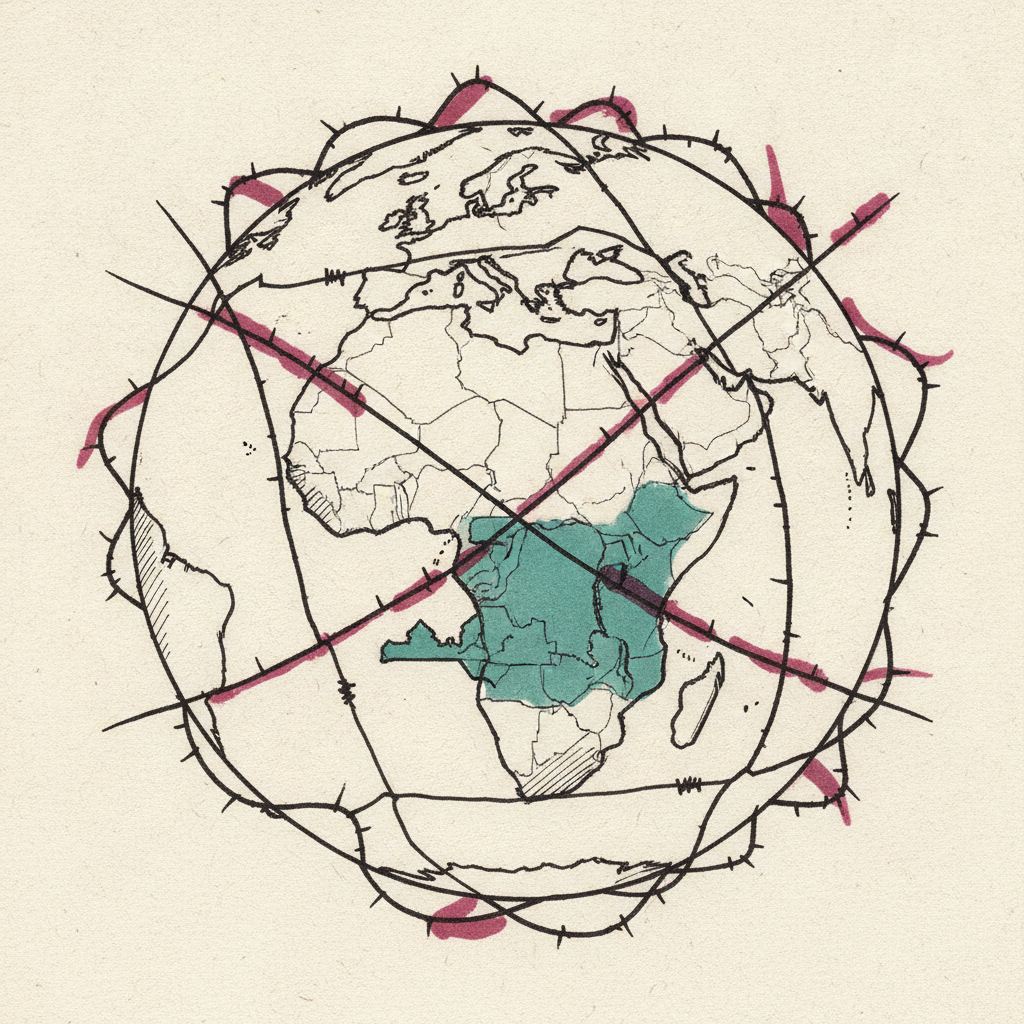
Islamic State's insurgency spans continents: its Central Africa affiliate has blocked Ebola contact tracing in Ituri since roughly 2017, while a departing US counterterrorism chief cited the group's persistence elsewhere on 17 March 2026.
Last refreshed: 22 September 2026 · Appears in 2 active topics
How does Islamic State's grip on Mambasa prevent Ebola containment in Ituri?
Timeline for Islamic State
US flies its last troops out of Erbil
Iran Conflict 2026Mentioned in: CENTCOM names no Falcon Strike partner
Iran Conflict 2026Mentioned in: DRC Ebola tops 1,000 confirmed cases
Pandemics and BiosecurityMentioned in: WHO counts 695 cases as Ebola climbs
Pandemics and BiosecurityControlled Mambasa territory preventing health worker access and contact tracing
Pandemics and Biosecurity: CEPI and GAVI commit $112m, no treatment yetBackground
Islamic State (IS) is a transnational militant organisation that declared a caliphate in June 2014, at its peak holding an estimated 8 million people across Iraq and Syria. Coalition military operations dismantled the physical caliphate by March 2019, but IS has persisted as a dispersed insurgency operating through provincial affiliates across the Middle East, Africa, South Asia and Central Asia.
Islamic State Central Africa Province (ISCAP), its affiliate operating principally in North Kivu and Ituri in the Democratic Republic of Congo, has been active since around 2017. It is one of several regional franchises that have outlasted the collapse of the original caliphate.
IS is not a combatant in the 2026 Iran-Israel war; its relevance to that conflict is as a separate, ongoing security concern cited by officials weighing where counterterrorism attention should sit. Its practical reach is felt most directly in Central Africa, where affiliate-held territory obstructs an active Ebola response.
Islamic State blocks Ebola containment
Islamic State's Central Africa affiliate, active in the Democratic Republic of Congo since around 2017, controls Mambasa Territory in Ituri Province, at the centre of the 2026 Bundibugyo Ebola response. Health workers cannot safely run contact tracing or deliver treatment inside affiliate-held ground, and CEPI-funded vaccine supply lines cannot reliably reach the population there.
Funders committed $112m on 1 June 2026 toward three Bundibugyo vaccine candidates, none of which will reach human trials for at least twelve months; two treatments already usable on patients, MBP134 and remdesivir, remain stuck awaiting regulatory clearance in Congo and Uganda. The access-denial effect compounds an outbreak with an estimated R0 of 2.51, creating conditions for undetected transmission that could seed cases across the Ugandan border.
Islamic State remains a stated US concern
Joe Kent resigned as director of the US National Counterterrorism Centre on 17 March 2026, becoming the first senior Trump official to leave over the Iran war. He said Iran 'posed no imminent threat' while Islamic State remained active, drawing an explicit line between the two: one a state Washington was fighting, the other a dispersed insurgency Washington was not.
Kent's objection was that resources and attention were being pulled toward Iran while Islamic State's provincial affiliates, from Iraq to Central Africa, kept operating unchecked. The same week, Iraqi authorities cited IS-linked instability as part of the security backdrop behind a Force majeure declaration on foreign-operated oilfields, a consequence of broader disorder rather than any Islamic State attack on the fields themselves.
How is Islamic State blocking the Ebola response in Congo?
Is Islamic State still active in the DRC in 2026?
What happened to the Islamic State caliphate?
Is Islamic State linked to the 2026 Iran conflict?


Written with AI from Lowdown's published reporting. Not individually reviewed by an editor. Updated 22 September 2026. Editorial standards.