Mosul
Iraq's second city, on the Tigris, held by Islamic State from 2014 to 2017
America's last troops flew out of Erbil Air Base on 30 September 2026, closing the Iraq leg of the campaign that Mosul's fall began. Central Command told the departing force that Islamic State no longer threatens Iraq's national security.
Last refreshed: 1 October 2026
Is the city that made the anti-Islamic State campaign necessary now safe?
Timeline for Mosul
Mentioned in: US flies its last troops out of Erbil
Iran Conflict 2026Mentioned in: Iran army moves into schools and mosques
Iran Conflict 2026Background
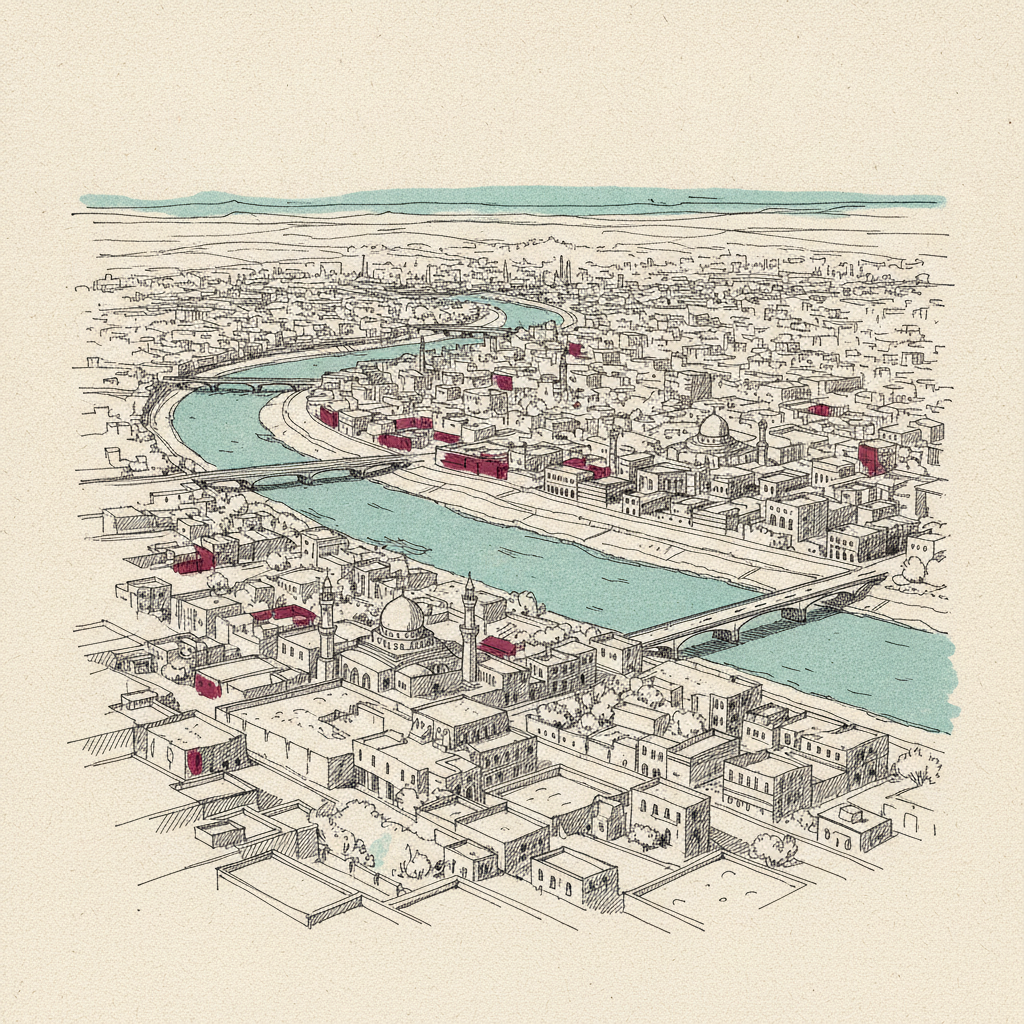
Mosul is Iraq's second city and the capital of Nineveh Governorate, on the river Tigris in the north of the country. Islamic State seized it on 10 June 2014 and declared its caliphate from the al-Nuri mosque. About 500,000 people fled. Iraqi forces, backed by Coalition air power, retook the city on 10 July 2017 after a nine-month battle that destroyed more than 500 buildings, the mosque among them.
That sequence is why Mosul carries more weight than its size. Its fall prompted the Coalition campaign against Islamic State, raised in October 2014 and run since by a combined task force. Washington cites the city's recapture as the proof that campaign worked.
Mosul now tests that claim rather than illustrating it. Baghdad holds the north alone, with no Coalition presence on Iraqi soil and the task force headquarters moved out of the country. Mosul fell once to a force the Iraqi Army was thought capable of holding, which is the reason anyone watching Iraq watches this city first.
Where is Mosul?
When did Islamic State take Mosul?
When was Mosul liberated?
Why does Mosul matter to the American withdrawal from Iraq?

