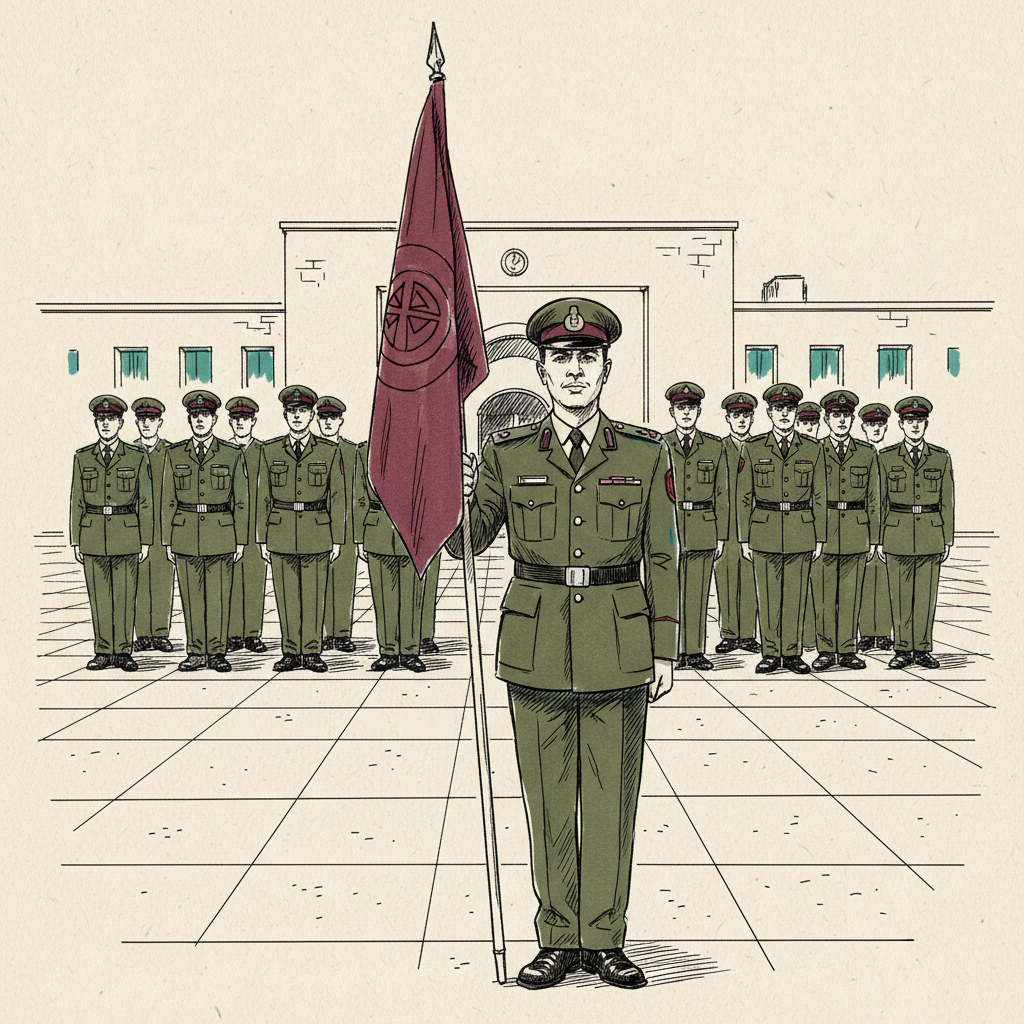
Are Iraqi Shia militias operating independently or directly commanded by Iran's IRGC?
Timeline for Iraqi Shia militias
Named as source of the threat
Iran Conflict 2026: Mentioned in: Riyadh names energy, port and airport targetsAttributed by US officials as having launched the three Barakah drones from Iraqi territory
Iran Conflict 2026: UNSC at Barakah: red line invokedMentioned in: Iraq: force majeure; oil goes nowhere
Iran Conflict 2026Mentioned in: Iran missile hits US Embassy in Baghdad
Iran Conflict 2026Mentioned in: Iran hits five KC-135s at Saudi base
Iran Conflict 2026Background
Iraqi Shia militias are a constellation of armed groups drawn from Iraq's majority-Shia population, most operating under or alongside the Popular Mobilization Forces (PMF), a state-recognised paramilitary network formally integrated into Iraq's security apparatus after the 2014 campaign against ISIS. The major factions include Kata'ib Hezbollah, Asa'ib Ahl al-Haq, the Badr Organization, and Harakat Hezbollah al-Nujaba. All maintain documented ideological and operational links to Iran's Islamic Revolutionary Guard Corps (IRGC), receiving funding, training, weapons, and political direction through the IRGC's Quds Force. They emerged primarily from the post-2003 US-occupation period, shaped by Lebanon's Hezbollah as an organisational model.
In the current conflict, Iraqi Shia militias opened a fifth operational front in early March 2026 when Saraya Awliya al-Dam claimed a drone attack on US forces at Baghdad International Airport. Prior to the attack, militia groups had issued formal retaliation threats against US assets in Iraq. The IDF subsequently struck the al-Shalamcheh Iraq-Iran border crossing in April, targeting logistics corridors connecting IRGC supply lines through Iraqi territory to militia networks.
On 6 August 2026 Saudi officials published an intelligence assessment naming energy facilities, ports and airports as likely targets of an Iraqi militia-Houthi campaign it said was coordinated under IRGC guidance, extending the pattern of cross-border coordination the group has shown since its opening attacks on US and Gulf targets earlier in the war.
The militias occupy a structurally ambiguous position: formally incorporated into the Iraqi state via the PMF while operating an Independent command chain answering to Tehran. Baghdad publicly denies authorising foreign military operations on Iraqi soil while the militias operate with de facto impunity in southern and western Iraq. Iran's exemption of Iraq from Hormuz toll restrictions in April 2026, citing 'brotherly ties', reflects Tehran's dependency on Iraqi political cover for militia operations rather than a strategic concession.
What are the main Iraqi Shia militia groups?
What is the Popular Mobilization Forces (PMF) in Iraq?
Have Iraqi militias attacked US forces during the Iran conflict?
Does Iran control Iraqi Shia militias?
What did Saudi Arabia say about Iraqi Shia militias in August 2026?
Which Iraqi Shia militia groups are aligned with Iran?
Are Iraqi Shia militias part of Iraq's state security forces?
When did Iraqi Shia militias first attack US forces in the 2026 conflict?


Written with AI from Lowdown's published reporting. Not individually reviewed by an editor. Updated 22 September 2026. Editorial standards.