Vadinar
Indian oil import hub; sole port that briefly received Iranian crude under GL-U waiver.
Last refreshed: 19 April 2026
Why is Vadinar no longer able to receive Iranian crude?
Timeline for Vadinar
Mentioned in: ARA gasoil hits a 2.5-year low
European Oil MarketsMentioned in: Ping Shun diverted from Vadinar to Dongying
Iran Conflict 2026Mentioned in: First Iranian Crude Reaches India Since 2019
Iran Conflict 2026Mentioned in: General License U Sets a Hidden Deadline
Iran Conflict 2026Background
Under the lapse of General License U on 19 April 2026, Vadinar became the first Indian port to face secondary-sanctions exposure on Iranian crude deliveries since March 2026. The PING SHUN, originally bound for Vadinar with 600,000 barrels of Iranian crude, was diverted mid-transit to Dongying, China, as Reliance Industries withdrew before the cliff. This is the first concrete instance of a Vadinar-destination cargo being rerouted under GL-U's exit.
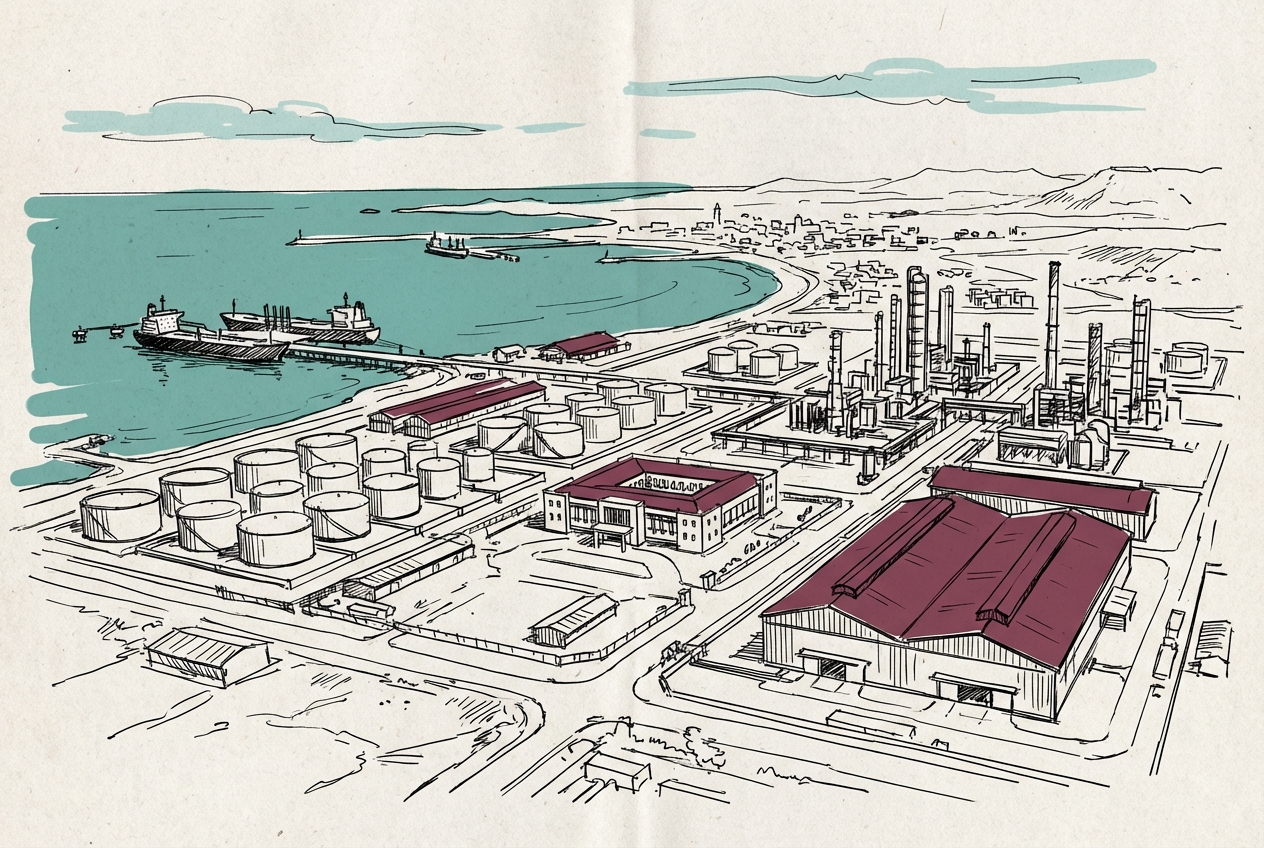
Vadinar sits on India's western Gujarat coast at approximately 22.4N, 69.7E. It hosts Reliance Industries' Jamnagar refinery complex, the world's largest single-location refinery at 1.4 million Barrels Per Day. The port operates Single Point Mooring (SPM) terminals capable of receiving VLCC and Aframax-class vessels. Reliance maintained rupee-based settlement mechanisms from pre-2019 Iranian crude trade, which allowed it to execute the original March delivery when no other Indian refiner could.
Vadinar's significance in the Hormuz crisis is as the only Indian port with both the refinery scale and the pre-existing settlement infrastructure to process sanctioned Iranian crude. Its withdrawal from the market under GL-U's lapse removes the sole functioning non-Chinese buyer. With 128 million barrels in floating storage across the wider sanctioned fleet, the closure of the Vadinar route consolidates Iranian crude exports toward China's Shandong Independent refiners and away from price-sensitive South Asian buyers, compressing the market further.
Why did Vadinar stop receiving Iranian oil?
What makes the Vadinar refinery the largest in the world?
What happens to Iranian crude now that Vadinar cannot receive it?



Written with AI from Lowdown's published reporting. Not individually reviewed by an editor. Updated 19 April 2026. Editorial standards.