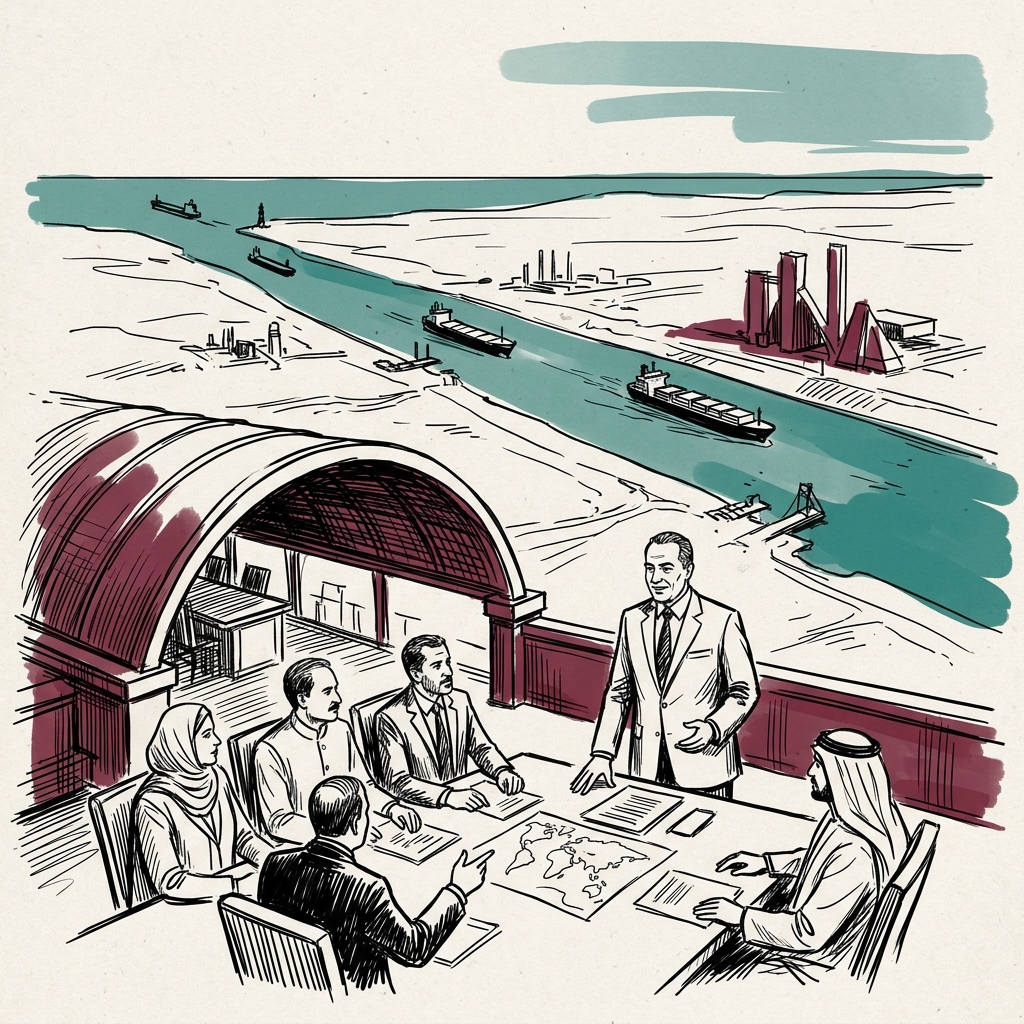
Egypt
Arab republic controlling the Suez Canal; active mediator in Iran conflict and Gaza diplomacy.
On 2 August Egypt kept its inquiry into the 29 July Damietta drone attack open, resisting pressure to name an author while the strike exposed a direct risk to its gas supply and Red Sea role.
Last refreshed: 22 September 2026 · Appears in 3 active topics
How is Egypt's dual role as peace broker and US-aid recipient shaping Iran conflict diplomacy?
Timeline for Egypt
Mentioned in: Cambodia confirms sixth human H5N1 case
Pandemics and BiosecurityMentioned in: Houthis take all of Yemen's Red Sea coast
Iran Conflict 2026Mentioned in: Iran recovers a broken US drone
Iran Conflict 2026Mentioned in: Qatar mediates in Beijing, files at UN
Iran Conflict 2026Mentioned in: CEPI awards Minapharm US$16.5m for Ebola
Pandemics and BiosecurityBackground
Egypt is an Arab republic whose control of the Suez Canal gives it a direct stake in maritime security between the Red Sea and the Mediterranean. On 18 April, Egypt joined Turkey, Saudi Arabia and Pakistan in discussions covering maritime security, sanctions relief and ceasefire guarantees around the Iran conflict.
Cairo also has a long-standing diplomatic role across regional conflicts. On 11 May, Iran's foreign minister met Egypt's foreign minister during a wider round of contacts with Turkey and the Netherlands, indicating that Egypt remained a usable channel alongside other mediators.
Egypt's significance rests on this combination of geography and diplomatic access. Its canal and Red Sea infrastructure make disruptions to shipping and energy flows domestic concerns, while its relationships with competing regional actors allow it to participate in Ceasefire efforts without becoming a formal belligerent.
Egypt remains a ceasefire channel
On 22 July, Egypt put its name to a ten-day truce plan for Washington and Tehran alongside three other mediators: Qatar, Pakistan and Oman. The plan sought to reopen Strait of Hormuz navigation while the parties negotiated further, placing Cairo in a diplomatic channel with direct consequences for trade routes serving the Suez Canal.
Egypt had already appeared in regional talks on 18 April with Turkey, Saudi Arabia and Pakistan on maritime security, sanctions relief and ceasefire guarantees. Its role is useful because it combines access to regional partners with a direct interest in keeping SEA lanes navigable. The Damietta strike makes that diplomatic stake more immediate, rather than merely strategic.
Reference
Has Egypt signed a peace deal with Israel?
Why does Egypt receive US military aid and how much does it get?
How does the Suez Canal connect Egypt to the Iran conflict?
How much revenue does Egypt earn from the Suez Canal?
Recently resolved
Why was the Egypt vs Iran World Cup match controversial?
Did Egypt qualify for the knockout rounds at the 2026 World Cup?
How far did Egypt go at the 2026 World Cup?
What role is Egypt playing in the Iran conflict negotiations?
What is the Antalya quartet and why is Egypt in it?
Did Egypt win their first-ever World Cup knockout match?


