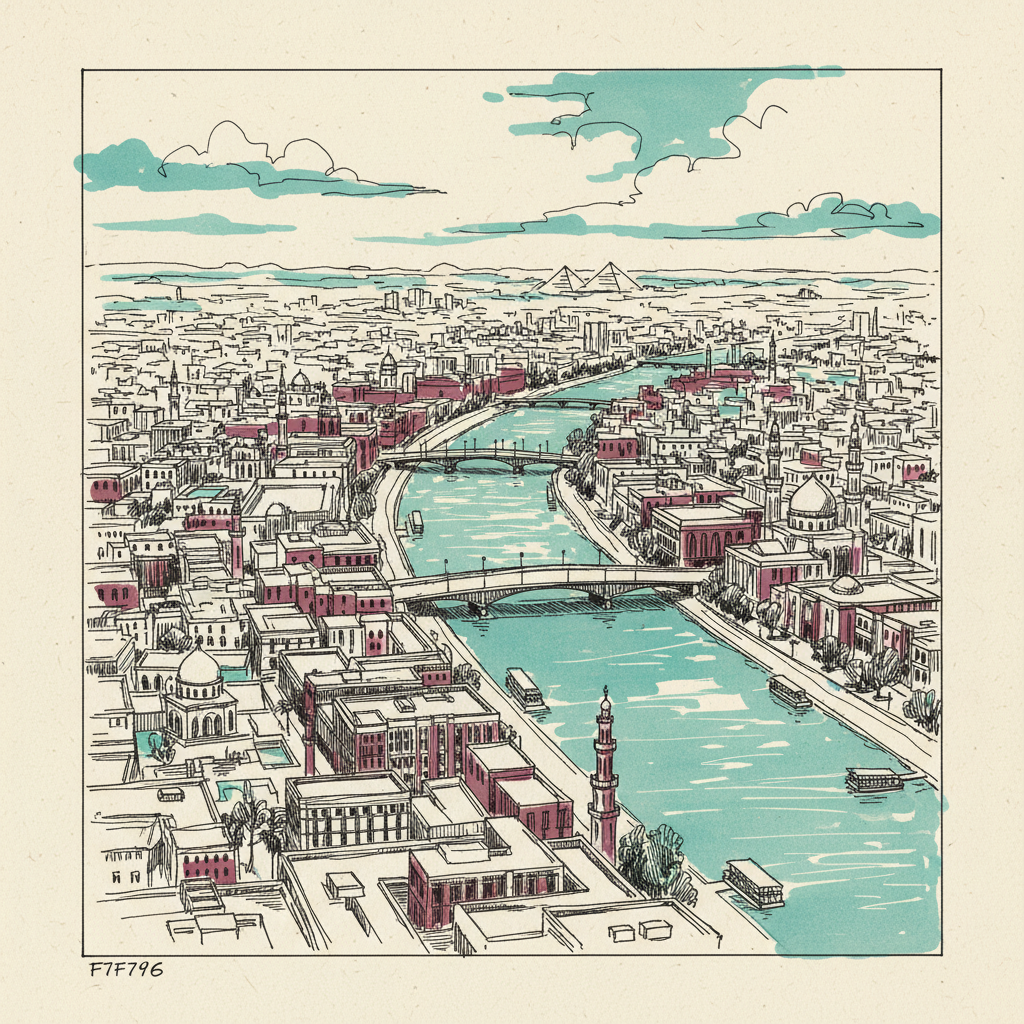
Cairo
Capital of Egypt and most populous city in the Arab world, hub of regional diplomacy and peace negotiations.
Egypt urged accurate reporting on the 29 July Damietta drone strike on 2 August, keeping its inquiry's findings unreleased while Iranian officials tell The New York Times the drone was Iranian and Iran's foreign minister publicly blames Israel.
Last refreshed: 3 August 2026 · Appears in 2 active topics
Why is Egypt the diplomatic bridge Iran is using to reach Washington?
Timeline for Cairo
CEPI awards Minapharm US$16.5m for Ebola
Pandemics and BiosecurityMentioned in: A four-year-old among eleven wounded in Najran strike
Iran Conflict 2026Mentioned in: Cairo tells the press to be accurate
Iran Conflict 2026Mentioned in: Iran claims and denies the same drone
Iran Conflict 2026Mentioned in: Oman's Hormuz fee splits its authors
Iran Conflict 2026Background
Cairo is the capital and largest city of Egypt, home to roughly 22 million people in its greater metropolitan area, and the political and diplomatic centre of the Arab world's most populous nation. It has historically served as a hub for regional peace negotiations, including Arab-Israeli contacts in the 1970s and various Gulf Mediation efforts.
Egypt's geographic position between North Africa and the Levant, and its sustained intelligence relationship with the United States, give Cairo a recurring role in backchannel diplomacy: a plausibly neutral interlocutor that can relay messages to Washington without the optics of a direct US-Iran channel.
Egypt carries economic exposure through Suez Canal traffic, which suffers whenever wider regional conflict disrupts shipping, and relies on US military aid under the Camp David framework, a dependency that limits how freely Cairo can act against Washington's wishes even while mediating for other parties. The Damietta drone strike on 29 July tested that balance directly, landing on Egyptian soil while Tehran and Israel traded blame.
It hosts a second diplomatic channel
Iran's Foreign Minister Abbas Araghchi met his Egyptian counterpart Badr Abdelatty in Cairo on 11 May, one of three separate meetings that day alongside Turkey and the Netherlands. Egypt was the most operationally significant of the three: Cairo has previously helped facilitate US-Iran backchannel contacts alongside Pakistan.
The visit read as insurance rather than a primary track. Pakistan-led talks remained the main channel, with a second Islamabad round still unconvened, but Iran used Cairo to build an alternative route in case Trump's return from Beijing on 15 May tilted toward military action rather than a deal. For Egypt, hosting the contact reaffirms a mediating role it has held since the 1970s, even as its own economy stays exposed to Suez Canal traffic disrupted by the wider conflict.
Why is Egypt involved in the Iran nuclear negotiations?
What is Egypt's role in the Iran-US ceasefire talks?
How has the Hormuz crisis affected Egypt?

