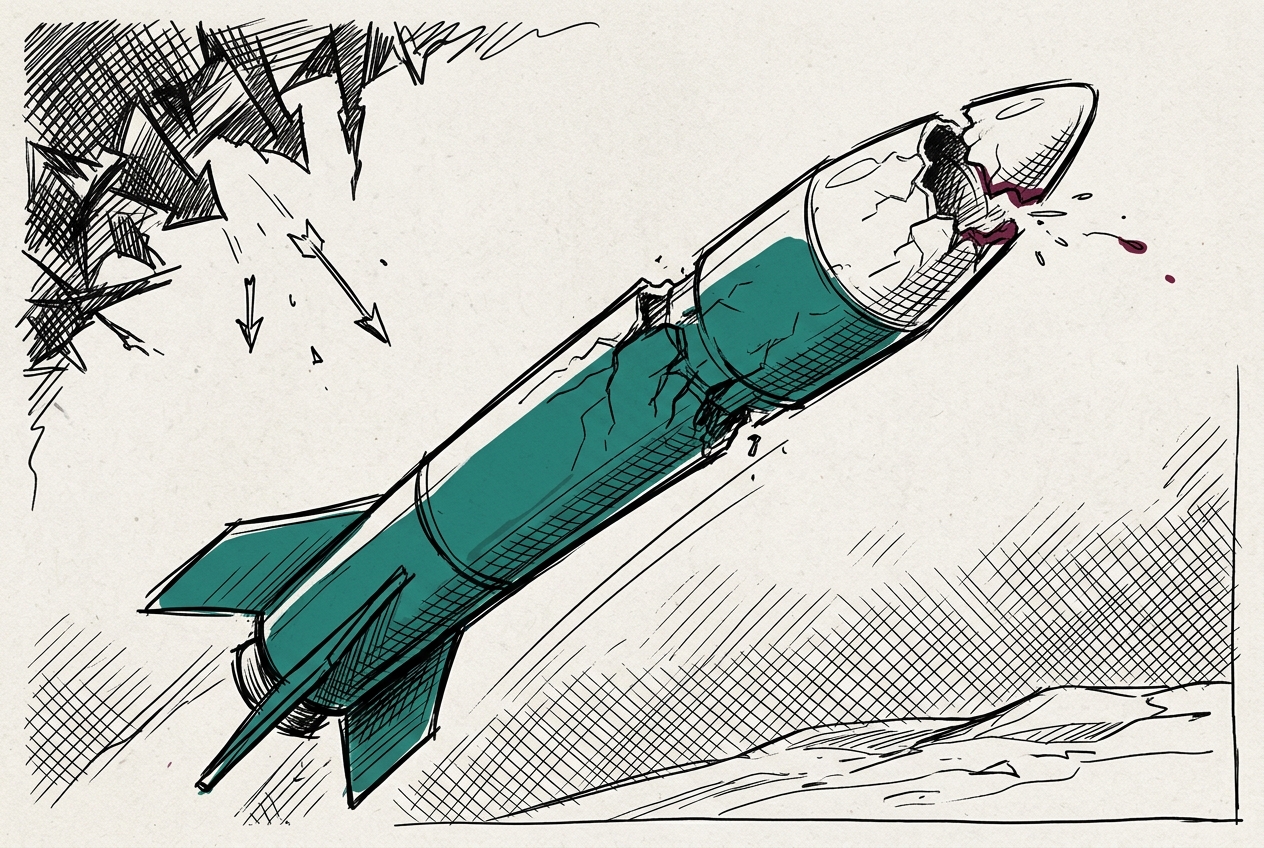
Arrow-3
Israel's exo-atmospheric Ballistic missile interceptor, now critically depleted by sustained Iranian salvos.
RUSI projected Arrow-3 stocks 81% spent by 26 March 2026, and by 10 April Israel's upper-tier interceptor was described as near exhausted, with two to three years needed to restock.
Last refreshed: 28 September 2026 · Appears in 1 active topic
Can Israel replenish Arrow-3 stocks fast enough to survive Iran's missile campaign?
Timeline for Arrow-3
Mentioned in: Hezbollah Missile Hits Tel Aviv Range
Iran Conflict 2026Interceptor Crisis Reaches Projected Depletion Window
Iran Conflict 2026Mentioned in: IDF Admits Air Defence Failures at Dimona and Arad
Iran Conflict 2026Mentioned in: Iran War Burns Through Pacific Missile Reserves
Iran Conflict 2026Arrow-3 stocks hit 81 per cent drain
Iran Conflict 2026Background
Arrow-3 is Israel's uppermost ballistic-missile defence layer. It is designed to Intercept long-range ballistic missiles above the atmosphere, in mid-course flight, before their warheads descend towards cities or strategic sites. It entered operational service in 2017.
Israel Aerospace Industries builds the system with Boeing as its US partner. It sits above Arrow-2, David's Sling and Iron Dome in Israel's layered air defence. Arrow and David's Sling batteries need 20 to 30 minutes to reload, a window that repeated salvos can probe.
Arrow-3 interceptors are built on multi-year production contracts, so stocks spent in a long exchange of fire cannot be quickly replaced; in April 2026 restocking was put at two to three years.
Arrow-3 stocks ran close to empty
In mid-March US officials told Semafor that Israel was critically low on interceptors, and Israel's Cabinet approved 2.6 billion shekels (about $826m) of emergency interceptor purchases. On 20 March interceptors launched at Dimona and Arad failed to engage incoming warheads, and 84 people were wounded in Arad and 40 in Dimona.
RUSI then projected Arrow-3 stocks at 81.33% depleted by 26 March, with full exhaustion by the end of the month, and replacement depends on multi-year production contracts. Iran fired its first cluster-warhead Ballistic missile at central Israel on 31 March, as the projected gap opened. By 10 April Arrow-3 stocks were described as near exhausted, with two to three years needed to restock.
What is Arrow-3?
Is Israel running out of Arrow-3 missiles?
Has Arrow-3 failed to intercept Iranian missiles?
What is the difference between Arrow-3 and Iron Dome?
How much does an Arrow-3 interceptor cost?


