Skip to content
Briefings are running a touch slower this week while we rebuild the foundations.See roadmap
Iran Conflict 2026
22MAR

Interceptors fail at Dimona and Arad

4 min read
05:50UTC

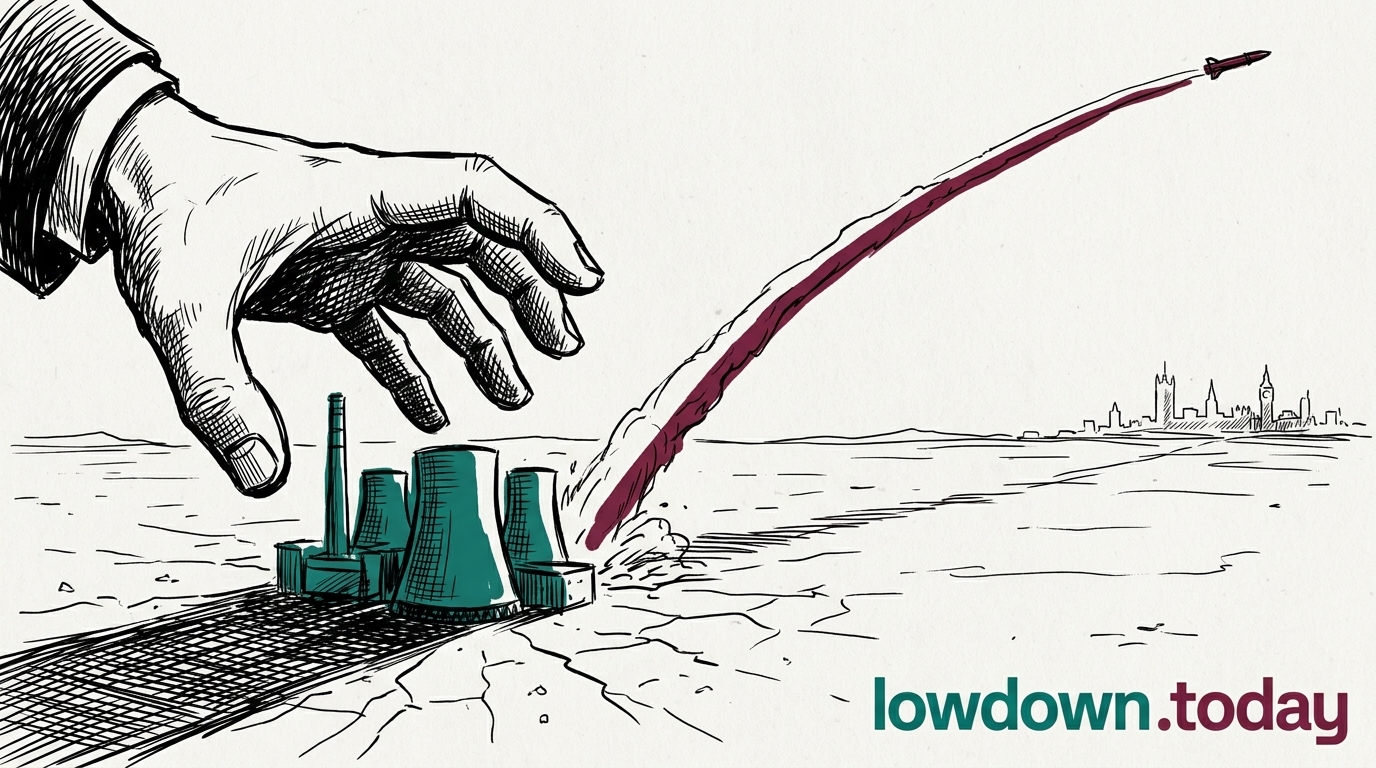
Interceptors launched and missed at two southern Israeli cities, including the site of the country's nuclear research centre — the second time Iranian warheads have penetrated defences built to prevent exactly this.

ConflictDeveloping
Key takeaway

Two simultaneous interception failures in one raid suggest Iran has operationally defeated Israeli ballistic missile defence protocols.

Israeli firefighters confirmed that interceptors launched against incoming Iranian ballistic missiles at both Dimona and Arad on Friday failed to hit the threats, resulting in two direct impacts by warheads weighing hundreds of kilograms 1. IDF Spokesman Brig. Gen. Effie Defrin acknowledged the system "operated but did not intercept the missile" 2. In Arad, 84 people were wounded, 10 seriously, including a five-year-old girl. In Dimona, 40 were wounded, including a 12-year-old boy. The IAEA confirmed no damage to the Shimon Peres Negev Nuclear Research Centre and no abnormal radiation levels.

This is the second acknowledged penetration of Israeli air defences since the war began on 28 February. The first came when Iranian cluster munitions struck central Israeli population centres during the IRGC's 61st wave, killing an elderly couple in Ramat Gan — one of whom had a disability that prevented reaching shelter . Israel's layered missile defence architecture — Arrow-3 and Arrow-2 for ballistic threats, David's Sling for medium-range missiles, Iron Dome for shorter-range projectiles — achieved a reported 99% interception rate during Iran's April 2024 retaliatory strikes. That rate reflected a limited salvo: roughly 300 projectiles launched over several hours with advance warning from multiple allied intelligence services. The current conflict presents a different problem. Iran has fired sixty-six acknowledged waves using mixed weapon types — Khorramshahr, Qadr, Kheibar Shekan, Emad, Zolfaqar — at sustained volume across 22 days. Interception systems have finite magazines, finite reload times, and finite capacity to discriminate between simultaneous threats.

The Dimona failure carries particular operational weight. The Shimon Peres centre is the facility most closely associated with Israel's undeclared nuclear deterrent — the ultimate guarantee of national survival in Israeli strategic doctrine. A ballistic warhead detonating in the vicinity, even without breaching the reactor complex, demonstrates that Iran can strike the area Israel considers most sensitive. The IRGC has made no public claim of targeting Dimona's reactor specifically, and the IAEA's confirmation of no reactor damage suggests the warhead may not have been aimed at the facility itself. But air defence failure is indiscriminate in its consequences: the interceptor does not choose which warheads to miss based on their intended target. If the defence architecture cannot reliably stop ballistic missiles over The Negev, every asset in the region — military, nuclear, and civilian — is exposed to whatever Iran chooses to launch next.


Deep Analysis

In plain English

Israel operates one of the world's most sophisticated layered missile defence architectures — Iron Dome for short-range rockets, David's Sling for medium-range threats, and the Arrow system for ballistic missiles. 'It operated but did not intercept' means the system detected the incoming missile, launched an interceptor, but the interceptor missed. Two simultaneous failures in the same raid — at locations roughly 30 kilometres apart — is statistically unlikely to be random malfunction. Three failure modes are plausible. Iran may have used manoeuvring re-entry vehicles (MaRVs) that alter trajectory during terminal descent, defeating Arrow-3's intercept algorithm. Alternatively, salvo timing may have saturated the system's simultaneous engagement capacity. A third possibility is decoy warheads exhausting interceptor magazines before the real threats arrived. Each explanation represents a qualitative Iranian capability that permanently changes the threat calculus for Israeli cities.

Deep Analysis
Synthesis

The IDF's public acknowledgement of two simultaneous interception failures is itself analytically significant. Israeli military communications doctrine normally emphasises intercept successes while minimising confirmed failures. The decision to acknowledge publicly — despite the intelligence value this hands to Iranian engineers — suggests the impact craters in populated areas made denial politically impossible. The IDF now faces a compounding bind: describing the specific failure mode would confirm to Iran which countermeasure succeeded, but maintaining silence prevents the public pressure that might accelerate THAAD procurement or shelter policy reform.

Root Causes

Arrow-3 is optimised for exo-atmospheric intercepts of single warheads on predictable ballistic trajectories. Iran's probable development of MaRV technology — acquired partially through North Korean technical exchange and, allegedly, Chinese subsystem transfer — produces warheads executing terminal-phase manoeuvres that fall outside Arrow-3's designed engagement envelope. This is a structural technical gap in the intercept architecture, not a system malfunction. Iran appears to have deliberately designed towards this gap for over a decade.

Escalation

Sequential, publicly acknowledged defence penetrations — cluster munitions earlier in the conflict, now ballistic missiles at both Dimona and Arad — suggest Iran is systematically identifying and exploiting specific gaps in Israeli intercept architecture. If the pattern continues through the IDF's remaining operational timeline, Israel will face intense political pressure to accept US THAAD batteries in the Negev — formally anchoring American military assets to Israeli soil and deepening the US commitment to the conflict's outcome beyond current levels.

What could happen next?
  • Precedent

    Two simultaneously acknowledged air defence failures in one raid represent the most significant public failure of Israeli missile defence since the layered system's inception.

    Immediate · Reported
  • Risk

    Iran will analyse each confirmed failure and refine subsequent attacks through an iterative defeat cycle, compounding Israeli vulnerability across the remaining operational timeline.

    Short term · Assessed
  • Consequence

    Israel will face intense domestic pressure to request US THAAD deployment in the Negev, formally entrenching American military assets in defence of Israeli nuclear infrastructure.

    Short term · Assessed
  • Risk

    If Arrow-3's intercept algorithm has been operationally defeated, the southern Israeli civilian population has effectively lost ballistic missile protection for the duration of the conflict.

    Immediate · Suggested
First Reported In

Update #44 · Trump: 48 hours to destroy Iran power grid

Times of Israel· 22 Mar 2026
Read original
Different Perspectives
IAEA
IAEA
Director General Rafael Grossi appeared in person at the UNSC on 19 May and warned that a direct hit on an operating reactor 'could result in very high release of radioactivity'. The session produced a condemnation record but no resolution, and the Barakah perimeter was already struck on 17 May.
Hengaw (Kurdish rights monitor)
Hengaw documented three judicial executions and the detention of Kurdish writer Majid Karimi in Tehran on 19 May, establishing Khorasan Razavi province as the newest geography in Iran's wartime judicial record. The organisation's Norway-based operation continues to surface a domestic repression track running in parallel with every diplomatic and military development.
India
India
Six India-flagged vessels conducted a coordinated cluster transit under PGSA bilateral assurances during the 17 May window, paying no yuan tolls. New Delhi's inclusion in Iran's state-to-state passage track insulates Indian energy supply without requiring endorsement of the PGSA's yuan-toll architecture or alignment with the US coalition.
Pakistan
Pakistan
Pakistan is the only functioning diplomatic bridge between Tehran and Washington. Its role is relay, not mediation in the settlement sense: it conveyed Iran's 10-point counter-MOU in early May, relayed the US rejection, and is now passing 'corrective points' in the third documented exchange of this sub-cycle without either side working from a shared text.
UK and France (Northwood coalition)
Twenty-six coalition members have published no rules of engagement eight days after the Bahrain joint statement; Lloyd's underwriters have conditioned war-risk reopening on written ROE from either Iran or the coalition. Italian and French mine-countermeasures deployments are operating on the in-water clearance task CENTCOM Admiral Brad Cooper's 90% mine-stockpile claim does not address.
Saudi Arabia
Saudi Arabia
Riyadh has not publicly commented on the Barakah strike or the 50-47 discharge vote. Saudi output feeds the IEA's $106 base case; the $5 Brent premium above that model reflects institutional uncertainty no Gulf producer can compress through supply adjustment alone.



