Skip to content
Iran Conflict 2026
22MAR

Interceptors fail at Dimona and Arad

4 min read
05:50UTC

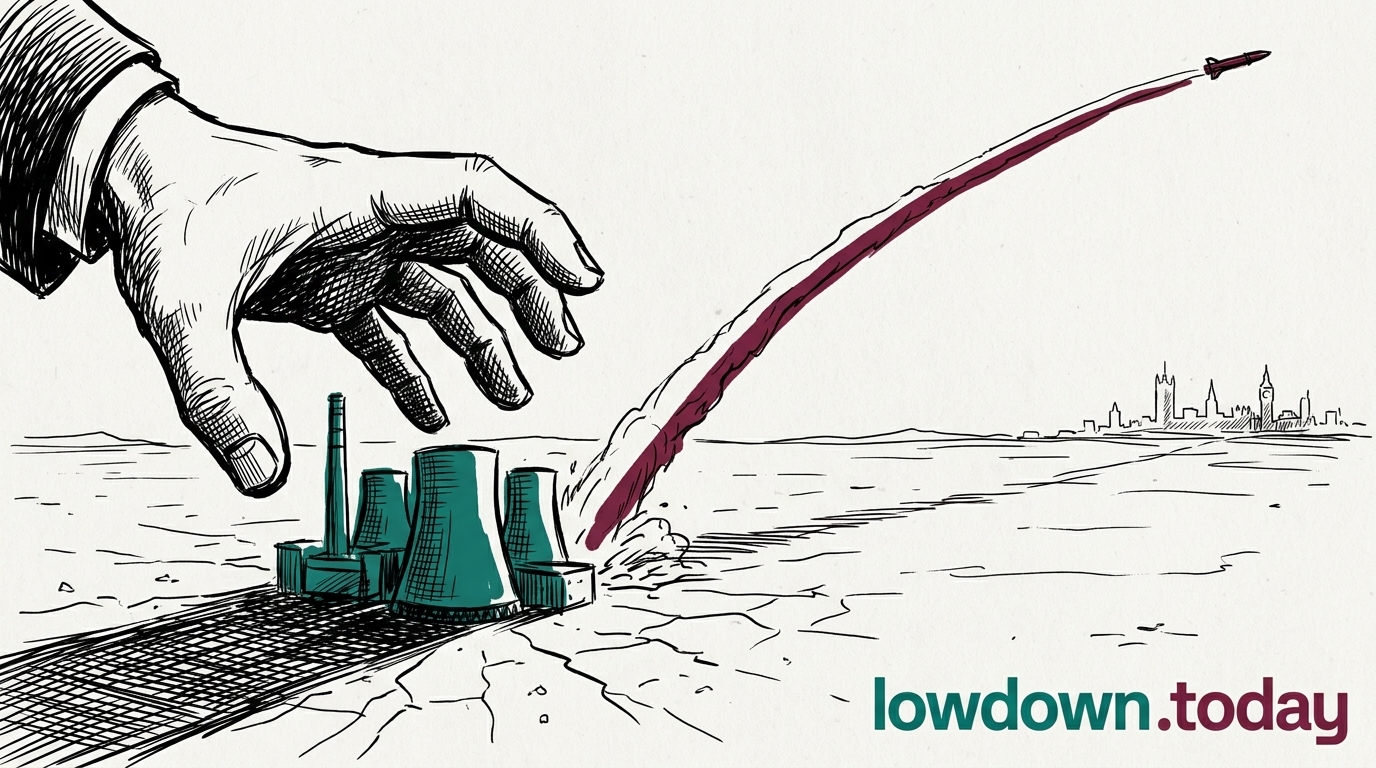
Interceptors launched and missed at two southern Israeli cities, including the site of the country's nuclear research centre — the second time Iranian warheads have penetrated defences built to prevent exactly this.

ConflictDeveloping
Key takeaway

Two simultaneous interception failures in one raid suggest Iran has operationally defeated Israeli ballistic missile defence protocols.

Israeli firefighters confirmed that interceptors launched against incoming Iranian ballistic missiles at both Dimona and Arad on Friday failed to hit the threats, resulting in two direct impacts by warheads weighing hundreds of kilograms 1. IDF Spokesman Brig. Gen. Effie Defrin acknowledged the system "operated but did not intercept the missile" 2. In Arad, 84 people were wounded, 10 seriously, including a five-year-old girl. In Dimona, 40 were wounded, including a 12-year-old boy. The IAEA confirmed no damage to the Shimon Peres Negev Nuclear Research Centre and no abnormal radiation levels.

This is the second acknowledged penetration of Israeli air defences since the war began on 28 February. The first came when Iranian cluster munitions struck central Israeli population centres during the IRGC's 61st wave, killing an elderly couple in Ramat Gan — one of whom had a disability that prevented reaching shelter . Israel's layered missile defence architecture — Arrow-3 and Arrow-2 for ballistic threats, David's Sling for medium-range missiles, Iron Dome for shorter-range projectiles — achieved a reported 99% interception rate during Iran's April 2024 retaliatory strikes. That rate reflected a limited salvo: roughly 300 projectiles launched over several hours with advance warning from multiple allied intelligence services. The current conflict presents a different problem. Iran has fired sixty-six acknowledged waves using mixed weapon types — Khorramshahr, Qadr, Kheibar Shekan, Emad, Zolfaqar — at sustained volume across 22 days. Interception systems have finite magazines, finite reload times, and finite capacity to discriminate between simultaneous threats.

The Dimona failure carries particular operational weight. The Shimon Peres centre is the facility most closely associated with Israel's undeclared nuclear deterrent — the ultimate guarantee of national survival in Israeli strategic doctrine. A ballistic warhead detonating in the vicinity, even without breaching the reactor complex, demonstrates that Iran can strike the area Israel considers most sensitive. The IRGC has made no public claim of targeting Dimona's reactor specifically, and the IAEA's confirmation of no reactor damage suggests the warhead may not have been aimed at the facility itself. But air defence failure is indiscriminate in its consequences: the interceptor does not choose which warheads to miss based on their intended target. If the defence architecture cannot reliably stop ballistic missiles over The Negev, every asset in the region — military, nuclear, and civilian — is exposed to whatever Iran chooses to launch next.

Deep Analysis

In plain English

Israel operates one of the world's most sophisticated layered missile defence architectures — Iron Dome for short-range rockets, David's Sling for medium-range threats, and the Arrow system for ballistic missiles. 'It operated but did not intercept' means the system detected the incoming missile, launched an interceptor, but the interceptor missed. Two simultaneous failures in the same raid — at locations roughly 30 kilometres apart — is statistically unlikely to be random malfunction. Three failure modes are plausible. Iran may have used manoeuvring re-entry vehicles (MaRVs) that alter trajectory during terminal descent, defeating Arrow-3's intercept algorithm. Alternatively, salvo timing may have saturated the system's simultaneous engagement capacity. A third possibility is decoy warheads exhausting interceptor magazines before the real threats arrived. Each explanation represents a qualitative Iranian capability that permanently changes the threat calculus for Israeli cities.

Deep Analysis
Synthesis

The IDF's public acknowledgement of two simultaneous interception failures is itself analytically significant. Israeli military communications doctrine normally emphasises intercept successes while minimising confirmed failures. The decision to acknowledge publicly — despite the intelligence value this hands to Iranian engineers — suggests the impact craters in populated areas made denial politically impossible. The IDF now faces a compounding bind: describing the specific failure mode would confirm to Iran which countermeasure succeeded, but maintaining silence prevents the public pressure that might accelerate THAAD procurement or shelter policy reform.

Root Causes

Arrow-3 is optimised for exo-atmospheric intercepts of single warheads on predictable ballistic trajectories. Iran's probable development of MaRV technology — acquired partially through North Korean technical exchange and, allegedly, Chinese subsystem transfer — produces warheads executing terminal-phase manoeuvres that fall outside Arrow-3's designed engagement envelope. This is a structural technical gap in the intercept architecture, not a system malfunction. Iran appears to have deliberately designed towards this gap for over a decade.

Escalation

Sequential, publicly acknowledged defence penetrations — cluster munitions earlier in the conflict, now ballistic missiles at both Dimona and Arad — suggest Iran is systematically identifying and exploiting specific gaps in Israeli intercept architecture. If the pattern continues through the IDF's remaining operational timeline, Israel will face intense political pressure to accept US THAAD batteries in the Negev — formally anchoring American military assets to Israeli soil and deepening the US commitment to the conflict's outcome beyond current levels.

What could happen next?
  • Precedent

    Two simultaneously acknowledged air defence failures in one raid represent the most significant public failure of Israeli missile defence since the layered system's inception.

    Immediate · Reported
  • Risk

    Iran will analyse each confirmed failure and refine subsequent attacks through an iterative defeat cycle, compounding Israeli vulnerability across the remaining operational timeline.

    Short term · Assessed
  • Consequence

    Israel will face intense domestic pressure to request US THAAD deployment in the Negev, formally entrenching American military assets in defence of Israeli nuclear infrastructure.

    Short term · Assessed
  • Risk

    If Arrow-3's intercept algorithm has been operationally defeated, the southern Israeli civilian population has effectively lost ballistic missile protection for the duration of the conflict.

    Immediate · Suggested
First Reported In

Update #44 · Trump: 48 hours to destroy Iran power grid

Times of Israel· 22 Mar 2026
Read original
Different Perspectives
South Korean financial markets
South Korea, which imports virtually all its crude oil, is absorbing the war's economic transmission most acutely among non-belligerents. The second KOSPI circuit breaker in four sessions — with Samsung down over 10% and SK Hynix down 12.3% — reflects an industrial economy unable to reprice energy costs that have risen 72% in ten days. The market response indicates Korean industry cannot sustain oil above $100 per barrel without margin compression across manufacturing, semiconductors, and shipping.
Migrant worker communities in the Gulf
The first confirmed civilian deaths in Saudi Arabia — one Indian and one Bangladeshi killed, twelve Bangladeshis wounded — fell on communities with no voice in the military decisions that placed them in harm's way. Migrant workers live near military installations because that housing is affordable, not by choice. Bangladesh and India face the dilemma of needing to protect nationals who cannot easily leave a war zone while depending on Gulf remittances that fund a substantial share of their domestic economies.
Azerbaijan — President Ilham Aliyev
Aliyev treats the Nakhchivan strikes as a direct act of war against Azerbaijani sovereignty, placing armed forces on full combat readiness and demanding an Iranian explanation. The response is calibrated to maximise international sympathy while stopping short of military retaliation — Baku cannot fight Iran alone and needs either Turkish or NATO backing to credibly deter further strikes.
Oil-importing nations (Japan, South Korea, India)
The Hormuz closure is an existential threat. Japan, South Korea, and India receive the majority of their crude through the strait — they will bear the heaviest economic cost of a war they had no part in.
Global South governments (Indonesia, Brazil, South Africa)
Neutrality was possible when the targets were military. 148 dead schoolgirls made it impossible — no government can explain that away to its own citizens.
Turkey
Turkey
Has absorbed three Iranian ballistic missile interceptions since 4 March without invoking NATO Article 5 consultation. Each incident narrows Ankara's political room to continue absorbing without Alliance-level response.