Why are Aframax tankers central to the Iran oil smuggling route?
Timeline for Aframax
Mentioned in: Med aframax freight doubles in a week
European Oil MarketsMentioned in: ARA jet fuel hits a six-year low
European Oil MarketsMentioned in: Freight prices Hormuz risk as permanent
European Oil MarketsMentioned in: GL 134C lapsed clean, no successor
European Oil MarketsMentioned in: VLCC forward freight stays 2x Atlantic
European Oil MarketsBackground
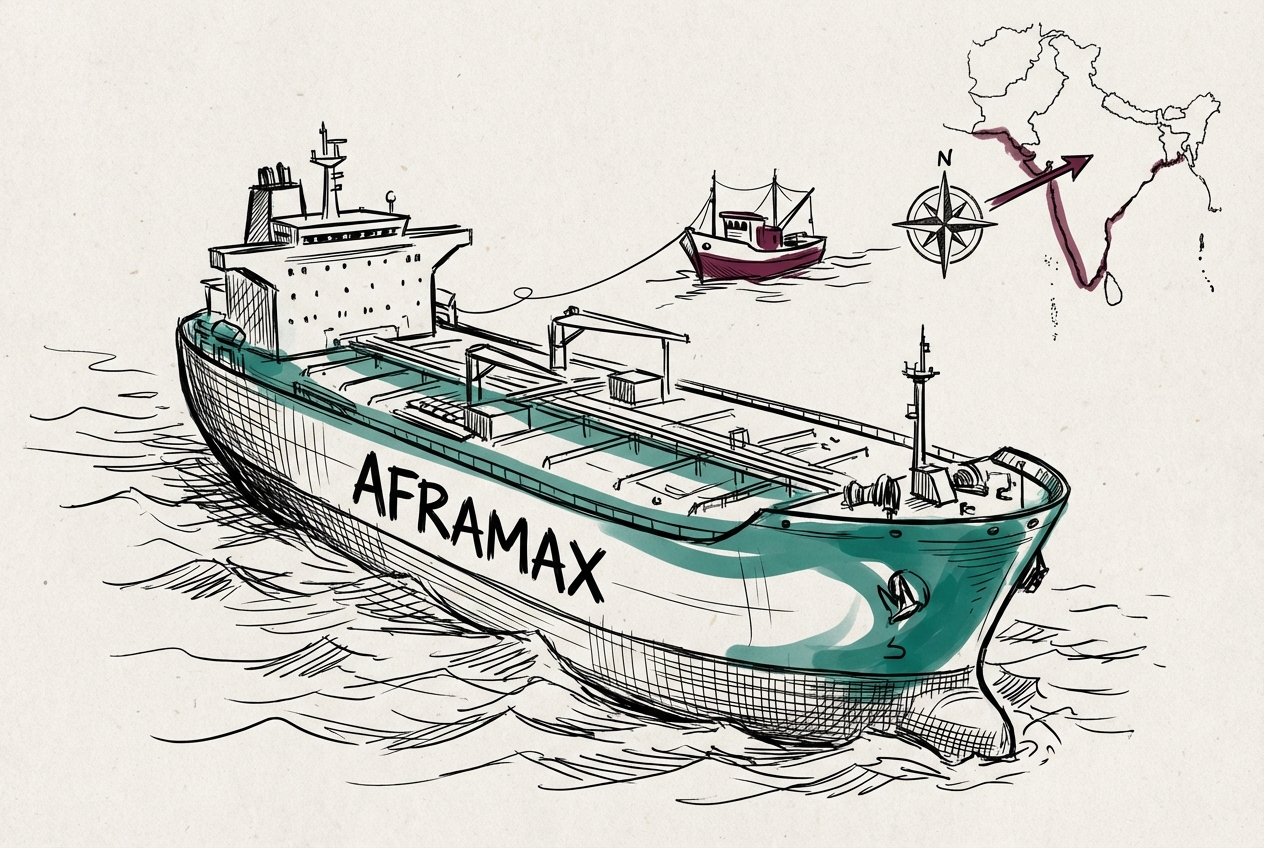
Aframax tankers carry between 80,000 and 120,000 deadweight tonnes of crude oil, making them the workhorses of regional crude trade. The class name derives from the Average Freight Rate Assessment (AFRA) system used by Shell to categorise tankers by size. Their smaller draught compared with Suezmaxes and VLCCs makes them suited to ports with depth restrictions, including North Sea, Baltic, and Mediterranean terminals.
In the 2026 conflict, Aframax tankers formed the backbone of the shadow fleet transiting Hormuz under the IRGC toll system, and they carry Russian crude on the key TD7 (North Sea to Continent) and TD19 (Baltic to Continent) Baltic routes. A dedicated Baltic Aframax compliance bid inflated TD7 and TD19 rates sharply through late April and into May as operators priced the legal uncertainty of trading pre-sanctions-cutoff Russian barrels. After OFAC Director Bradley T. Smith signed General License 134C on 18 May 2026, authorising in-transit completion of Russian crude cargoes loaded on or before 17 April, the compliance bid eased rather than collapsed on TD7 and TD19, markets priced a smaller residual uncertainty rather than a clean legal green light. The Baltic Dirty Tanker Index (BDTI) read 2,249 on 20 May, still pricing a war it no longer fully believed in.
Aframax exposure cuts across both the Iran and Russia-Ukraine conflicts: the PING SHUN, a sanctioned Aframax, delivered the first Iranian crude to India since 2019 under General License U. In the Russia-Ukraine context, Aframaxes are the primary vessel class on Baltic shadow-fleet routes, making GL 134C's Aframax-segment compliance bid the most liquid indicator of how tightly the Russian sanctions regime bites.
What is an Aframax tanker?
What tankers are carrying Iranian oil in 2026?
How big is an Aframax compared to a VLCC?
What is the Baltic Aframax compliance bid and GL 134C?
How does the Russia-Ukraine war affect tanker freight rates?

