Skip to content
Welcome, thoughtbot's Giant Robots listeners!Start here
US Midterms 2026
24SEP

White House signs nothing on elections

3 min read
11:45UTC

Between Tuesday 28 April and Thursday 7 May, the Presidential Actions portal recorded three executive orders, none of them on voting, redistricting, the SAVE Act, or judicial nominations.

PoliticsDeveloping
Key takeaway

Two fortnights of zero election-related signings, with maximum institutional effect routed elsewhere.

The White House signed no executive order, proclamation, or pardon touching elections, voting, redistricting, the SAVE Act (Safeguard American Voter Eligibility Act), or judicial nominations between Tuesday 28 April and Thursday 7 May 2026.⁠1 The Presidential Actions portal records three executive orders in the window: a Cuba sanctions order on Friday 1 May, the TrumpIRA.gov retirement-savings order on Thursday 30 April, and a federal contracting efficiency order the same day.

The pattern compounds. This is the second consecutive fortnight in which the institutional architecture of the midterm map advances without an election-related instrument leaving the Resolute Desk. Louisiana v. Callais was decided by a Court three of whose justices President Donald Trump appointed; Pam Bondi's DOJ pressed the voter-data suits dismissed by five district courts; the Senate Republican majority confirmed Justin D. Smith to the 8th Circuit by unanimous consent on 20 April; state legislatures in Texas and Florida moved on the executive's tempo.

Operational silence at the Resolute Desk has paired with maximum effect through aligned actors. Senator John Kennedy's SAVE Act reconciliation motion failed 48-50 on Monday 27 April when Susan Collins, Lisa Murkowski, Thom Tillis and Mitch McConnell voted against. The legislative route remains closed; SCOTUS, DOJ, and the state legislatures continue to deliver.

Deep Analysis

In plain English

Presidents often sign executive orders to signal their priorities and direct government agencies. But in the nearly two-week window from 28 April to 7 May, President Trump signed nothing related to elections, voting, or redistricting, even as his political allies were using courts and state governments to reshape electoral maps. The Administration's electoral objectives are being achieved through institutions the executive has already shaped: the Supreme Court through judicial appointments, the Justice Department through the attorney general, and state governors through political alignment. Direct orders on voting rules would be blocked by the same courts that enjoined seven of the eight 31 March voting executive order provisions in early April. The result is that the most consequential changes to how Americans elect their representatives are happening without a single presidential signature.

Deep Analysis
Root Causes

The White House signed its last election-related executive order on 31 March 2026, which was blocked within 72 hours by three federal courts. That injunction pattern removed direct executive action on voting rules from the available toolkit for this window.

The structural alternative is already in place: three Trump judicial appointees sit on SCOTUS, Pam Bondi runs the Justice Department, and Republican governors in Florida, Tennessee, South Carolina, and Mississippi were ready to act on SCOTUS clearance. The alignment between the executive branch and aligned institutions is dense enough that presidential signature is not the bottleneck.

What could happen next?
  • Consequence

    With the legislative route to the SAVE Act closed and direct executive orders on voting blocked by courts, the redistricting and Justice Department voter-data tracks are the only active federal election-infrastructure tools through at least October 2026.

  • Risk

    The DOJ voter-data programme has now lost in five consecutive district court rulings; if the 9th Circuit affirms on 19 May, the programme effectively collapses without a legislative fix or a Supreme Court intervention.

First Reported In

Update #5 · Callais lands; maps move

The White House· 7 May 2026
Read original →
Causes and effects
This Event
White House signs nothing on elections
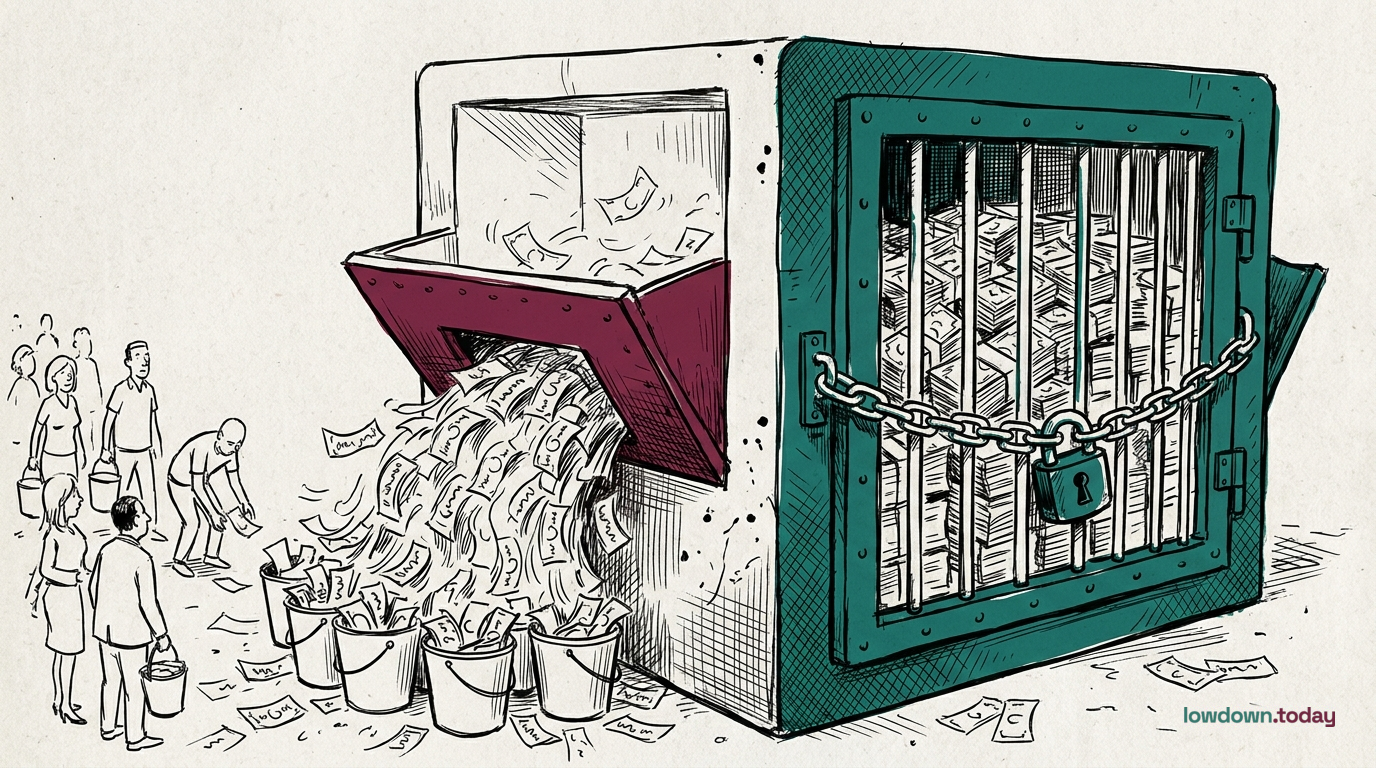
The desk is quiet on election machinery while aligned institutions, courts, DOJ, state legislatures, deliver the same outcomes through their own instruments.
Different Perspectives
Missouri and Secretary of State Denny Hoskins
Missouri and Hoskins, held in contempt by the state's own supreme court on 10 September for prematurely reverting to HB 1, filed against a pause of the 8th Circuit's order restoring the same 2025 map.
Richard von Glahn and People Not Politicians
Von Glahn and People Not Politicians filed emergency application 26A388 on 22 September asking Justice Kavanaugh to pause the 8th Circuit's order restoring the 2025 map, days after Missouri mailed overseas ballots under the 2022 lines. A refusal to pause it would leave those ballots carrying the wrong districts.
Harmeet Dhillon, Justice Department
Dhillon said the department will send about 1,000 election monitors to Nevada, Pennsylvania and Rhode Island in November, calling it "the biggest DOJ election observer effort in history" and citing "67 election-related indictments and convictions" against 13 under the Biden administration.
National Association for the Advancement of Colored People and co-plaintiffs
The NAACP and eight other groups sued DHS in Washington on 18 September to keep ICE away from polling places, citing federal statutes barring armed officers and troops at elections. The suit follows a released 2025 DHS email listing non-English-language voting jurisdictions beside a Justice Department prosecution checklist.
Cook Political Report
Cook wrote that "the amount of money national Republicans have dedicated to this race is a flashing red light for Democrats" when it moved New Hampshire from Lean Democrat to Toss Up on 15 September, citing the NRSC's $5.18m for Sununu. It is the one state where Republican spending and the rating move the same direction.
Democratic Senate strategists
Strategists note the DSCC held a $37.6m cash lead over the NRSC's $18.7m at the end of August, after coordinating just $1.00m of spending itself. One reading holds the committee is banking that cash for the campaign's final weeks rather than matching Republican spending dollar-for-dollar in August.