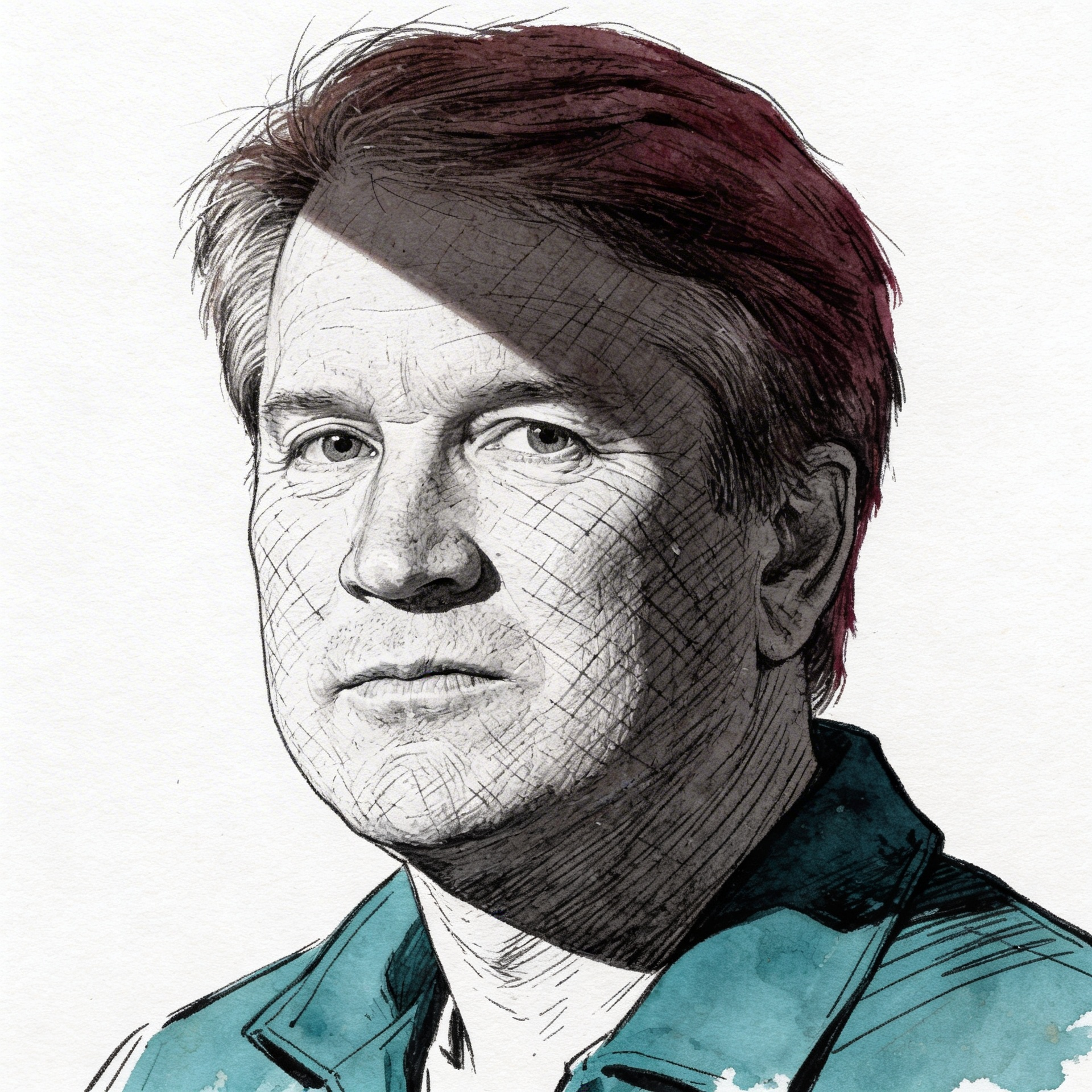
Justice Kavanaugh
US Supreme Court Associate Justice, sitting as Circuit Justice for the Eighth Circuit.
On 30 June, Justice Kavanaugh helped deliver the 6-3 NRSC v. FEC ruling that removed federal caps on coordinated party-candidate spending, reshaping how parties can fund the 2026 midterms.
Last refreshed: 24 September 2026 · Appears in 1 active topic
Will Kavanaugh's NRSC v. FEC signal rewrite who controls campaign money in 2026?
Timeline for Justice Kavanaugh
Mentioned in: Justices keep Missouri on its 2022 map
US Midterms 2026Mentioned in: 8th Circuit puts Missouri on 2025 map
US Midterms 2026Referred the federal-track application to the full Court
US Midterms 2026: Supreme Court stays the Missouri TRODenied Missouri's emergency stay application alone
US Midterms 2026: One justice ends Missouri's map appealRequested a response by noon EDT on 7 September
US Midterms 2026: Missouri takes its map to KavanaughBackground
Justice Kavanaugh is an Associate Justice of the United States Supreme Court and Circuit Justice for the Eighth Circuit. That circuit assignment gives him a defined role in emergency applications from states in the region before matters reach the full Court. On 8 September 2026, he denied Missouri's emergency stay application alone; on 10 September, he referred a separate Missouri application to the full Court.
His public significance extends beyond emergency procedure to constitutional questions that govern elections. The 30 June 2026 NRSC v. FEC decision removed limits on party-candidate coordinated spending, making the Court's campaign-finance doctrine directly relevant to the conduct of federal campaigns.
As a justice, Kavanaugh's influence lies in both written constitutional rulings and circuit-justice decisions made under compressed election timetables. The latter can decide whether a state measure remains in force while wider litigation continues.
Kavanaugh helped remove party spending caps
On 30 June, the Supreme Court struck down federal limits on coordinated spending between political parties and their candidates in NRSC v. FEC, by 6-3. Justice Kavanaugh, identified in the update record as the majority author, placed his campaign-finance reasoning at the centre of the 2026 Senate contest.
The ruling followed the 9 December 2025 argument over limits that had kept party committees and candidate campaigns formally separate. On 30 June, the decision allowed party committees to spend without those federal caps alongside candidates, changing the practical value of coordinated advertising and campaign operations.
Kavanaugh helped remove party spending caps
Why did Brett Kavanaugh strike down coordinated spending caps?
Who is Brett Kavanaugh and how was he appointed to the Supreme Court?
Reference
What does a Supreme Court Circuit Justice do?
Who appointed Brett Kavanaugh to the Supreme Court?
Why did Missouri's congressional map keep changing before the 2026 midterms?
Did the Supreme Court block Missouri's new congressional map?
Who benefits most from the NRSC v FEC ruling?
What did the NRSC v FEC ruling change?
What did Brett Kavanaugh say about party spending limits in NRSC v. FEC?





