Skip to content
You can now search across every topic, entity and event.What's new
Russia-Ukraine War 2026
16JUN

Russia GL-134B extended as Iran GL-U lapses

3 min read
10:25UTC

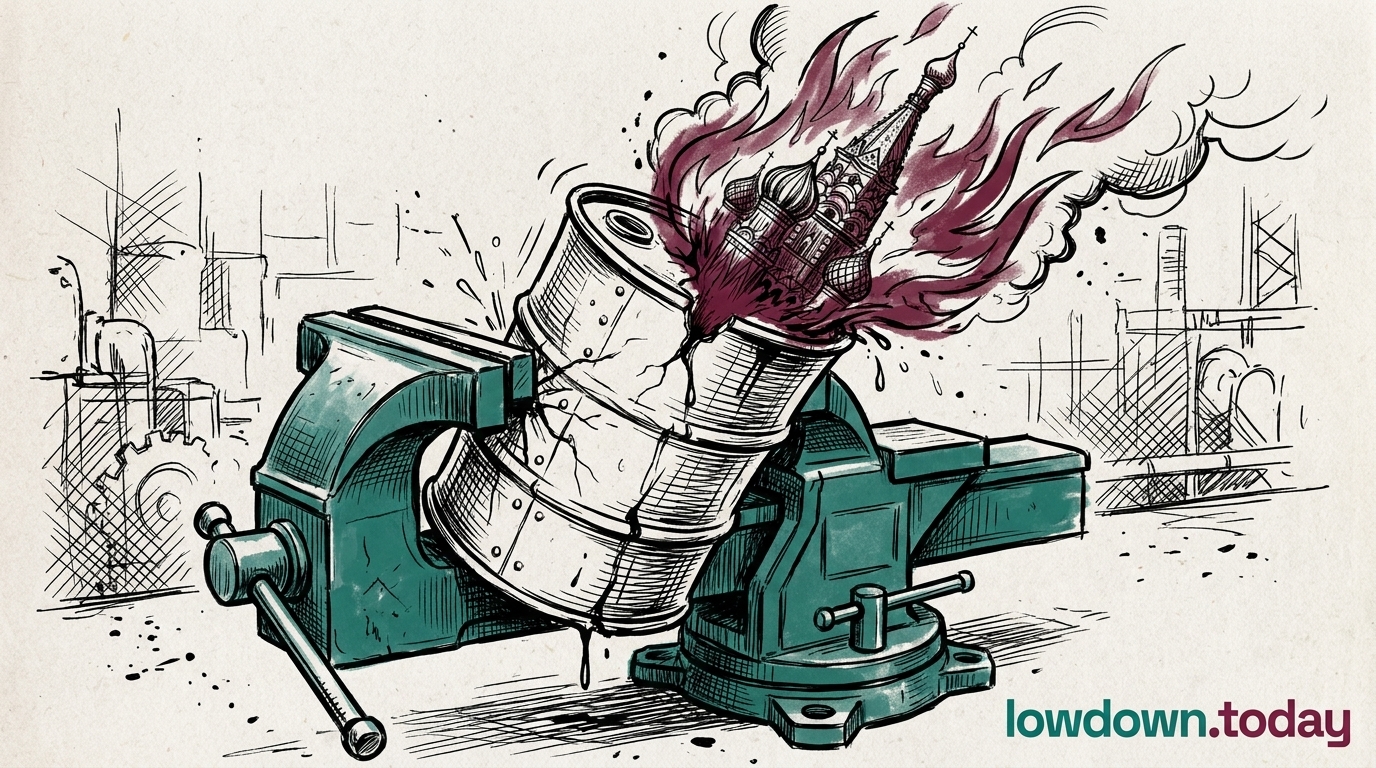
Treasury signed a seaborne-oil waiver for Russia to 16 May on the same Saturday it allowed the parallel Iranian authorisation to expire, producing a Russia-yes, Iran-no asymmetry in signed US policy text.

ConflictDeveloping
Key takeaway

Treasury's 19 April paperwork draws the Russia-yes, Iran-no line into signed policy text for the first time.

The US Treasury extended GL-134B, the OFAC General License authorising Russian seaborne-oil transactions, to 16 May 2026 on the same calendar day Iran's GL-U was allowed to lapse 1. Treasury Secretary Scott Bessent oversees both files; either renewal could have been declined or signed at his discretion. Treasury's choice to sign one and not the other on a single Saturday produced a policy act rather than a scheduling artefact.

Russia's side of the ledger had a readable expiry. GL-134A expired on 11 April and an extension had been widely expected since ; Treasury's silence between 14 April and 19 April made the asymmetry predictable rather than surprising . When Treasury did break silence, it broke it only for Russia. GL-134B now covers Russian seaborne-oil transactions through 16 May; GL-U covers no Iranian tanker past midnight Washington time.

For crude buyers, Saturday's paperwork produces a legally two-tier oil market. An Indian state refiner loading Russian crude this week retains signed cover under GL-134B; the same refiner loading Iranian crude loses it under the GL-U lapse and picks up secondary-sanctions exposure. The instruments governing the two flows are no longer symmetrical, and the asymmetry is now on paper that compliance teams, banks and foreign ministries can read without interpretation.


Deep Analysis

In plain English

Sanctions are legal rules that say 'you cannot do business with country X without special permission.' The US government grants those permissions through documents called General Licenses. On 19 April, the US did two things at the same time. It let Iran's special permission expire ; meaning ships carrying Iranian oil are now operating without legal cover. And it extended Russia's special permission through 16 May, meaning ships carrying Russian oil are still fully legal. Both decisions came from the same department ; the US Treasury ; on the same day. It is the first time US government documents show Iran and Russia being treated this differently at exactly the same moment, written into official text anyone can read.

Deep Analysis
Root Causes

GL-134B's extension to 16 May reflects the Trump administration's Ukraine-theatre calculus: ratcheting Russia energy sanctions during active Ukraine ceasefire diplomacy would remove leverage and signal bad faith to Moscow. Treasury's operational logic is to keep Russia sanctions pressure below the threshold that collapses ongoing talks.

The asymmetry's structural root is that GL-U and GL-134B were on different legal tracks from inception: GL-U was a war-emergency bridge instrument with a hard sunset; GL-134B was a rolling Russia waiver maintained across multiple renewal cycles. The same OFAC desk renewed one and allowed the other to lapse ; a decision that appears in the Federal Register as simultaneous administrative actions taken on the same calendar day.

What could happen next?
  • Precedent

    The first signed Russia-yes Iran-no asymmetry in US sanctions policy text gives trading partners a legally verifiable basis to distinguish their Russian and Iranian crude exposure.

    Immediate · 0.9
  • Consequence

    Countries like India that buy both Russian and Iranian crude face a regulatory wedge: maintaining Russian purchases while scaling back Iranian ones to avoid secondary-sanction exposure.

    Short term · 0.78
  • Risk

    If GL-134B's 16 May extension lapses without renewal while Iran negotiations remain unresolved, both Russian and Iranian crude simultaneously lose US legal cover ; a compound supply shock not yet priced by markets.

    Medium term · 0.62
First Reported In

Update #73 · Russia yes, Iran no: Treasury signs only one waiver

The White House· 19 Apr 2026
Read original
Different Perspectives
Turkey
Turkey
Ankara hosts the NATO summit on 7-8 July, the next Western diplomatic convergence that Russia may target with a mass barrage based on the documented pattern of timing strikes to allied events; Turkey's role as the indispensable logistical intermediary between Kyiv and Moscow gives it standing to broker any ceasefire repair at Zaporizhzhia.
IAEA
IAEA
The IAEA's sixth brokered repair ceasefire at ZNPP collapsed within days of enabling initial work on the 750 kV Dniprovska line, leaving Europe's largest nuclear plant on a single 330 kV backup with 19 total blackouts recorded since the Russian occupation began.
European Union
European Union
The EU delayed the €9.1bn first tranche of its €90bn Ukraine loan on unmet technical conditions, while disbursing a separate €2.8bn Facility payment on 8 June; the G7 sanctions-to-talks linkage now runs parallel to EU enforcement.
United Kingdom
United Kingdom
Britain conducted its first maritime interdiction of the Russian shadow fleet, with Royal Marines seizing the Smyrtos in the English Channel on 14 June, and simultaneously announced a £210m Urenco uranium deal to break Ukraine's dependence on Russian nuclear fuel.
United States
United States
Trump called both Putin and Zelenskyy separately on 14 June, pledged to re-engage on Ukraine now the Iran deal is done, and the G7 tied future Russia sanctions to peace-talk progress, giving Washington leverage over both parties' negotiating posture.
Ukraine
Ukraine
Zelenskyy attended the G7 at Evian and proposed a direct Putin summit while 140,000 households in Kyiv lost power and the Lavra's Dormition Cathedral burned; Metropolitan Epiphanius called it an attack "against history, against Christianity." Kyiv's immediate priority is closing the PAC-3 export gap that left 19 of 34 Iskander-M ballistic missiles unintercepted.


