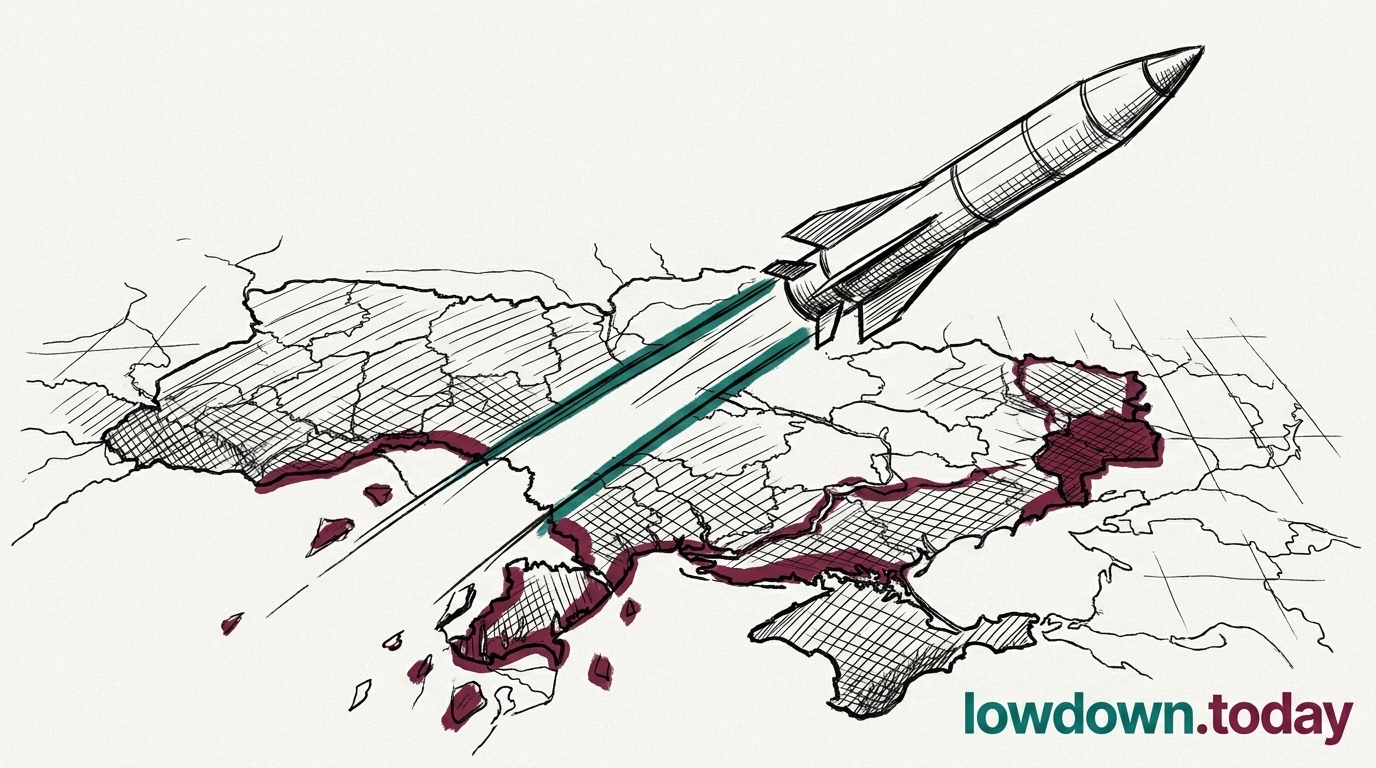
Russia fired two Oreshnik intermediate-range ballistic missiles simultaneously at Ukraine on 24 May. Where the November 2024 and March 2026 single launches carried signalling weight, firing two at once points to production confidence and a shift from demonstration to operational doctrine.
The weapon cannot be intercepted. Oreshnik travels at Mach 10-13 and releases multiple manoeuvring warheads; nothing in Ukraine's inventory, including US-supplied Patriot, can stop it. Kyiv has requested additional Patriots but faces a White House export freeze. The barrage hit 300 sites across every capital district, which suggests targeting of civilian morale as much as military infrastructure.
Poland scrambled fighters during the attack, the closest NATO has come to a direct military response during a Russian strike on Ukraine. The scramble did not change the outcome, but it set a precedent: if Oreshnik debris crosses NATO airspace, the Article 5 consultation threshold becomes a live question.
This is the first operational firing of a ground-launched IRBM in a European theatre since Soviet SS-20s were withdrawn under the 1987 INF Treaty. Russia's 2019 withdrawal from the INF, citing US violations, removed the legal barrier; the dual launch is the operational consequence of that withdrawal. The escalation tracks the front line: ISW recorded Russia's first net monthly territorial loss since August 2024 in early May, and the missile spectacle now substitutes for the ground advance Moscow can no longer deliver.




