Skip to content
Briefings are running a touch slower this week while we rebuild the foundations.See roadmap
Russia-Ukraine War 2026
1JUN

Ukraine kills 65 drone cadets at Snizhne

2 min read
10:39UTC

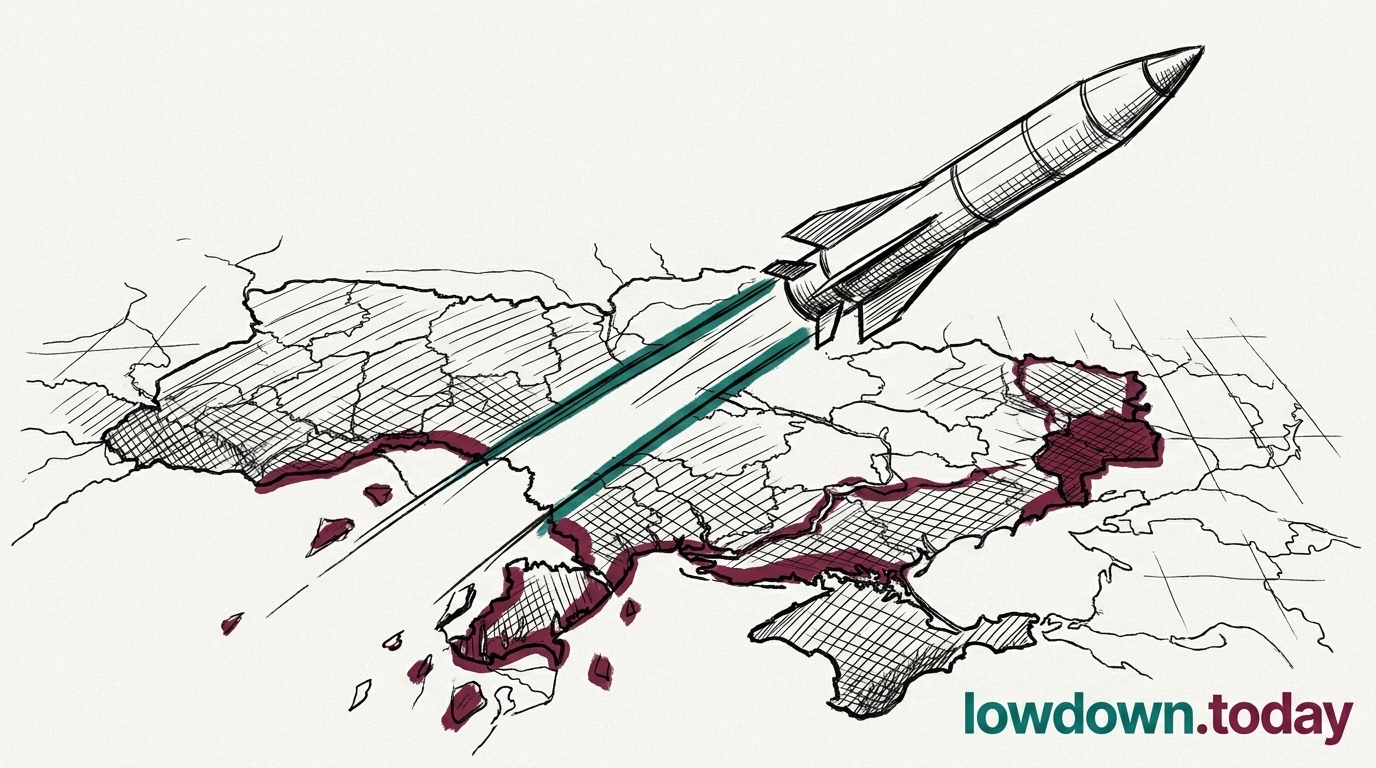
Ukraine's Unmanned Systems Forces destroyed a 2,484 sq m drone training compound in Russian-occupied Snizhne on 20-21 May, killing 65 Sever-Akhmat cadets and one instructor. Russia cited a follow-up strike on Starobilsk as its formal justification for the 24 May Oreshnik barrage.

ConflictDeveloping
Key takeaway

Ukraine hit a Chechen drone school 11 drones; Russia replied with 690 weapons including nuclear-capable IRBMs.

Ukraine deployed 11 drones carrying 100 kg warheads to destroy the Sever-Akhmat regiment's drone training compound in Russian-occupied Snizhne on 20-21 May, killing 65 cadets and one instructor. Russia answered with two nuclear-capable IRBMs and 688 other weapons aimed at a capital city.

The Sever-Akhmat regiment is a Chechen-affiliated unit that has used drone operators as a force-multiplier in Donetsk. Destroying the training pipeline at compound level is a different class of targeting from battlefield drone interdiction.

Russia cited the follow-up Starobilsk strike, not the Snizhne operation, as its formal justification for the barrage. The distinction matters: Starobilsk sits in Luhansk Oblast, which Russia claims as its own territory under annexation. Strikes on annexed land carry different rhetorical weight in Moscow than strikes on occupied Donetsk.

The Snizhne operation followed Ukraine's Syzran refinery strike , which halted roughly 25% of Russian refining; together they put simultaneous pressure on both Russian military training and fuel supply.

Deep Analysis

In plain English

Ukraine's military drone branch sent 11 small drones into Russian-occupied eastern Ukraine on 20-21 May to destroy a training school where Russian soldiers were learning to fly combat drones. The school belonged to a Chechen-affiliated unit called Sever-Akhmat, named after the founder of Chechnya's current ruling family. Ukraine said 65 trainee drone pilots and one instructor were killed. Russia then used a separate strike Ukraine made on another facility in the same region as its stated reason for firing nearly 700 weapons at Kyiv three days later. The two strikes were very different in scale: Ukraine used 11 small drones against military targets; Russia responded with nuclear-capable missiles against a civilian capital.

Deep Analysis
Root Causes

The Sever-Akhmat regiment depends on a continuous supply of trained drone operators to sustain its force-multiplier role in Donetsk. Russian conventional infantry training cannot produce drone specialists at the required rate; dedicated training facilities like the Snizhne compound are a structural bottleneck in Russian drone warfare capacity.

Russia's formal annexation of Luhansk Oblast provides the second structural driver: by citing the Starobilsk Rubikon strike, not the Snizhne operation, as its formal Oreshnik justification, Moscow signals that strikes on annexed territory carry a different escalation threshold in its doctrine than strikes on occupied Donetsk.

Kyiv's drone forces struck in Luhansk Oblast knowing Moscow would treat it as a strike on Russian territory, which gave Russia a more credible retaliation justification than the Snizhne operation alone would have provided.

What could happen next?
  • Consequence

    Russia's Oreshnik response to a proportionate drone strike establishes a new escalation baseline where conventional military targeting triggers IRBM retaliation.

First Reported In

Update #18 · Oreshnik doubles as Russia's front collapses

ISW / Critical Threats· 1 Jun 2026
Read original
Causes and effects
This Event
Ukraine kills 65 drone cadets at Snizhne
Ukraine's precision strike on a drone training facility demonstrates deep-strike capacity against occupation-zone military infrastructure; Russia's response, 11 drones answered with 690 weapons, illustrates the escalation asymmetry now governing the war.
Different Perspectives
China
China
Beijing has not publicly commented on the dual Oreshnik launch. China's declared position of urging restraint and dialogue sits awkwardly alongside its continued economic ties with Russia; the weapons escalation tests whether Beijing's neutrality framing can survive a European IRBM normalisation event.
IAEA
IAEA
Director General Grossi condemned the ZNPP reactor-6 turbine building strike and stated "there should be no attack of any kind from or against the plant." The agency confirmed normal radiation levels but has not resolved attribution; Rosatom CEO Likachev warned the region is "one step closer to an incident."
Turkey
Turkey
Ankara hosted Istanbul Round 2 at Ciragan Palace on 2 June and secured a 1,200-for-1,200 prisoner exchange, consolidating Turkey as the war's sole diplomatic venue after Rubio confirmed US mediation has ended. Erdogan's leverage over both parties grows with each round.
European Union
European Union
EU Ambassador Mathernova answered Lavrov's evacuation demand with "We stay in Kyiv. We stay with Ukraine." The Verkhovna Rada approved the EUR 90bn EU loan on 28 May; the EUR 9.1bn first tranche, the EU's first explicit defence-procurement financing, arrives mid-June.
United States
United States
Rubio declared US mediation stagnated on 22 May and confirmed no talks were occurring, then received Lavrov's evacuation demand three days later without ordering embassy drawdown. Washington's leverage now runs through the GL 134C sanctions cliff on 17 June rather than any active diplomatic channel.
Ukraine
Ukraine
Zelenskyy called Russia's 2-3 day ceasefire counter-offer at Istanbul Round 2 "shortsighted" and submitted a full peace memorandum covering EU membership, international guarantees, phased sanctions relief and frozen-asset reparations. Kyiv's position is that a partial ceasefire freeze aids Russian reconstitution; only an all-domain 30-day pause is acceptable.
