Skip to content
Briefings are running a touch slower this week while we rebuild the foundations.See roadmap
Russia-Ukraine War 2026
1JUN

Kyiv moves the oil war to the Black Sea

2 min read
10:39UTC

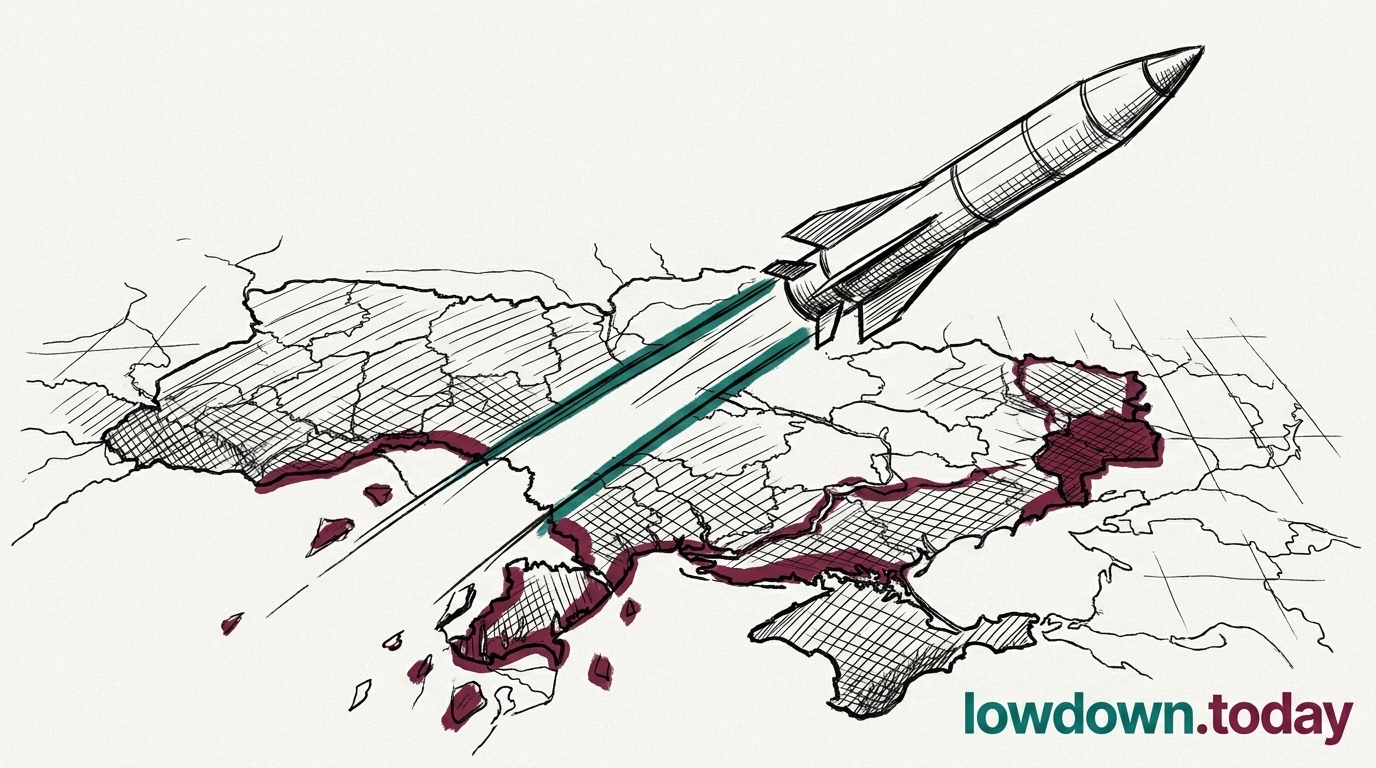
Ukrainian drones struck the Caspian Pipeline Consortium terminal at Novorossiysk on 6 April, extending an anti-oil campaign that had worked the Baltic ports to year-low throughput.

ConflictDeveloping
Key takeaway

Kyiv accepted a diplomatic cost to extend the oil strike map past the Baltic.

Ukrainian drones struck the Caspian Pipeline Consortium terminal at Novorossiysk on 6 April, followed by a hit at Taman 1. The strikes carry the anti-oil fight into terminals that Ukraine's earlier Baltic campaign had left alone. Moscow scrambled to reroute crude through Vysotsk and Taman after Ust-Luga and Primorsk lost capacity in late March.

The Baltic ports are partially back on line. Ust-Luga resumed crude loading on 5 April, but Primorsk berths dropped from ten to four, and combined daily throughput fell to about 115,000 tonnes, a year-low 2. That partial recovery is exactly the dynamic the Iran war already complicated: the Russia-Iran corridor still runs, and Urals hit $123 a barrel earlier in April , offsetting the 43% Baltic volume drop with a price lift Ukraine cannot influence.

The southern expansion carries a different diplomatic risk than the Baltic strikes did. The CPC terminal's Chevron and ExxonMobil shareholders triggered a State Department demarche addressed separately elsewhere in this briefing. Kyiv continued striking after receiving the warning, accepting a commercial-channel diplomatic cost to keep the strike map expanding rather than retreat to Baltic assets with no American interest register.

Deep Analysis

In plain English

Ukraine has been attacking Russia's oil export infrastructure to cut revenue that funds the war. The 6 April strike at Novorossiysk on the Black Sea expanded that campaign beyond the Baltic coast, where Ukraine has been hitting terminals for months. The Baltic terminals have partially recovered: Ust-Luga resumed loading on 5 April, but at year-low throughput. The Black Sea expansion brought the campaign to a terminal partly owned by Chevron and ExxonMobil, which prompted the US State Department to warn Ukraine to stop. This created a direct conflict between Ukraine's military strategy and US energy company interests.

What could happen next?
  • Risk

    Continued Novorossiysk strikes risk triggering US suspension of other forms of military support, creating a forced choice between the oil campaign and broader US assistance.

  • Consequence

    Baltic oil throughput at 115,000 tonnes per day, a year-low, represents a real constraint on Russian export volumes but is partially offset by the Urals price surge driven by the Iran war (ID:2016).

First Reported In

Update #12 · Three narrowings of US support for Kyiv

Kyiv Independent· 11 Apr 2026
Read original
Different Perspectives
China
China
Beijing has not publicly commented on the dual Oreshnik launch. China's declared position of urging restraint and dialogue sits awkwardly alongside its continued economic ties with Russia; the weapons escalation tests whether Beijing's neutrality framing can survive a European IRBM normalisation event.
IAEA
IAEA
Director General Grossi condemned the ZNPP reactor-6 turbine building strike and stated "there should be no attack of any kind from or against the plant." The agency confirmed normal radiation levels but has not resolved attribution; Rosatom CEO Likachev warned the region is "one step closer to an incident."
Turkey
Turkey
Ankara hosted Istanbul Round 2 at Ciragan Palace on 2 June and secured a 1,200-for-1,200 prisoner exchange, consolidating Turkey as the war's sole diplomatic venue after Rubio confirmed US mediation has ended. Erdogan's leverage over both parties grows with each round.
European Union
European Union
EU Ambassador Mathernova answered Lavrov's evacuation demand with "We stay in Kyiv. We stay with Ukraine." The Verkhovna Rada approved the EUR 90bn EU loan on 28 May; the EUR 9.1bn first tranche, the EU's first explicit defence-procurement financing, arrives mid-June.
United States
United States
Rubio declared US mediation stagnated on 22 May and confirmed no talks were occurring, then received Lavrov's evacuation demand three days later without ordering embassy drawdown. Washington's leverage now runs through the GL 134C sanctions cliff on 17 June rather than any active diplomatic channel.
Ukraine
Ukraine
Zelenskyy called Russia's 2-3 day ceasefire counter-offer at Istanbul Round 2 "shortsighted" and submitted a full peace memorandum covering EU membership, international guarantees, phased sanctions relief and frozen-asset reparations. Kyiv's position is that a partial ceasefire freeze aids Russian reconstitution; only an all-domain 30-day pause is acceptable.
