Skip to content
Briefings are running a touch slower this week while we rebuild the foundations.See roadmap
Russia-Ukraine War 2026
22MAY

OFAC SDN round skips mainland refineries again

3 min read
10:57UTC

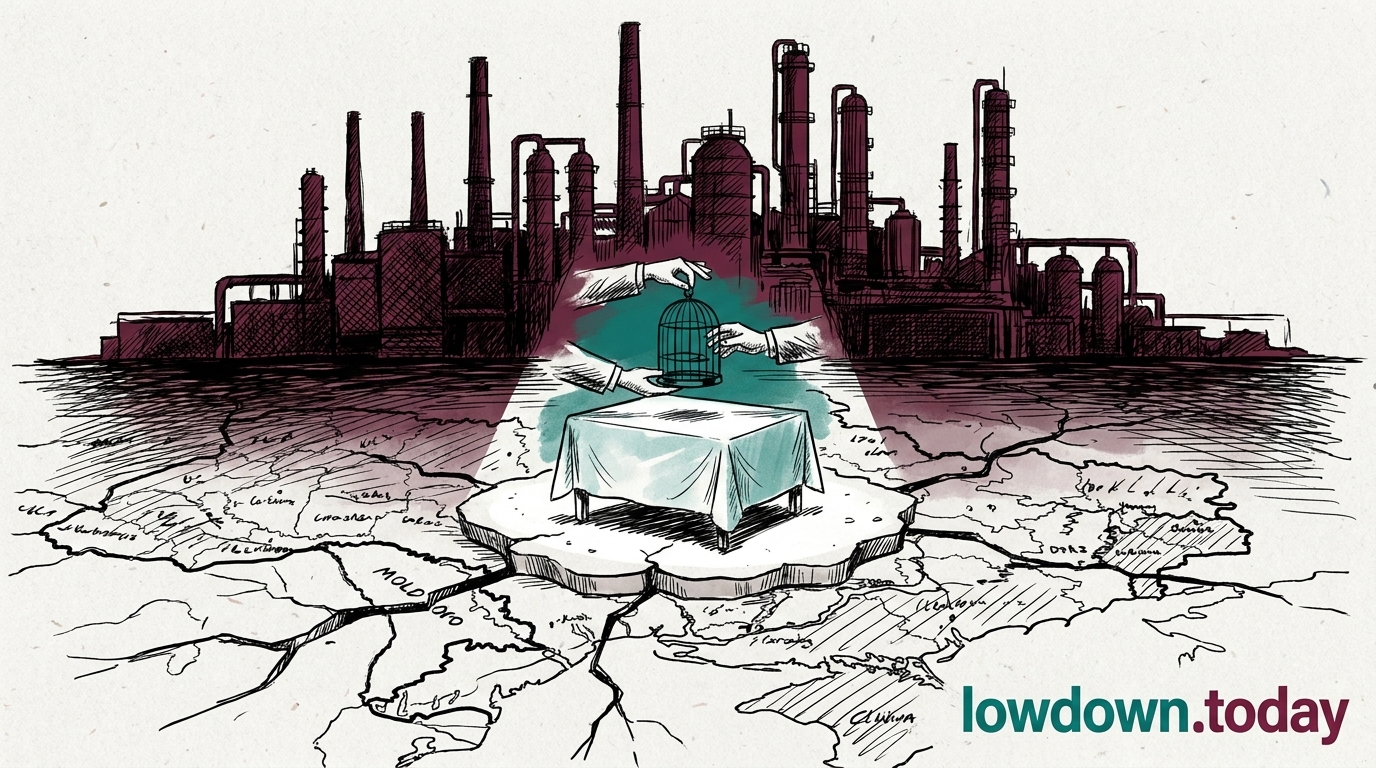
OFAC's 19 May SDN round designated over a dozen individuals across Gaza, Turkey, Spain, Belgium, Jordan and Iran and over two dozen entities across Hong Kong, the UAE, the Marshall Islands, Panama, Liberia, Nevis, China and the UK, naming vessels BRIGHT GOLD, FEADSHIP, LUNA LUSTER, MIDAS and QUANTUM STAR; zero mainland Chinese refineries were added.

ConflictDeveloping
Key takeaway

OFAC keeps sanctioning shells and tankers while leaving the Chinese refinery counterparties untouched.

The US Treasury's Office of Foreign Assets Control published its 19 May 2026 SDN list update naming over a dozen individuals across Gaza, Turkey, Spain, Belgium, Jordan and Iran, and over two dozen entities in Hong Kong, the UAE, the Marshall Islands, Panama, Liberia, Nevis, China and the UK. Designated vessels included BRIGHT GOLD, FEADSHIP, LUNA LUSTER, MIDAS and QUANTUM STAR, OFAC's Recent Actions notice showed 1. Zero mainland Chinese refineries were added, continuing the pattern from the 11, 12 and 15 May rounds.

OFAC's choice of layers tells the structural story. The bureau had already used a 15 May round to designate twelve individuals and entities for routing IRGC oil to China, but targeted Hong Kong-registered shells rather than the mainland refineries actually processing the crude . The 19 May round repeats that geometry across a broader list of flag-of-convenience jurisdictions: Marshall Islands, Panama, Liberia, Nevis. These are the registries where named vessels like LUNA LUSTER and MIDAS are paperwork-resident; the cargo that those vessels carry, however, lands in mainland Chinese ports run by Sinopec and PetroChina subsidiaries, which OFAC's pattern continues to leave outside the sanctions perimeter.

The same morning Washington again declined to put a mainland Chinese refinery on the SDN list, Tehran promoted Speaker Mohammad Bagher Ghalibaf to special China envoy with cross-factional cover, which is the juxtaposition that matters. Iran is formalising the Beijing relationship at the same tempo Washington is structurally avoiding direct confrontation with it. The shell-and-vessel layer OFAC keeps designating absorbs the political pressure to act; the actual cargo flow, and the financial architecture behind it, remains unsanctioned by design.

Deep Analysis

In plain English

The US Treasury Department published a new list of people and companies it has sanctioned for helping Iran sell oil. The list includes several ships with names like BRIGHT GOLD and MIDAS, plus companies registered in Hong Kong, Panama and the Marshall Islands. Notably absent from the list: any Chinese oil refinery. China is the largest buyer of Iranian oil. The US has repeatedly sanctioned the middlemen the shell companies and ships that move the oil without targeting the Chinese refineries that are the actual end customers. That is because China passed a law in May 2026 saying Chinese companies cannot comply with foreign sanctions the Chinese government does not recognise, making direct refinery sanctions politically explosive.

Deep Analysis
Root Causes

The 19 May SDN round's structural avoidance of mainland refineries has a documented legal cause: China's MOFCOM Blocking Rules, enacted 2 May 2026, prohibit Chinese entities from complying with any foreign sanction that is not recognised under Chinese domestic law. Designating a MOFCOM-protected refinery would immediately trigger a Chinese retaliatory measure against US entities operating in China a consequence the Trump administration has deferred since the Beijing summit.

A second driver is the gap between OFAC's extraterritorial reach and the practical enforcement ceiling. OFAC can freeze US-dollar-denominated assets and block dollar-clearing correspondent relationships, but the 19 May designated vessels include several registered in jurisdictions Marshall Islands, Nevis, Liberia that have not co-enforced prior OFAC rounds. Without local-law enforcement, the designations constrain dollar-clearing access but leave physical vessel operations intact.

Escalation

The 19 May SDN round represents financial-system pressure at the intermediate layer, not a strategic escalation. The pattern of refinery avoidance is now a documented structural feature rather than a tactical choice, limiting the round's escalatory significance.

What could happen next?
  • Consequence

    Four consecutive OFAC rounds avoiding MOFCOM-protected mainland refineries has established a de facto Iran-China oil corridor with effective US tolerance, regardless of the administration's stated maximum-pressure posture.

    Immediate · 0.82
  • Risk

    Shell-layer designation without refinery designation creates a regenerating intermediate layer: new shells register in Nevis or Liberia within weeks at minimal cost, maintaining the same oil-routing function.

    Short term · 0.78
  • Precedent

    OFAC's structural avoidance of MOFCOM-protected entities will constrain every future US administration's Iran sanctions toolkit: the carve-out has been demonstrated, and China will defend it in any subsequent sanctions negotiation.

    Long term · 0.7
First Reported In

Update #102 · Iran signs Hormuz toll; Trump posts a cancelled strike

Haaretz· 19 May 2026
Read original
Causes and effects
Different Perspectives
Rafael Grossi, IAEA Director General
Grossi's Update 349 of 7 May recorded a drone strike on ZNPP's radiation monitoring laboratory on 3 May. Rosatom's 17 May public attack on the Secretariat's neutrality degrades the diplomatic ground Grossi needs for the sixth repair ceasefire at day 60 on the single backup line.
Indian Government / Embassy Moscow
The Indian Embassy in Moscow confirmed on 18 May that an Indian national was killed and three hospitalised at a refinery construction site in the 17 May barrage. India is among the largest buyers of discounted Russian crude; the fatality forces a diplomatic protest without changing the purchasing posture.
Recep Tayyip Erdogan, Turkish President
Erdogan met Zelenskyy in Ankara for nearly three hours on 15 May before the Istanbul session, recovering Turkey's 2022 mediator role and reducing Trump's leverage by hosting bilateral talks without Washington in the room. Turkey hosts the NATO Ankara summit on 7-8 July; the Istanbul format gives Erdogan standing at both tables simultaneously.
Viktor Orban / Hungarian Government
Budapest's new cabinet, formed 12 May, holds the institutional veto point on the EU tranche disbursement ahead of the first-half June window. Hungary has previously leveraged EU loan tranches to extract bilateral concessions; the combination of a fresh cabinet and a tight disbursement timeline makes Budapest the single highest-leverage actor in the EU track this fortnight.
European Council / Commission
The Commission is preparing a three-document disbursement package for the 9.1-billion euro first tranche of the EU loan to Ukraine, targeting first-half June, but delivery depends on the Magyar cabinet, which formed on 12 May, not blocking the mechanism. The 20th sanctions package remains in force against Russia.
Donald Trump / US Treasury
Treasury issued GL 134C with a 48-hour gap after GL 134B expired, confirming the waiver series functions as permanent monthly management rather than a wind-down instrument. Washington was absent from the Istanbul room; Treasury Secretary Bessent framed the Cuba carve-out as protecting 'most vulnerable nations', maintaining the fiction that the 30-day bridge has a humanitarian rationale.
