Skip to content
Briefings are running a touch slower this week while we rebuild the foundations.See roadmap
Russia-Ukraine War 2026
24APR

Iran's Hormuz Toll Matures Into Permanent Institution

3 min read
11:21UTC

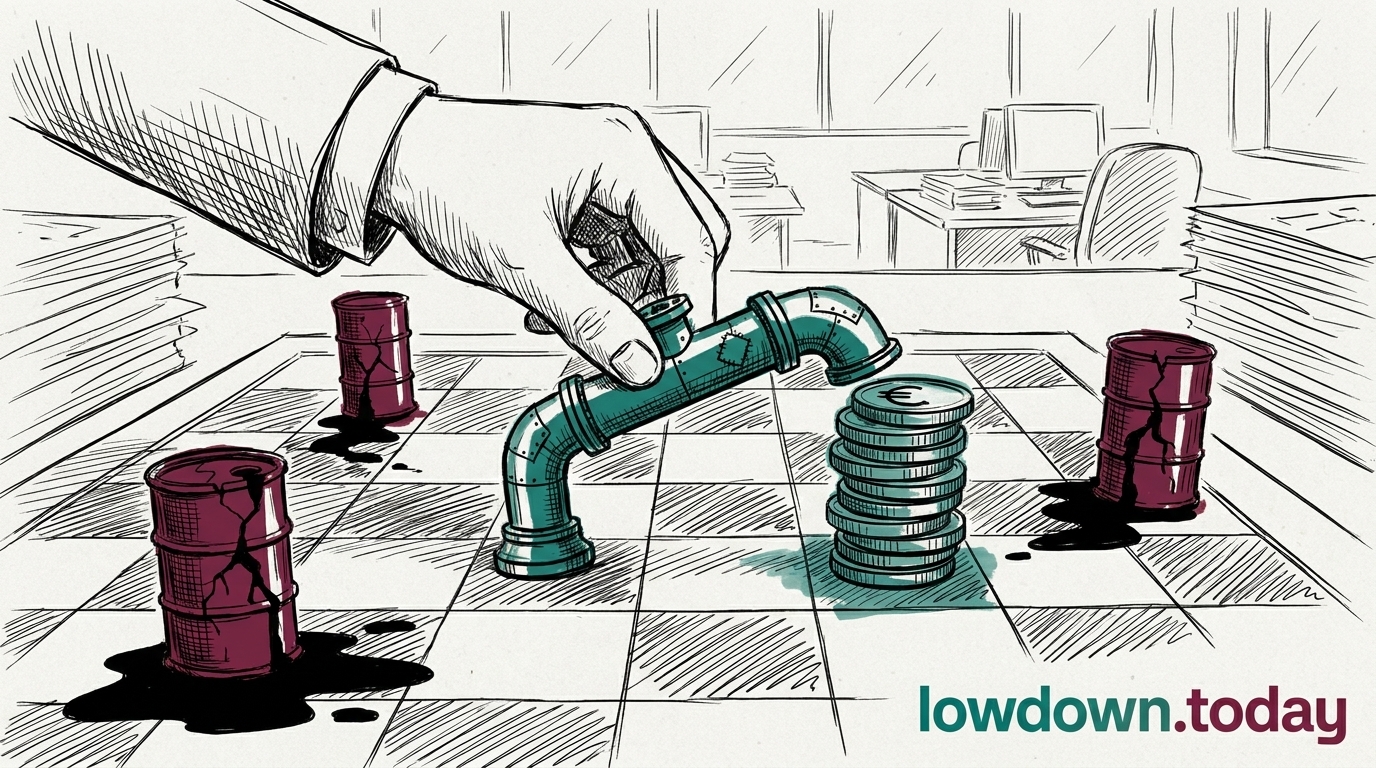
The IRGC built a customs authority, not a blockade. The infrastructure is designed for permanence, and the currency is yuan.

ConflictAssessed
Key takeaway

Iran built a customs authority, not a blockade; the infrastructure is permanent.

the strait of Hormuz toll system has matured from improvised blockade into something closer to a functioning customs authority , . Claims Journal and Bloomberg detail the mechanics: $1 per barrel paid in yuan or stablecoins. A Very Large Crude Carrier carrying two million barrels pays roughly $2 million per transit.

The IRGC's Hormozgan Provincial Command runs background checks on all vessels. Five tiers of country classification determine access. Ships must raise the flag of a deal-country, broadcast passcodes over VHF radio, and receive an IRGC patrol escort through the corridor. Some vessels are required to change flag registration entirely. Pakistan has secured deals for 20 vessels.

Weekly transits have risen to 53, up from 36 the previous week, driven by bilateral exemptions: the Philippines , France, Japan , Oman, and Iraq . But pre-war volume was roughly 966 transits per week. The recovery runs through Tehran's licensing desk. Each new deal normalises Iran's sovereignty claim over international waters. Ali Vaez of the International Crisis Group assessed that Hormuz control is much more potent than even a nuclear weapon. The yuan, not the dollar, is the currency of this chokepoint.

At $1 per barrel, the IRGC's annual revenue from Hormuz tolls, if pre-war volumes resumed, would exceed $7 billion. Even at current reduced volumes, the toll generates hundreds of millions annually. The stablecoin payment option creates a sanctions-resistant financial channel. This is a new revenue stream for the IRGC that exists independently of any ceasefire agreement.

Deep Analysis

In plain English

Iran is not just blocking ships; it has built a full toll system with security checks, country rankings, and digital payments in Chinese currency. Ships pay roughly $2 million each time they pass through. This looks like a permanent operation, not a temporary war measure. It affects the price of everything that moves through the strait, which carries roughly one-fifth of global oil supply.

Deep Analysis
Root Causes

The toll system emerged from a blockade that the US threatened to break but never did (five deadline extensions).

Each unfulfilled threat gave Iran more time to institutionalise its control. The bilateral exemption pattern (Philippines, France, Japan, Oman, Iraq, Pakistan) further normalises the system by giving individual nations incentives to cooperate rather than collectively resist.

Escalation

The toll system is itself an escalation that has been normalised through repetition. Each new bilateral deal raises the cost of reversing the system. The transition from blockade to customs authority represents a permanent alteration of the maritime order in the Persian Gulf that no ceasefire framework currently addresses.

What could happen next?
  • Yuan as the currency of Hormuz transit accelerates de-dollarisation of global energy trade

    months · Assessed
  • Precedent for sovereign toll claims on international waterways could spread to other chokepoints

    years · Suggested
  • Insurance and shipping markets must price IRGC compliance costs into every Hormuz-dependent route

    weeks · Assessed
First Reported In

Update #60 · Pakistan's Ceasefire Plan Fills the Vacuum

Claims Journal / Bloomberg· 6 Apr 2026
Read original
Different Perspectives
EU Council / European Commission
With Orban's veto lifted and Magyar's Tisza government not placing a replacement block, the European Commission is signalling the first 90 billion euro Ukraine loan tranche for late May or early June 2026. Disbursement depends on Magyar's 5 May government formation proceeding to schedule.
Germany
Germany
Russia's Druzhba northern branch transit halt from 1 May removes one of Germany's residual non-Russian crude supply options. The timing compounds Berlin's exposure in the same week Ukrainian strikes drive Russian refinery throughput to its lowest since December 2009.
IAEA / Rafael Grossi
Grossi confirmed the Zaporizhzhia Nuclear Power Plant lost external power for its 14th and 15th times within a single week in late April, with the Ferosplavna-1 backup feeder damaged 1.8 km from the switchyard. He was negotiating a further local ceasefire; the previous IAEA-brokered repair lasted less than a week.
Japan
Japan
Japan authorised direct PAC-3 exports to the United States on 30 April, breaking its post-1945 arms export restrictions to replenish Iran-war-depleted US stockpiles. The White House global Patriot export freeze remains in place; Japan's historic policy shift benefits US readiness without reaching Ukraine.
Kazakhstan
Kazakhstan
Russia's Druzhba northern branch transit halt from 1 May cuts Kazakhstan's access to the German crude market. Astana routes most of its export crude through Russian infrastructure, meaning Moscow's unilateral decision directly constrains Kazakh export diversification despite Kazakhstan's stated neutrality on the war.
Péter Magyar / Tisza Party / Hungary
Magyar targets 5 May for government formation ahead of the 12 May constitutional deadline. Orbán lifted the EU loan veto before leaving office; Magyar supports Hungary's opt-out but has not placed a new veto, leaving the first 90 billion euro tranche on track for late May disbursement.
