
Skip to content
Briefings are running a touch slower this week while we rebuild the foundations.See roadmap
Russia-Ukraine War 2026
24APR

Day 1521: Kyiv's Druzhba gambit unlocks €90bn loan

4 min read
11:21UTC

Ukraine repaired the Druzhba pipeline that it had publicly accepted responsibility for restoring, then struck Russian oil infrastructure upstream in the same 72-hour window. Hungary dropped its veto, the EU Council approved a €90 billion Ukraine loan and a 20th sanctions package, and Russia's Development Minister admitted on the record that Moscow's reserves are 'largely exhausted'.

Key takeaway

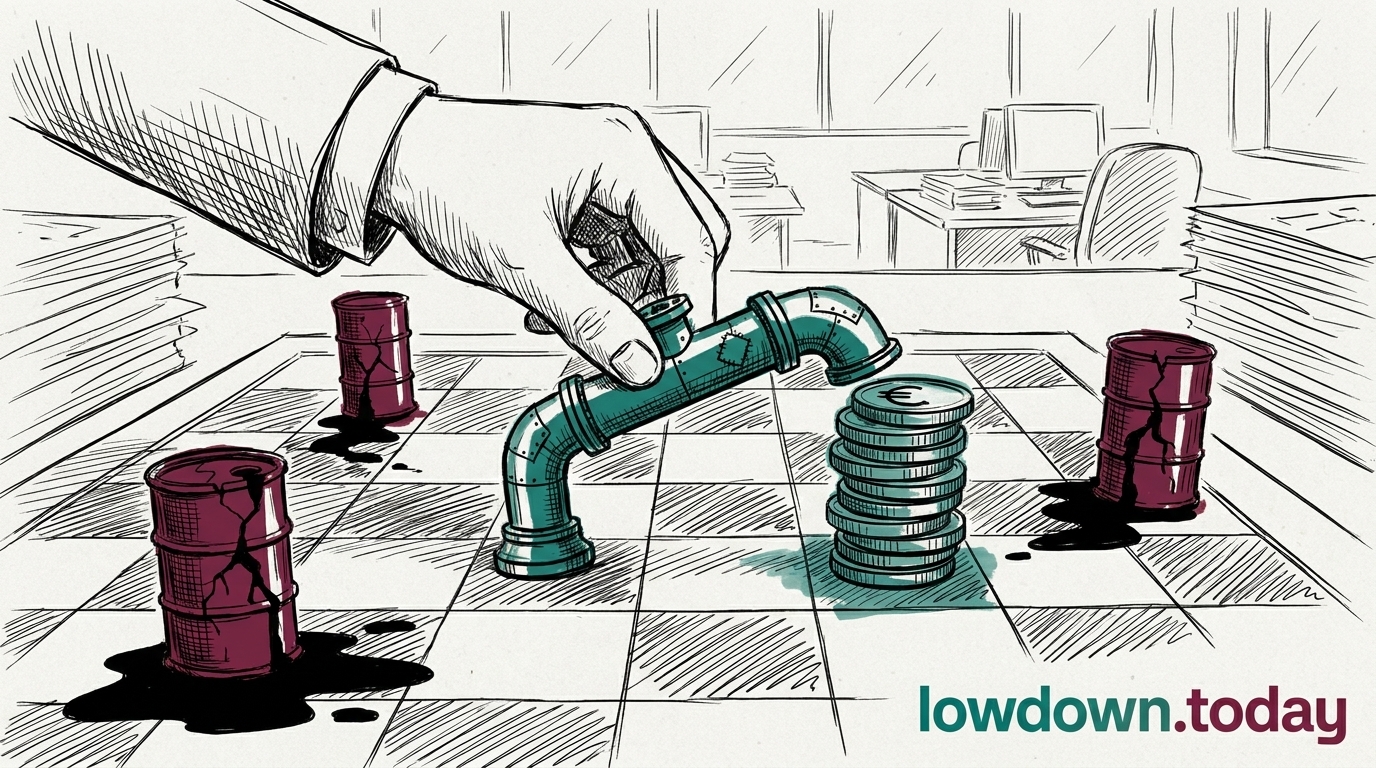
Ukraine turned Druzhba control into leverage, pulling €90 billion through a Hungarian veto while hitting Russian oil upstream simultaneously.

This briefing mapped
Loading map…
Diplomatic
Military
Economic
Infrastructure
Domestic

Zelenskyy reopened the Druzhba pipeline on 21 April; within hours Orbán dropped the veto on Kyiv's €90 billion loan. A physical lever now sits outside Brussels's legal architecture.

Sources profile:This story draws on mixed-leaning sources from France and Qatar
FranceQatar
LeftRight

Ukraine reopened the Druzhba pipeline on 21 April, oil resumed from Belarus at 11:35 on 22 April, Hungary dropped its veto within hours, and the European Council approved a €90 billion loan for Ukraine on 23 April.

Ukraine turned a Russian pipeline repair into a diplomatic instrument, forcing a Hungarian veto break that had held €90 billion in EU funding hostage since February. 

Briefing analysis

The Druzhba pipeline was built in 1964 to carry Soviet crude to Warsaw Pact refineries and has run continuously through every post-Cold War crisis. Until 2026 the pipeline's politics ran through Russia: shutdowns were Russian instruments, whether as price negotiation (2003, 2007) or compliance enforcement. The 27 January 2026 Russian drone strike on the Brody hub in western Ukraine was the first time the Druzhba had been cut by action inside Ukrainian territory. The 21-22 April sequence is the first time Ukraine has used the pipeline's restoration as a diplomatic card. The instrument is the same; the hand on it is not.

Ukraine's special-operations drone unit struck three segments of Russia's crude chain between 20 and 22 April: a dispatch node at Samara, the Tuapse export refinery, and the Gorky pumping station on the Druzhba trunk.

Sources profile:This story draws on centre-left-leaning sources from Qatar
Qatar

SSU Alpha drones struck the Samara crude dispatch station at Prosvet on the night of 20-21 April, destroying five 20,000 m³ crude storage tanks. Ukrainian drones also hit the Tuapse refinery on 20 April and struck the Gorky pumping station near Nizhny Novgorod after Druzhba flow resumed.

Ukraine extended its anti-oil campaign from Baltic terminals to inland and Black Sea infrastructure in the same 72 hours it held the Druzhba pipeline open for European diplomacy. 

Sources:Al Jazeera

The European Council adopted its 20th sanctions package on 23 April, naming 120 individuals and entities, seven Russian refineries and 46 shadow-fleet vessels, and triggering the anti-circumvention tool against Kyrgyzstan for the first time.

Sources profile:This story draws on neutral-leaning sources

The EU's 20th sanctions package, adopted on 23 April, designated 120 new individuals and entities, seven Russian refineries, 46 additional shadow-fleet vessels bringing the total to 632, imposed a blanket ban on Russian and Belarusian crypto assets, and activated the anti-circumvention tool against Kyrgyzstan for the first time.

The EU's largest single sanctions round in two years activates a new anti-circumvention tool against a third country and imposes the first blanket ban on Russian crypto-asset providers. 

Sources:EU Council

Russia's Economic Development Minister Maxim Reshetnikov told Meduza on 17 April that Moscow's internal reserves are "largely exhausted". The portfolio supposed to produce growth is explaining its absence.

Sources profile:This story draws on mixed-leaning sources from Latvia and United States
LatviaUnited States
LeftRight

Russian Economic Development Minister Maxim Reshetnikov told Meduza on 17 April that Moscow's internal reserves are 'largely exhausted', two days after Vladimir Putin publicly blamed 'seasonal factors' for missed macroeconomic indicators. The federal budget deficit reached 3.45 trillion roubles in January-February alone, Q1 oil tax revenue halved year-on-year, and VAT was raised from 20% to 22% in January.

A serving Russian minister publicly contradicted Putin's framing of the economy as seasonally weak, a governance signal historically precedes rather than lags hard policy shifts. 

Sources:Meduza·Fortune

Carnegie put numbers on a paradox this week: Ukrainian strikes cut Russian crude exports by 33% between 25 March and 11 April, yet post-attack weekly revenues ran 62% above late February because the Iran conflict drove global prices higher.

Sources profile:This story draws on centre-leaning sources from United States
United States
LeftRight

Carnegie analysis published in April quantified that Ukrainian strikes cut Russian crude exports from 5.2 million to 3.5 million barrels per day between 25 March and 11 April, a 33% volume cut, while the Iran conflict drove global prices higher so that post-attack revenues ran 17% below the preceding two weeks but 62% above late February.

The Iran conflict's price spike is currently offsetting roughly two thirds of the revenue loss Kyiv's strike campaign engineered, linking two theatres Moscow cannot control. 

The UK's Chief of the Defence Staff confirmed Whitehall is rebuilding the Cold War Government War Book, citing the Iran conflict as a driver alongside Ukraine. Three days later the MoD hosted 30 nations at Northwood to plan the Strait of Hormuz.

Sources profile:This story draws on mixed-leaning sources from United Kingdom and United States
United KingdomUnited States

Air Chief Marshal Sir Richard Knighton, the UK's Chief of the Defence Staff, announced on 10 April that Britain is rebuilding the Government War Book. The Ministry of Defence hosted a 30-nation Strait of Hormuz military planning conference at Permanent Joint Headquarters Northwood on 22 April, co-chaired by Defence Secretary John Healey with France, covering mine clearance and freedom of navigation.

Britain is reactivating a Cold War civil mobilisation framework while its operational headquarters runs an Iran scenario, revealing which theatre Whitehall is actually planning for. 

Germany published its first-ever standalone military strategy on 22 April, naming Russia the "biggest and most immediate threat" and setting a 2029 readiness deadline. Active Bundeswehr strength is planned to grow from 185,420 to 260,000.

Sources profile:This story draws on neutral-leaning sources from United States
United States

German Defence Minister Boris Pistorius published Germany's first-ever standalone military strategy on 22 April, naming Russia as the 'biggest and most immediate threat', setting a 2029 readiness deadline for large-scale conflict, and planning to grow active military strength from 185,420 to 260,000 by the mid-2030s and reserves from 60,000 to 200,000.

Berlin's first standalone military strategy sets a 2029 Bundeswehr readiness deadline for large-scale conflict and puts a doctrinal Russia-facing frame around a force expansion already funded. 

Sources:Defense News

Europe's largest nuclear plant lost external power for the fourteenth and fifteenth times of the war around 17 April, days after an IAEA-mediated ceasefire had restored the main 750 kV feeder.

Sources profile:This story draws on neutral-leaning sources from Austria
Austria

Zaporizhzhia Nuclear Power Plant lost all external power for the fourteenth and fifteenth times of the war in the same week around 17-22 April. The main 750 kV Dniprovska line was repaired via an IAEA-mediated local ceasefire then lost again. Repair crews found additional damage on the 330 kV Ferosplavna-1 backup feeder 1.8 kilometres from the switchyard. As of 22 April, one external line was running.

Europe's largest nuclear plant registered its 14th and 15th external power losses of the war within days of an IAEA-brokered repair, with a backup feeder damaged 1.8 kilometres from the switchyard. 

Gerasimov claimed "full" occupation of Luhansk Oblast on 21 April, citing 1,700 square kilometres seized in 2026. ISW's open-source geolocations verify 340 square kilometres and a net territorial loss since 1 March.

Sources profile:This story draws on centre-leaning sources from Ukraine
Ukraine
LeftRight

Russian Chief of the General Staff Valery Gerasimov claimed on 21 April that Russia had 'fully completed' the occupation of Luhansk Oblast, citing 1,700 square kilometres seized in 2026 across eighty settlements. The Institute for the Study of War verifies roughly 340 square kilometres, no control of Lyman, and a net territorial loss since 1 March.

A four-time false filing is no longer an operational claim; it is a domestic audience product paired with a verified territorial loss. 

The Ukrainian General Staff recorded 9,096 Russian kamikaze drones on 22 April, the highest single-day figure of the war, alongside 234 guided bombs, 73 airstrikes and 3,231 shelling attacks.

Sources profile:This story draws on neutral-leaning sources from Ukraine (includes Ukraine state media)
Ukraine

The Ukrainian General Staff recorded 9,096 Russian kamikaze drones, 234 guided aerial bombs, 73 airstrikes and 3,231 shelling attacks on 22 April, a single-day war-high figure. Russia lost 1,140 personnel on the day; cumulative Russian military deaths reached 1,321,450. The UN Security Council's 20 April briefing put March 2026 civilian casualties at 211 killed and 1,206 injured, a 49% increase on February.

The war-high single-day drone volume on 22 April is roughly thirty times the 324-drone barrage that made international headlines a week earlier. 

Péter Magyar's Tisza party confirmed the new Hungarian National Assembly convenes on 9 May, with a "government of experts" targeted for the first week of May. Hungary, Slovakia and the Czech Republic were locked out of the EU's €90 billion borrowing mechanism.

Sources profile:This story draws on centre-leaning sources from France
France
LeftRight

Péter Magyar announced a 'government of experts' and confirmed the new Hungarian National Assembly will convene on 9 May with a constitutional deadline of 12 May. Hungary, Slovakia and the Czech Republic were excluded from the EU joint borrowing mechanism for the €90 billion loan. Magyar's MEPs voted against the loan in Strasbourg and his platform commits Hungary to a referendum on Ukraine's EU accession.

The disbursement timeline for the €90 billion loan now runs on a Budapest cabinet calendar rather than a Brussels one, even as the veto has been lifted. 

Sources:Euronews
Closing comments

Direction: sideways-to-up, with a specific Hormuz-contingent trip-wire on the fiscal axis. The 9,096-drone day on 22 April is not a prelude to a ground offensive; ISW's verified 340 square kilometres of net 2026 territorial gain against Gerasimov's claimed 1,700 confirms the strike tempo is strategic signalling and attrition, not breakthrough preparation. The military trajectory is grinding continuity. The fiscal axis is the mechanism that could shift the direction. Carnegie's April quantification shows Ukrainian strikes cut Russian crude exports from 5.2 million to 3.5 million barrels a day between 25 March and 11 April, but the Iran conflict kept weekly revenues only 17% below the preceding two weeks rather than the 33% volume cut would otherwise imply. If the Northwood 22 April planning conference produces a working Hormuz freedom-of-navigation coalition that reopens the strait in May or June 2026, global oil prices fall, the Iranian subsidy to Moscow's strike losses disappears, and Reshetnikov's "largely exhausted" reserves face the pressure without the cushion. The named decision hinge is Péter Magyar's cabinet formation timeline. Hungary, Slovakia, and the Czech Republic were excluded from the EU's joint borrowing mechanism. Magyar's Tisza Party won 138 of 199 seats on 12 April; the new National Assembly convenes 9 May, with a mid-May cabinet target. Magyar's MEPs voted against the loan in Strasbourg, and his platform commits Hungary to a national referendum on Ukraine's EU accession. The veto is technically lifted; the disbursement question past mid-May depends on a Budapest cabinet that has not yet been formed.

Different Perspectives
Zelenskyy and the Ukrainian government
Zelenskyy restored Druzhba flow on 21 April, then authorised SSU Alpha strikes on Samara crude storage the same night, holding both moves simultaneously. The pairing signals that pipeline access is a card Kyiv will play again, not a concession it has made.
Hungary: Orbán caretaker and Magyar incoming
Orbán dropped the veto within hours of Druzhba oil resuming on 22 April, his position already untenable after Tisza's 12 April landslide. Magyar's incoming government targets cabinet formation in the first week of May; his MEPs voted against the EU loan in Strasbourg and his platform commits Hungary to a national referendum on Ukraine's EU accession.
Kremlin and Putin versus Reshetnikov
Putin told his government on 15 April that economic shortfalls reflected seasonal factors; two days later his own Development Minister told Meduza the reserves are 'largely exhausted' and conditions 'genuinely significantly more difficult'. Gerasimov filed the fourth iteration of his Luhansk-fully-seized claim three days before the EU loan vote; ISW verified one fifth of the area claimed.
UK government — Starmer, Healey, and the defence establishment
Healey co-chaired a 30-nation Hormuz planning conference at Northwood on 22 April while the War Book revival and the £900 million Apache-Chinook contract ran in parallel. General Sir Richard Barrons told CNBC the army can 'frankly do one very small thing'; Lord Robertson accused the government of 'corrosive complacency' atop a £28 billion funding gap.
Boris Pistorius and the German government
Pistorius published Germany's first standalone military strategy on 22 April, naming Russia the 'biggest and most immediate threat' and setting 2029 as the Bundeswehr's readiness deadline for large-scale conflict. The document, operational follow-on to the January debt-brake removal, commits active strength to rise from 185,420 to 260,000 and reserves from 60,000 to 200,000.
EU Commission and Council
The EU Council approved the €90 billion Ukraine loan and 20th sanctions package on 23 April, excluding Hungary, Slovakia, and the Czech Republic from joint borrowing. The Kyrgyzstan anti-circumvention activation and blanket ban on RUBx and the digital rouble extend enforcement into corridors the previous nineteen rounds left largely intact.
