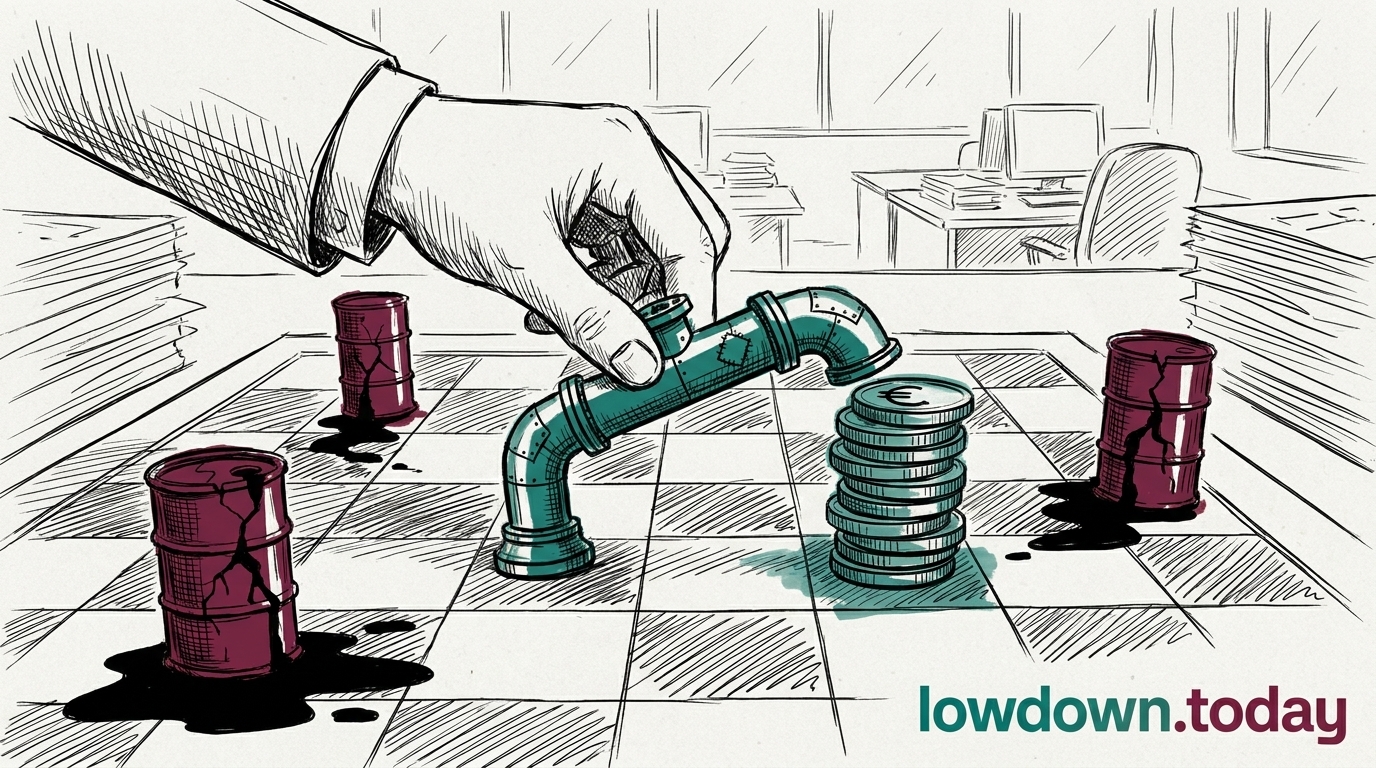
SSU Alpha, the Ukrainian Security Service's special operations drone unit, struck the Samara crude dispatch station at Prosvet overnight on 20 to 21 April, destroying five crude storage tanks of 20,000 cubic metres each1. Ukrainian drones hit the Tuapse refinery in Krasnodar Krai on Monday 20 April, and Kyiv Post reported a further strike on the Gorky pumping station near Nizhny Novgorod after Druzhba flow resumed on Wednesday 22 April. The three targets sit at different segments of the Russian crude chain: an inland dispatch node, a Black Sea export refinery, and a pipeline pumping station on the Druzhba trunk itself.
The campaign geography has widened. The Baltic terminal strikes in late March cut Russian crude exports by 43% in one week, and Ukrainian operators paid a diplomatic cost to extend the target map into the Black Sea after the CPC Novorossiysk hit in early April. Samara pushes the strike envelope deeper into Russian territory; Gorky places a Ukrainian drone on the same Druzhba pipeline whose southern leg Kyiv had just repaired to unlock the €90 billion EU loan. Tuapse was designated in the EU 20th sanctions package three days after the strike, one of seven Russian refineries added to the list.
CEPA, citing RUSI research, had assessed Ukraine's 2025 strike campaign delivered cumulative damage of $863 million against roughly $189 billion in annual Russian oil revenue, a 0.46% base. The 20-21 April strikes do not change that arithmetic on their own. What they change is the operational signal: SSU Alpha reached Samara, struck the Druzhba at both ends within 48 hours of flow resuming, and timed the strikes to land inside the same news cycle as the 23 April EU Council vote. The five destroyed Prosvet tanks demonstrate reach, not revenue impact.




