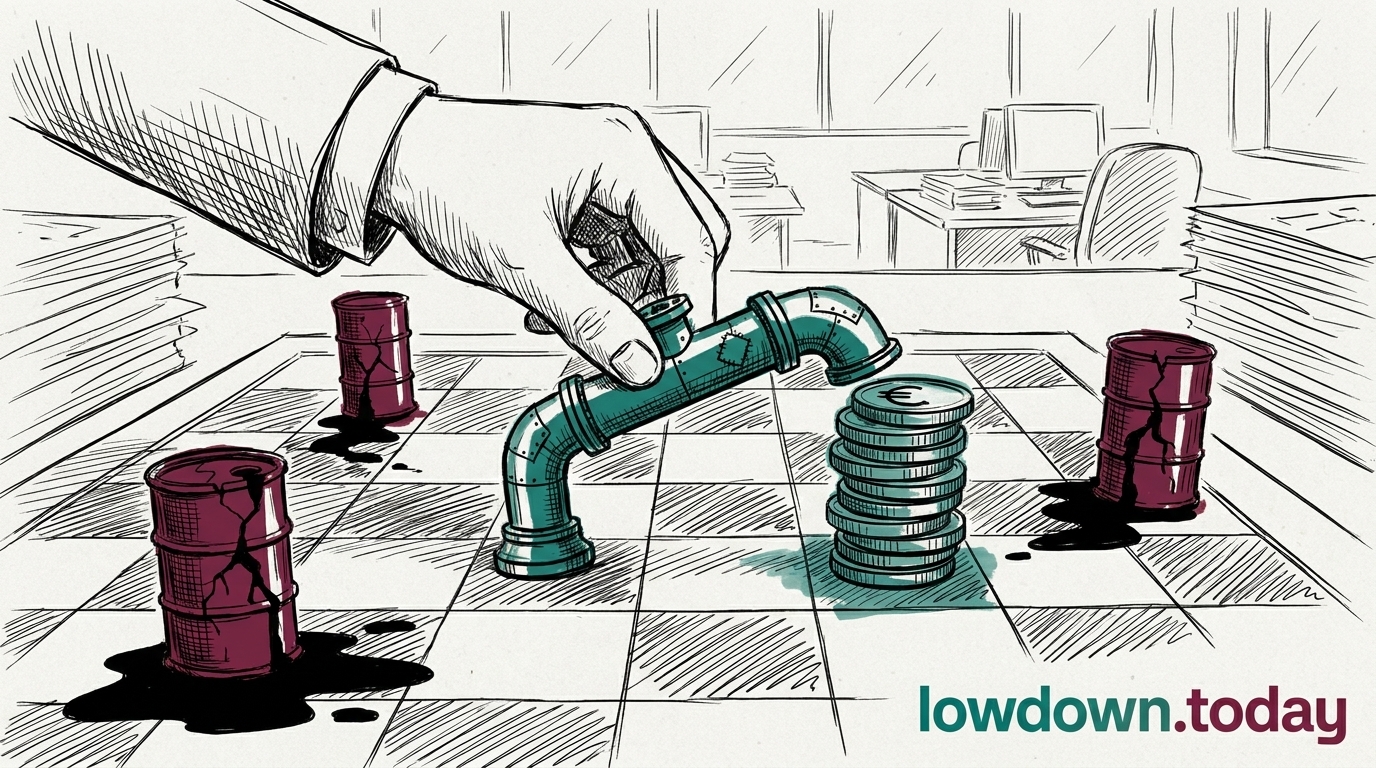
The European Council adopted its 20th sanctions package on Thursday 23 April, designating 120 new individuals and entities, seven Russian refineries, 46 additional shadow-fleet vessels bringing the sanctioned fleet total to 632, a blanket ban on transactions with Russian and Belarusian crypto-asset providers, and the first-ever activation of the anti-circumvention tool against Kyrgyzstan1. The seven refineries named are Tuapse, Komsomolsk, Angarsk, Achinsk, Ryazan, Afipsky and Lukoil's Usinsk plant. Two producers, Bashneft and Slavneft, sit alongside them. Transaction bans extend to twenty Russian banks.
The novel parts sit further out from the energy core. The crypto ban covers the RUBx rouble-pegged stablecoin and the digital rouble, closing a channel Russian counterparties had used to settle sanctioned transactions off the SWIFT rails. Sixteen entities in China, the UAE, Uzbekistan, Kazakhstan and Belarus are listed for shipping dual-use components into Russia's military-industrial base. The Kyrgyzstan activation targets the systematic transhipment of EU machine tools and telecoms gear into Russian drone and missile production lines, a route documented across successive packages but never before sanctioned with the anti-circumvention instrument the EU added for this purpose.
The package builds directly on Treasury's 16 April SDN redesignation of Rosneft and Lukoil, which had already closed the dollar-clearing channel for Russia's two largest oil producers. Brussels is layering European sanctions on top of an American cliff that now runs to 29 October for Lukoil's non-Russian retail network. What the 20th package adds is enforcement at the periphery: shadow-fleet insurers, third-country transhippers, crypto providers. The commercial enforcement architecture Kyiv reinforced this week with the Druzhba move now runs through two jurisdictions at once.




