The US Centers for Disease Control and Prevention (CDC) published modelling on Friday 5 June putting the Bundibugyo Ebola outbreak's basic reproduction number (R0, the average number of people each case infects) at 2.51, and estimating that the spillover which started it occurred around 19 February1. The CDC is the United States' principal federal public-health agency; it released the projections through its Morbidity and Mortality Weekly Report (MMWR), its flagship epidemiological journal. Bundibugyo is one of the rarer Ebola species, named for the Ugandan district where it was first isolated in 2007, and the 2026 DRC and Uganda outbreak is the largest on record for it.
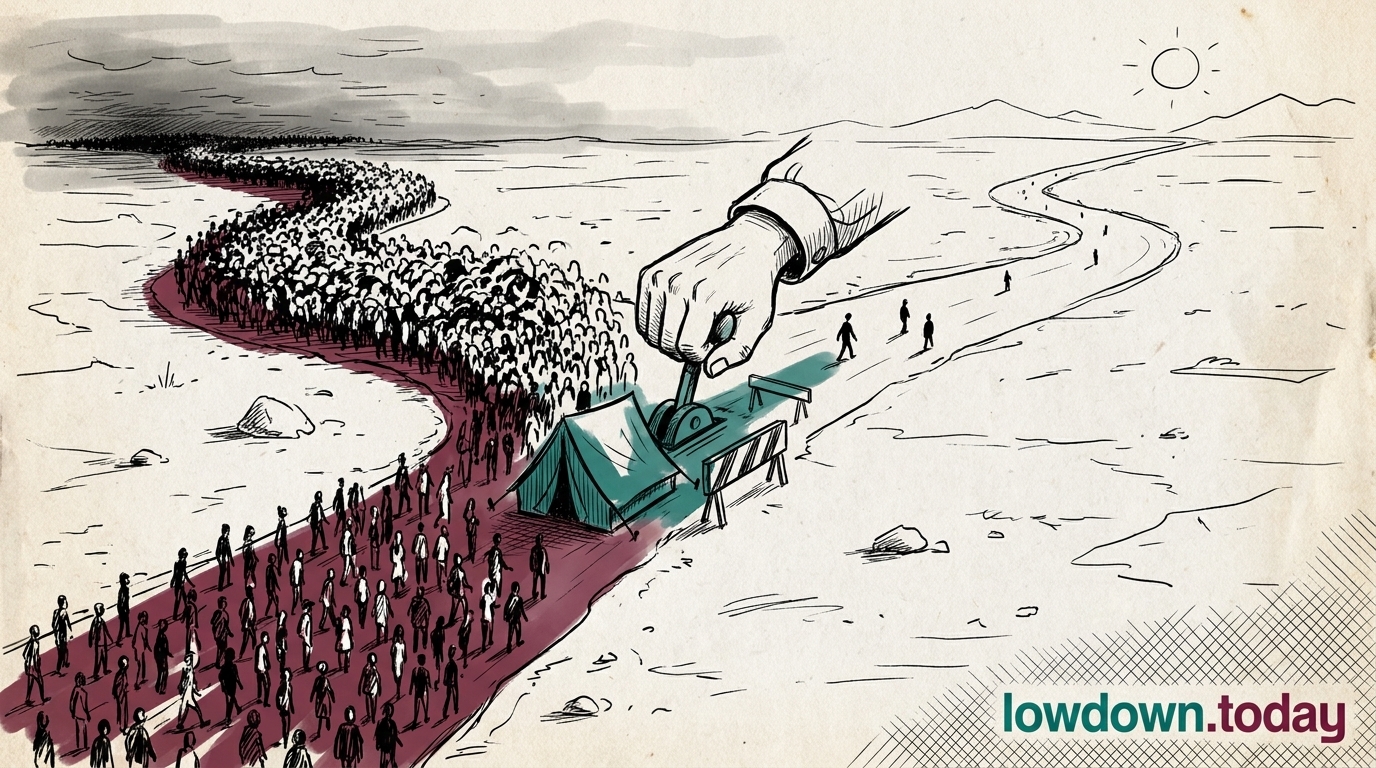
The fork in the model matters more than the R0. At the current patient isolation rate of roughly 20%, 65% of the model's simulation runs cross 20,000 cases by 22 August, approaching the scale of the 2014 to 2016 West Africa epidemic. Lift isolation to 70% and that worst case collapses to a 1% tail, with 90% of runs projecting fewer than 2,000 deaths. One controllable variable, the isolation rate, decides which of those two futures the outbreak follows.
That R0 of 2.51 sits below the 2014 Zaire-ebolavirus estimates of roughly 1.5 to 2.5 at peak, yet the projection runs worse, because isolation rather than intrinsic transmissibility is the binding control, and isolation is failing where the state apparatus is thin. The model was computed against a corrected baseline: WHO had carried 1,040 cases in late May before clearing its laboratory backlog and switching to confirmed-only figures. We lead on the projection and the correction rather than a raw count, because the counting method itself had inflated the earlier figure.



