Skip to content
Briefings are running a touch slower this week while we rebuild the foundations.See roadmap
Pandemics and Biosecurity
9JUN

WHO cuts the count, cases keep climbing

3 min read
09:58UTC

WHO recalibrated the Bundibugyo headline count on 8 June, cutting suspected cases from around 1,000 to 116 and reporting 534 confirmed; the confirmed line is still rising fast.

ScienceDeveloping
Key takeaway

The headline number fell to 534, but confirmed DRC cases rose 321 to 515 in five days.

The World Health Organization (WHO) recalibrated the Bundibugyo Ebola headline count in its 8 June outbreak notice, cutting suspected cases from around 1,000 to 116 and moving to a confirmed-only basis: 534 confirmed cases and 93 deaths, a CFR (case-fatality ratio, the share of confirmed cases WHO die) of 17.4% 1. WHO is the United Nations health agency that declares public-health emergencies and publishes the Disease Outbreak News bulletins this count appears in. The earlier briefing carried 1,040 cases ; WHO has since worked through a testing backlog and reclassified most suspected cases as either confirmed or as other febrile illness.

That drop from 1,040 reflects method, not improvement. The residual of just 116 suspected cases suggests most of the cleared backlog was never Ebola, which sharpens the confirmed signal rather than softening it. Readers comparing today's 534 with the prior 1,040 will read a fall where the confirmed trajectory is climbing: DRC (the Democratic Republic of the Congo) confirmed cases rose from 321 to 515 in five days, with Uganda accounting for the other 19.

That five-day jump of 194 cases is the line to hold, not the lower headline. The CDC's modelling, published the same week, was calculated against this corrected confirmed-only baseline rather than the inflated total, which is why the two developments are methodologically linked: the count correction is what the reproduction-number estimate rests on.

Deep Analysis

In plain English

When an Ebola outbreak is first detected, health workers list anyone with fever and other symptoms as a 'suspected case' while they wait for laboratory test results. This one had about 1,000 suspected cases on the books. When WHO worked through the testing backlog , the pile of samples waiting to be processed , most turned out not to be Ebola at all. The real count of confirmed Ebola cases now stands at 534. That sounds like good news, but it isn't: the confirmed count rose by 194 in just five days in the Democratic Republic of the Congo alone, and there are still thousands of contacts being traced. The 17.4% death rate among confirmed cases means roughly one in six people who test positive for this strain of Ebola does not survive.

Deep Analysis
Root Causes

The testing backlog that required this revision accumulated because Ituri's reference laboratory network was not scaled to a 500-plus confirmed-case outbreak. The INRB Bunia sub-unit has a throughput constraint that forced WHO to hold samples until capacity expanded , a structural gap in DRC's laboratory infrastructure that the ARILAC programme (launched 6 May with Africa CDC) is designed to address over a four-year horizon, not in the current response window.

The 1,040-to-534 recalibration also reflects a positive signal obscured by the headline: the majority of the ~900 suspected cases that were cleared tested negative, confirming that the community fever burden in Ituri is not entirely Ebola. This has clinical triage value but was not foregrounded in the WHO communication.

What could happen next?
  • Meaning

    The confirmed-only recalibration provides a cleaner epidemiological baseline, but the +194 DRC confirmed cases in five days shows the trajectory has not improved since DON605 (ID:3822) , the numerics changed, the outbreak dynamics did not.

  • Risk

    The North Kivu 64% CFR anomaly (25 cases, 16 deaths) remains unexplained and may indicate under-ascertainment of cases in that province , if so, the confirmed total understates the true outbreak size in the M23-controlled east.

First Reported In

Update #6 · Ebola outbreak gets an R0, and a fork

World Health Organization· 9 Jun 2026
Read original
Causes and effects
This Event
WHO cuts the count, cases keep climbing
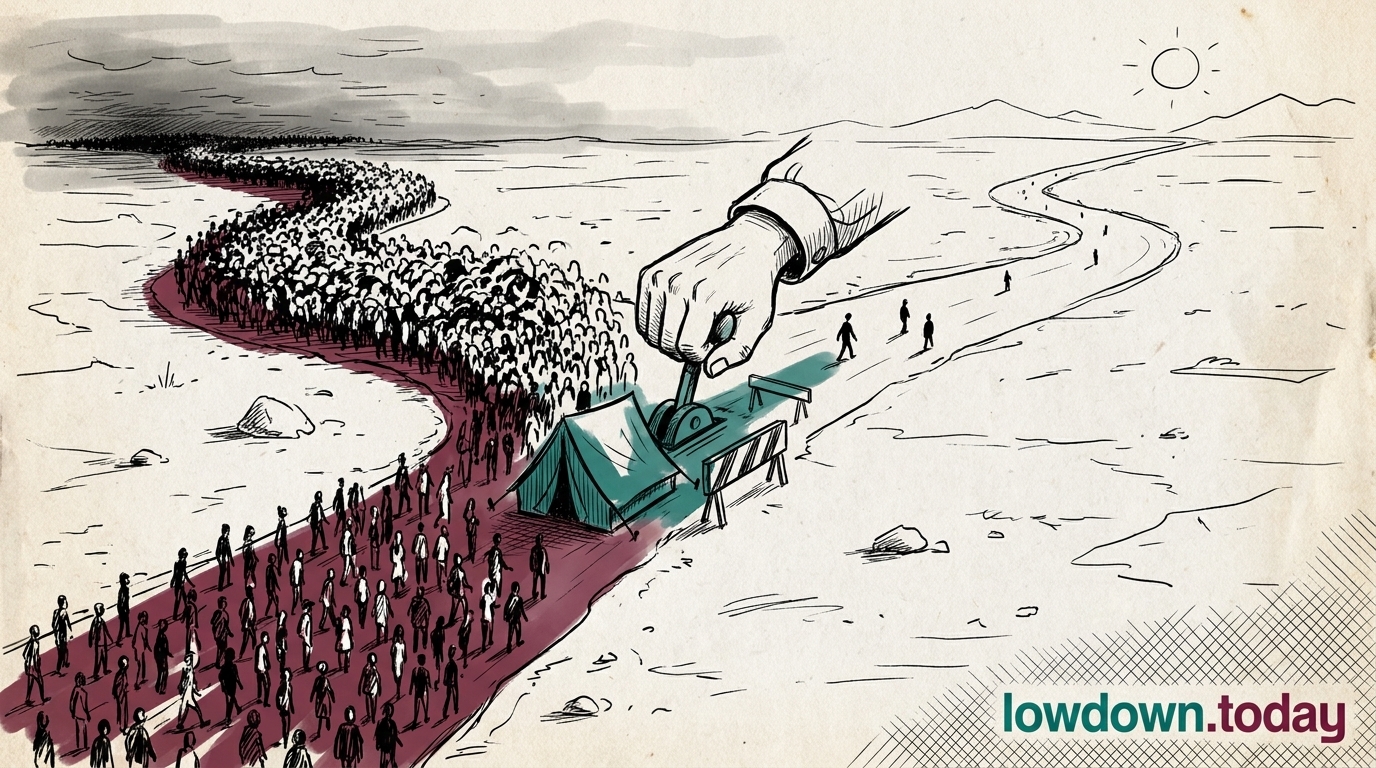
A falling headline number can coexist with a rising real one, and readers comparing 1,040 with 534 will misread a counting correction as a shrinking outbreak.
Different Perspectives
World Health Organization
WHO's DON606 recalibration to confirmed-only reporting gives the clean baseline the CDC model rests on, but the apparent fall from 1,040 to 534 carries misinterpretation risk WHO communications have not pre-empted. The PABS deadlock ahead of IGWG7 and continuing MBP134/remdesivir assessment without authorisation make WHO the body most able to accelerate the two decisions that could change the outbreak's trajectory.
European Union (ECDC)
ECDC's Week 23 CDTR tracked four simultaneous non-Ebola signals: the Dermatophilus congolensis novel-transmission cluster across France, Germany and Spain; a 4.2-fold malaria surge in Mayotte; the Salmonella ST2045 multi-country cluster; and two new Saudi MERS cases. The continental early-warning layer is carrying a full multi-pathogen picture while Bundibugyo dominates headlines.
Uganda
Uganda
Uganda's 19 confirmed cases are concentrated in Kampala and Wakiso, an urban cluster that applied the 2022 Sudan-ebolavirus playbook; the Bwera border laboratory shortens cross-border confirmation to same-day. Uganda's regulatory authority must co-sign before MBP134 or remdesivir can dose any patient.
Democratic Republic of the Congo
Kinshasa shares Bundibugyo sequence data in real time with no treaty-guaranteed access to the vaccines that data informs, and its health minister called the US entry ban discriminatory while negotiating an early lift. DRC accounts for 515 of 534 confirmed cases and faces IS-controlled access blockades in Mambasa that health authorities cannot resolve.
United States (HHS/CDC)
HHS expanded the Ebola entry ban to green-card holders on 5 June, widening a restriction expiring around 17 June against WHO advice. The CDC simultaneously published the R0=2.51 modelling, the sharpest analytical contribution to the response, from a federal bench that holds the NIH and acting CDC director roles in one person.
Imperial College London / Cori and Ferguson
Anne Cori and Neil Ferguson place the case-fatality ratio at 30 to 40 per cent and read the 6.8-to-1 suspected-to-confirmed ratio as evidence that the laboratory figure understates true lethality. Many people die before a swab reaches them.
