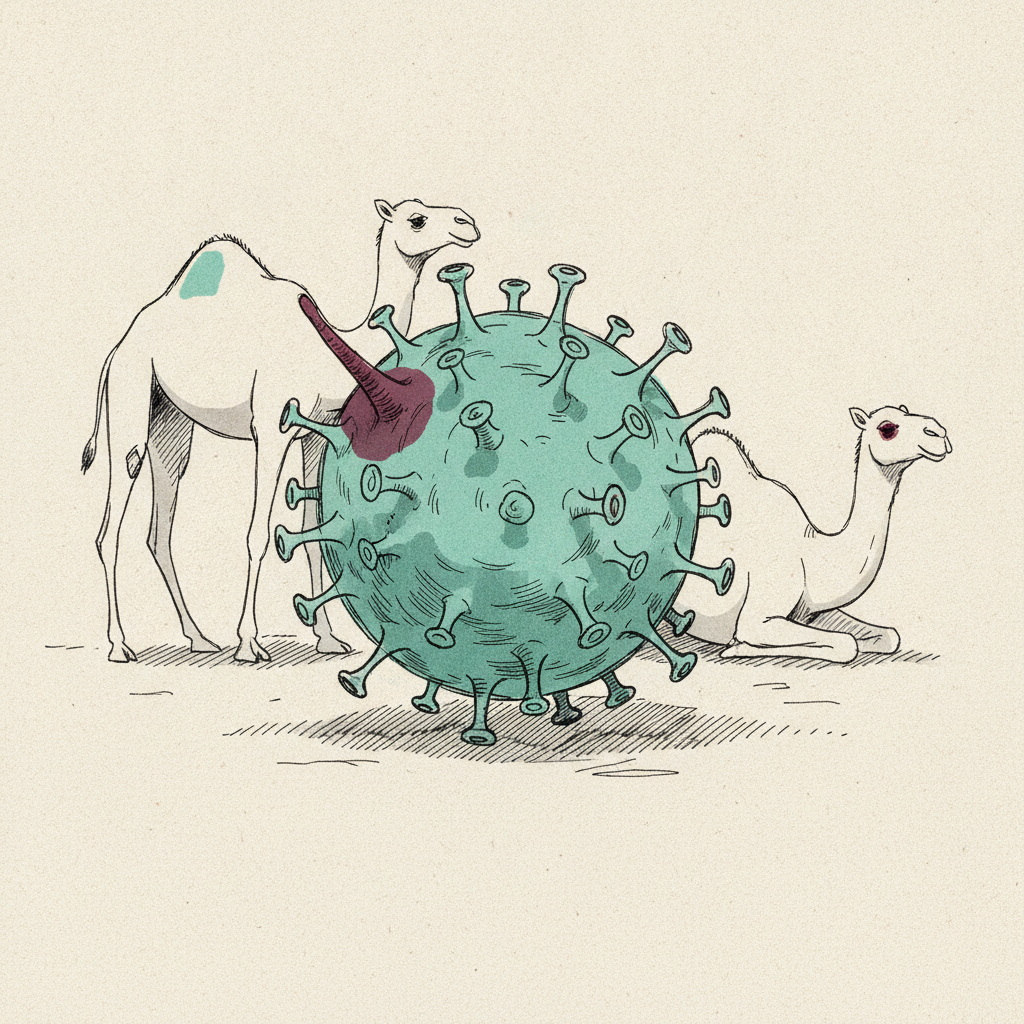
MERS-CoV
A betacoronavirus with a ~35% historical case-fatality ratio; two new Saudi cases in 2026, no sustained human-to-human spread.
As of 22 October 2026, MERS-CoV remained a camel-linked betacoronavirus with about 35% historical case fatality and no sustained human transmission.
Last refreshed: 22 October 2026 · Appears in 1 active topic
If MERS kills one in three patients, why is the 2026 Saudi outbreak considered low risk?
Timeline for MERS-CoV
Infected six people with no known exposure
Pandemics and Biosecurity: Six Saudi MERS cases had no camel linkMERS clade B found in Nile Basin camels
Pandemics and BiosecurityMERS kills a third, two new Gulf cases
Pandemics and BiosecurityMentioned in: Ship hantavirus cluster is winding down
Pandemics and BiosecurityMentioned in: UK airdrops supplies to isolated island Andes case
Pandemics and BiosecurityBackground
MERS-CoV is a betacoronavirus that causes Middle East respiratory syndrome. Confirmed infections have a historical case-fatality ratio of about 35%, which makes each case a surveillance concern even when totals remain small. Human MERS-CoV infections most often follow exposure to dromedary camels.
The virus can pass between people during close contact, including in households and health settings, but the evidence records no sustained community transmission. Investigators therefore look for linked cases and infection among health workers when judging whether the risk has changed. Camel surveillance also matters because viral findings in herds may signal a changed spillover risk, although incomplete sequences cannot establish a lineage on their own.
Reference
How do you catch MERS coronavirus?
Should I be worried about MERS if I am travelling to Saudi Arabia?
Is MERS spreading in Saudi Arabia in 2026?
How deadly is MERS compared to COVID-19?
Written with AI from Lowdown's published reporting. Not individually reviewed by an editor. Updated 22 October 2026. Editorial standards.