Skip to content
Briefings are running a touch slower this week while we rebuild the foundations.See roadmap
Iran Conflict 2026
16MAY

Iran defers nuclear talks past ceasefire

3 min read
12:41UTC

Pakistan delivered Iran's revised ceasefire proposal to Washington on 28 April; nuclear talks now sit in a post-war Phase 3, and Marco Rubio called the offer 'better than we thought'.

ConflictDeveloping
Key takeaway

Iran routed a two-phase ceasefire through Pakistan; Rubio called the offer 'better than we thought'.

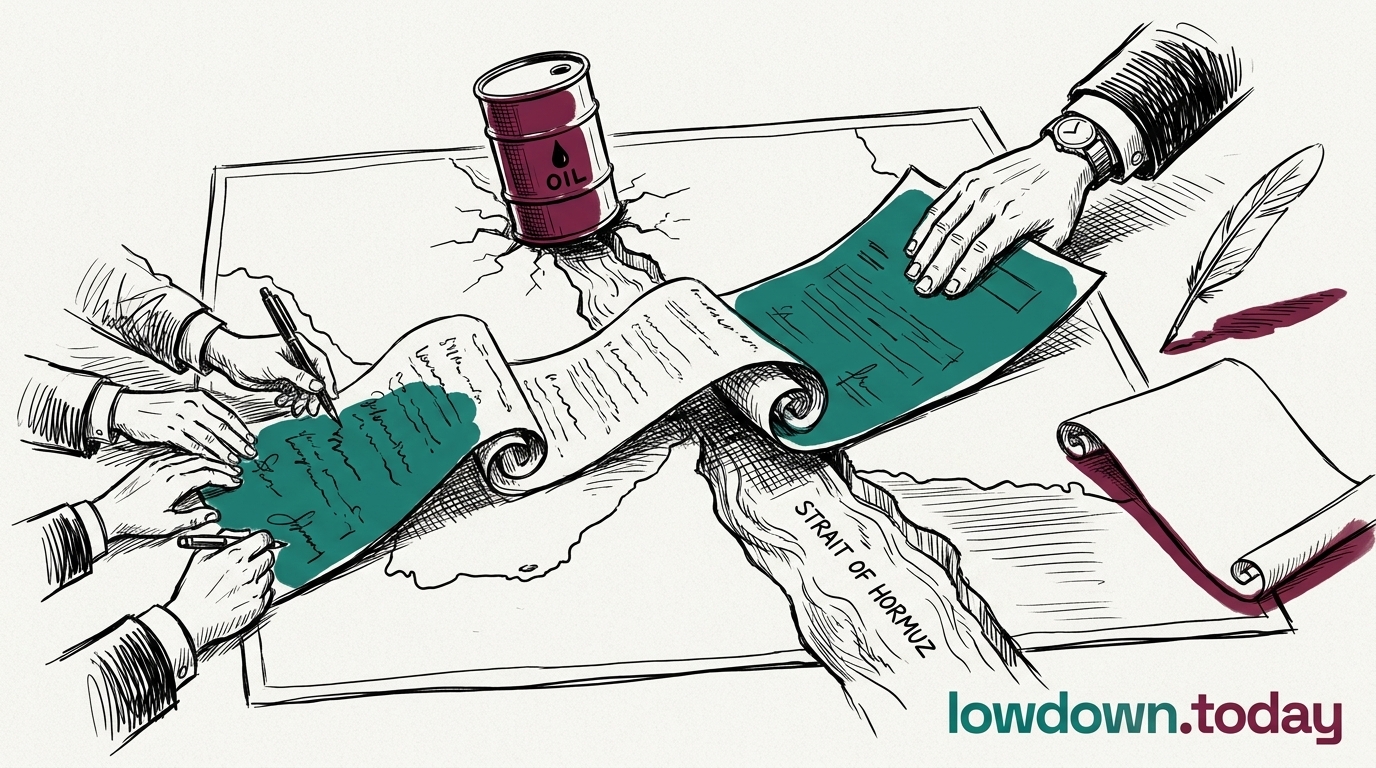
Pakistan delivered Iran's revised two-phase ceasefire proposal to Washington on 28 April 2026. Phase 1 calls for full cessation of hostilities and binding guarantees against renewed attacks on Iran and Lebanon; Phase 2 covers Strait of Hormuz management and security. Nuclear talks are deferred entirely to a post-war Phase 3, a substantive change from the three-phase document Pakistan carried on 27 April which placed nuclear sequencing as a pre-ceasefire condition. Al Jazeera confirmed the text via the Pakistani government channel.

Marco Rubio, the US Secretary of State, called the offer 'better than we thought' but raised verification concerns. The assessment is the most positive US public signal yet on a ceasefire text, and arrives 24 hours before the War Powers Resolution (WPR) 60-day clock expires . Iranian Foreign Minister Abbas Araghchi ran a three-day shuttle through Islamabad twice, Muscat, and St Petersburg, where he met Vladimir Putin at the Boris Yeltsin Library . Donald Trump rejected the earlier three-phase version on Truth Social; the cancelled Steve Witkoff and Jared Kushner Pakistan trip leaves Pakistan as the sole active mediator, displacing Oman's bilateral track that ran the early war.

Deferring nuclear talks to the post-war period is the same procedural move JCPOA (Joint Comprehensive Plan of Action) negotiators used in 2013 to break a sequencing impasse: settle the politics first, settle the verification later. The 2013 framework had a P5+1 structure to carry the verification weight; this proposal has Pakistan and one Truth Social rejection. Phase 1's binding guarantees against renewed attacks on Lebanon expand the geographic scope of the ceasefire beyond Iran itself, recognising Hezbollah's operational entanglement with Iranian command. The verification gap Rubio flagged is the procedural lever Washington can use to slow the text without rejecting it, particularly if Senator Lisa Murkowski's AUMF lands on Congress.gov before the deadline and forces the executive into adversarial-text territory.

The revised text now sits at the State Department alongside a 60-day US signing column that has remained empty throughout the conflict.

Deep Analysis

In plain English

Pakistan handed a written ceasefire proposal from Tehran to Washington on 28 April, acting as the go-between because Iran and the United States have no direct diplomatic channel. Iran's offer has two stages. First: stop the fighting and give Iran guarantees that neither the US nor Israel will attack again. Second, once the war is over: figure out the Hormuz shipping rules. The most controversial issue, Iran's nuclear programme, has been moved entirely off the table for now. Secretary of State Marco Rubio called this version better than the previous one, the most positive thing Washington has said publicly about any Iranian proposal since the war began on 28 February.

Deep Analysis
Root Causes

Pakistan's emergence as the sole active mediating channel after the Witkoff-Kushner trip cancellation reflects a structural asymmetry in the diplomatic architecture: Islamabad has civilian and military buy-in on the Iranian side that no Western interlocutor has achieved. Army Chief Asim Munir's April meetings secured Iranian agreement in principle to outside nuclear monitoring. The Foreign Ministry channel through Araghchi runs in parallel, not subordinate to, the IRGC's operational posture.

The revision from three phases to two reflects Iranian domestic politics as much as diplomatic flexibility. The three-phase structure that Pakistan carried on 27 April included nuclear sequencing as a pre-war condition, a position that the IRGC hardline faction, led by Ahmad Vahidi, had publicly endorsed.

Dropping nuclear sequencing to a post-war track removes a point of IRGC-Foreign Ministry alignment, suggesting Araghchi won an internal argument about what is negotiable without Khamenei's written position moving.

What could happen next?
  • Opportunity

    Rubio's positive public signal creates the first credible diplomatic window for a signed ceasefire instrument before the War Powers Resolution deadline at 12:01 EDT on 1 May, which would remove the WPR's legally awkward teeth before they need to be applied.

    Immediate · 0.65
  • Risk

    Pakistan's role as sole mediating channel is structurally fragile: Islamabad has no enforcement mechanism if either party rejects the next text, and the cancellation of the Witkoff-Kushner trip means there is no US-side backup channel if Pakistan's mediation stalls.

    Short term · 0.8
  • Consequence

    Deferring nuclear talks to the post-war period leaves Iran's 440.9 kg of 60% enriched uranium unaddressed under any ceasefire text, which means European signatories to a potential peace framework would need to accept a nuclear ambiguity clause with no IAEA verification scheduled.

    Medium term · 0.75
First Reported In

Update #83 · UAE quits OPEC, war signs nothing

Al Jazeera· 29 Apr 2026
Read original
Different Perspectives
India (BRICS meeting host, grey-market beneficiary)
New Delhi hosted the BRICS foreign ministers' meeting on 14 May that Araghchi attended under the Minab168 designation, giving India a front-row seat to Iran's diplomatic positioning. India's state refiners have been absorbing discounted Iranian crude through grey-market routing since April; Brent at $109.30 means every barrel sourced outside the formal market generates a structural saving.
Hengaw / Kurdish human rights monitors
Hengaw's daily reports from Iran's Kurdish provinces remain the sole independent cross-check on Iran's judicial activity during the conflict. Two executions across Qom and Karaj Central prisons on 15 May and five Kurdish detentions on 15-16 May indicate the wartime judicial pipeline is operating independently of military tempo.
Pakistan (mediator and bilateral partner)
Islamabad spent its diplomatic capital as the US-Iran MOU carrier to secure LNG passage for two Qatari vessels through a bilateral Pakistan-Iran agreement, spending its mediation credit for direct economic gain. China's public endorsement of Pakistan's mediatory role on 13 May is the structural reward.
China and BRICS bloc
Beijing endorsed Pakistan's mediatory role on 13 May, one day after the BRICS foreign ministers' meeting in New Delhi. Chinese state banks are processing PGSA yuan toll payments; China has not commented on its vessels' continued Hormuz passage, but benefits structurally from a non-dollar toll system it did not design.
Iraq (bilateral passage partner)
Baghdad negotiated a 2-million-barrel VLCC transit without paying PGSA yuan tolls, offering political alignment in lieu of cash. Iraq's position inside Iran's adjacent bloc makes it the natural first bilateral partner and a template for how Tehran structures passage deals with states that cannot afford Western coalition membership.
Bahrain and Qatar (Gulf signatories)
Both signed the Western coalition paper while hosting US Fifth Fleet and CENTCOM's Al Udeid base, respectively. Qatar occupies the sharpest contradiction: it is on coalition paper while simultaneously receiving LNG passage through the bilateral Iran-Pakistan track, a position Doha has tacitly accepted from both sides.