Skip to content
Briefings are running a touch slower this week while we rebuild the foundations.See roadmap
Iran Conflict 2026
16MAY

Hormuz trickle: five then seven vessels

3 min read
12:41UTC

Kpler logged five vessel transits through the Strait of Hormuz on 9 April and seven on 10 April, against a pre-war baseline of 120 to 140 a day. ADNOC's chief executive told reporters the strait is not open.

ConflictDeveloping
Key takeaway

Hormuz is delivering fewer transits under ceasefire than under Iran's own toll regime.

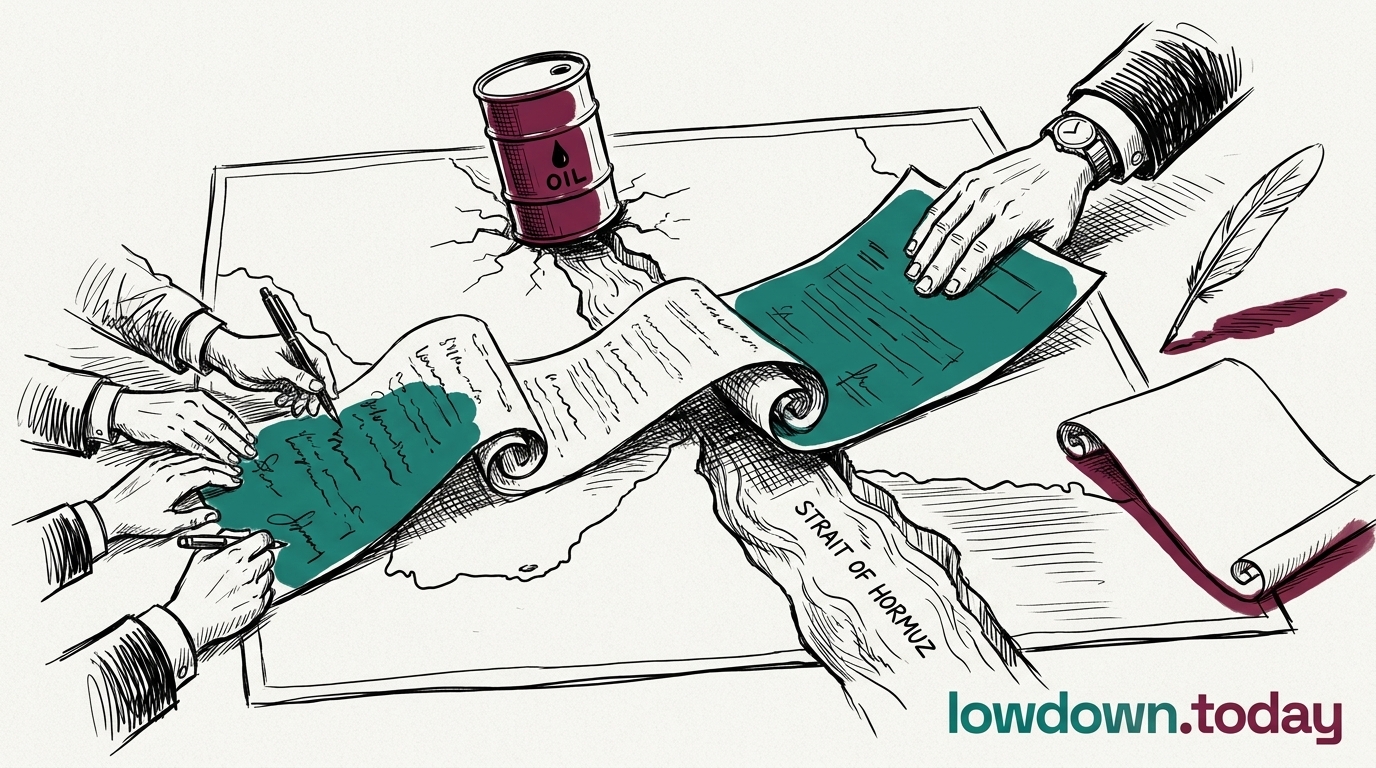
Kpler recorded 5 vessel transits through the Strait of Hormuz on 9 April and 7 on 10 April, against a pre-war baseline of 120 to 140 daily 1. The ceasefire is delivering fewer movements than the 20 transits per day Iran's own toll regime was carrying on 5 April . More than 600 vessels remain stranded inside The Gulf, including 325 oil tankers.

Sultan Al Jaber, chief executive of ADNOC (Abu Dhabi National Oil Company), told reporters on Friday that "the strait of Hormuz is not open. Access is being restricted, conditioned and controlled" 2. Ana Subasic, a Kpler analyst, projects a ceiling of 10 to 15 transits per day even if the ceasefire fully holds.

That ceiling is roughly one-tenth of the pre-war baseline and half of Iran's own toll volume last week. It implies structurally tight oil throughput regardless of Brent's headline price , and no single-day breakthrough is likely to restore pre-war flow. The Gulf is moving at a trickle because the physical problem in the water is larger than the political problem in the hotel in Islamabad.

Deep Analysis

In plain English

Before the war, 120 to 140 ships passed through the Strait of Hormuz every day carrying oil from Gulf states to the rest of the world. In the three days since the ceasefire, that number has fallen to five or seven — not much more than zero. The ceasefire stopped the bombing, but it did not clear the sea mines, lift the shipping insurance bans, or dissolve the Iranian inspection system. A political peace agreement does not automatically move oil.

Deep Analysis
Root Causes

The trickle is not a ceasefire failure in the usual sense. It reflects three compounding physical constraints that the diplomatic process cannot resolve: uncharted Iranian mines making navigation hazardous, the IRGC corridor system restricting passage to specific channels near Larak Island , and the withdrawal of war-risk insurance coverage from standard commercial operators.

The UN Security Council's 11-2 vote for a Hormuz reopening resolution was vetoed by Russia and China — both of whom benefit from the toll architecture their own tankers already use. The multilateral route to maritime normalisation is therefore closed, leaving only bilateral US-Iran negotiation or unilateral force, neither of which resolves the physical mine problem.

What could happen next?
  • Consequence

    Brent crude will remain structurally elevated at 40-60% above pre-war levels until mine clearance and insurance normalisation occur, regardless of which diplomatic outcome Islamabad produces.

  • Risk

    GL-U expiry on 19 April would simultaneously criminalise the 325 stranded tankers' cargo under US sanctions while they remain physically unable to move, creating a compound maritime-legal crisis.

First Reported In

Update #65 · Iran lost its own minefield

Al Jazeera· 11 Apr 2026
Read original
Different Perspectives
India (BRICS meeting host, grey-market beneficiary)
New Delhi hosted the BRICS foreign ministers' meeting on 14 May that Araghchi attended under the Minab168 designation, giving India a front-row seat to Iran's diplomatic positioning. India's state refiners have been absorbing discounted Iranian crude through grey-market routing since April; Brent at $109.30 means every barrel sourced outside the formal market generates a structural saving.
Hengaw / Kurdish human rights monitors
Hengaw's daily reports from Iran's Kurdish provinces remain the sole independent cross-check on Iran's judicial activity during the conflict. Two executions across Qom and Karaj Central prisons on 15 May and five Kurdish detentions on 15-16 May indicate the wartime judicial pipeline is operating independently of military tempo.
Pakistan (mediator and bilateral partner)
Islamabad spent its diplomatic capital as the US-Iran MOU carrier to secure LNG passage for two Qatari vessels through a bilateral Pakistan-Iran agreement, spending its mediation credit for direct economic gain. China's public endorsement of Pakistan's mediatory role on 13 May is the structural reward.
China and BRICS bloc
Beijing endorsed Pakistan's mediatory role on 13 May, one day after the BRICS foreign ministers' meeting in New Delhi. Chinese state banks are processing PGSA yuan toll payments; China has not commented on its vessels' continued Hormuz passage, but benefits structurally from a non-dollar toll system it did not design.
Iraq (bilateral passage partner)
Baghdad negotiated a 2-million-barrel VLCC transit without paying PGSA yuan tolls, offering political alignment in lieu of cash. Iraq's position inside Iran's adjacent bloc makes it the natural first bilateral partner and a template for how Tehran structures passage deals with states that cannot afford Western coalition membership.
Bahrain and Qatar (Gulf signatories)
Both signed the Western coalition paper while hosting US Fifth Fleet and CENTCOM's Al Udeid base, respectively. Qatar occupies the sharpest contradiction: it is on coalition paper while simultaneously receiving LNG passage through the bilateral Iran-Pakistan track, a position Doha has tacitly accepted from both sides.