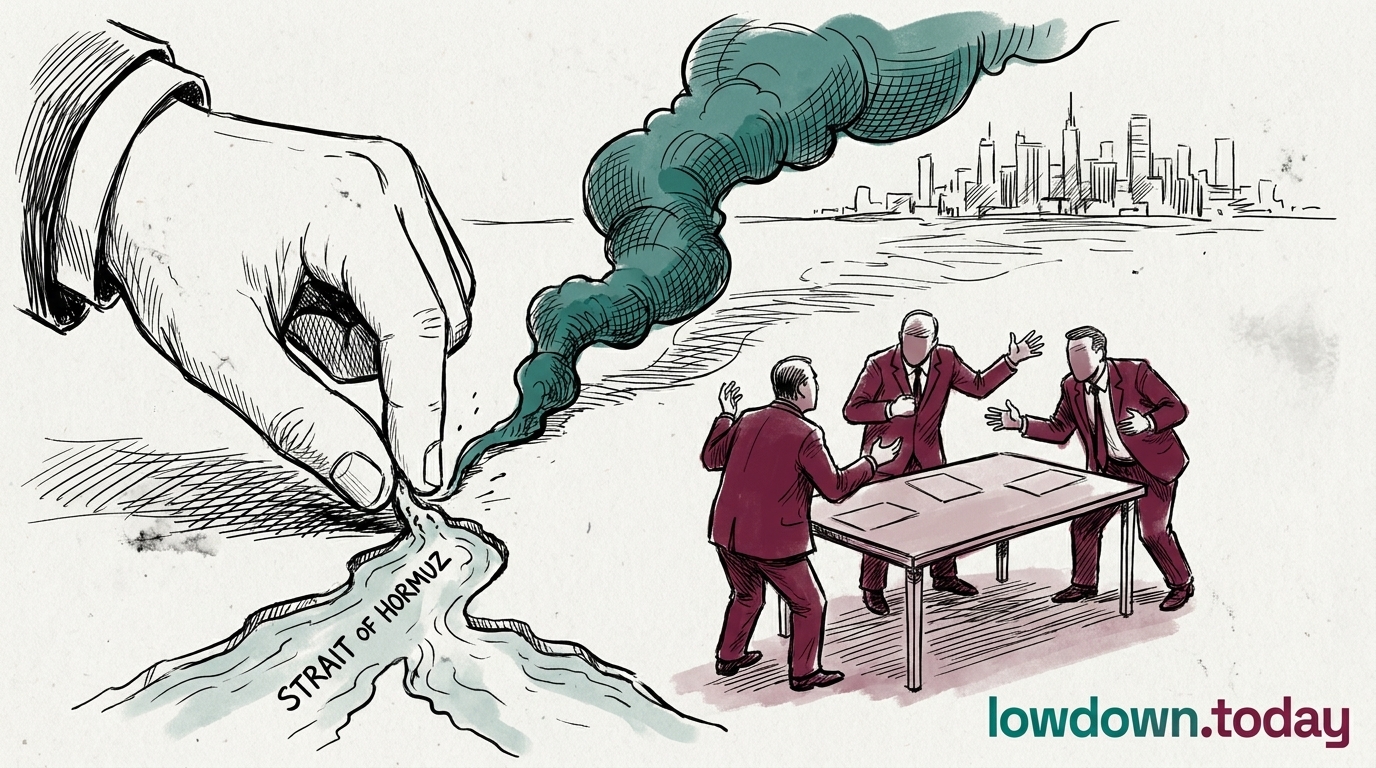
United Arab Emirates Energy Minister Suhail Mohamed al-Mazrouei announced on Tuesday 28 April 2026 that the UAE will leave OPEC (Organization of Petroleum Exporting Countries) and OPEC+ effective Friday 1 May 2026, without consulting Saudi Arabia or any other Gulf Cooperation Council member. Al-Mazrouei cited the inability to export freely through the Strait of Hormuz and disappointment with Gulf allies' response to Iranian military action in the strait. Reuters, Bloomberg, CNBC, NPR, Al Jazeera, The National and Dawn independently confirmed the announcement.
The exit takes effect at 00:01 GMT on the same calendar day the War Powers Resolution 60-day clock expires at 12:01 EDT in Washington. OPEC+ pairs OPEC members with Russia and aligned non-OPEC producers; the UAE's departure removes its third-largest producer, behind only Saudi Arabia and Iraq. Abu Dhabi has been pushing Riyadh for higher quotas for years, but the catalysing agent is the war: Hormuz transits sat at 9 vessels on 24 April per Windward, a fraction of the 50-plus daily baseline that gave Emirati cargoes free passage. Al-Mazrouei chose 28 April to announce and 1 May to take effect, the same Friday Iran's foreign minister Abbas Araghchi told Vladimir Putin in St Petersburg that Tehran would gate any Hormuz reopening through its own conditions.
The break will be priced into every cargo loaded after Friday. Vienna's next ministerial sits without an Emirati seat for the first time since OPEC seated the UAE in 1967, and Saudi Arabia loses its long-running quota counterweight inside the bloc. Russia, the largest non-OPEC producer in OPEC+, becomes the second-largest voice in a smaller coalition, shifting the balance of any post-war production cut towards Moscow. Abu Dhabi can lift output above its previous 3.0 mb/d ceiling without a Vienna vote once the strait reopens, freeing roughly 1.0 mb/d of barrels the bloc had held under quota. The 2018 Qatar exit was political, refocused on LNG, and absorbed without spare-capacity dispute. This one is structural, denominated in barrels Abu Dhabi has been waiting to ship.
OPEC loses a moderating voice inside its quota debate at the very moment the bloc's collective slack barrels remain trapped behind the closed strait. European insurance underwriters writing post-war Hormuz cover lose a Gulf-state OPEC anchor in their sovereign-risk models. The structural premium will not unwind on a ceasefire alone.


