Skip to content
You can now search across every topic, entity and event.What's new
Iran Conflict 2026
10MAY

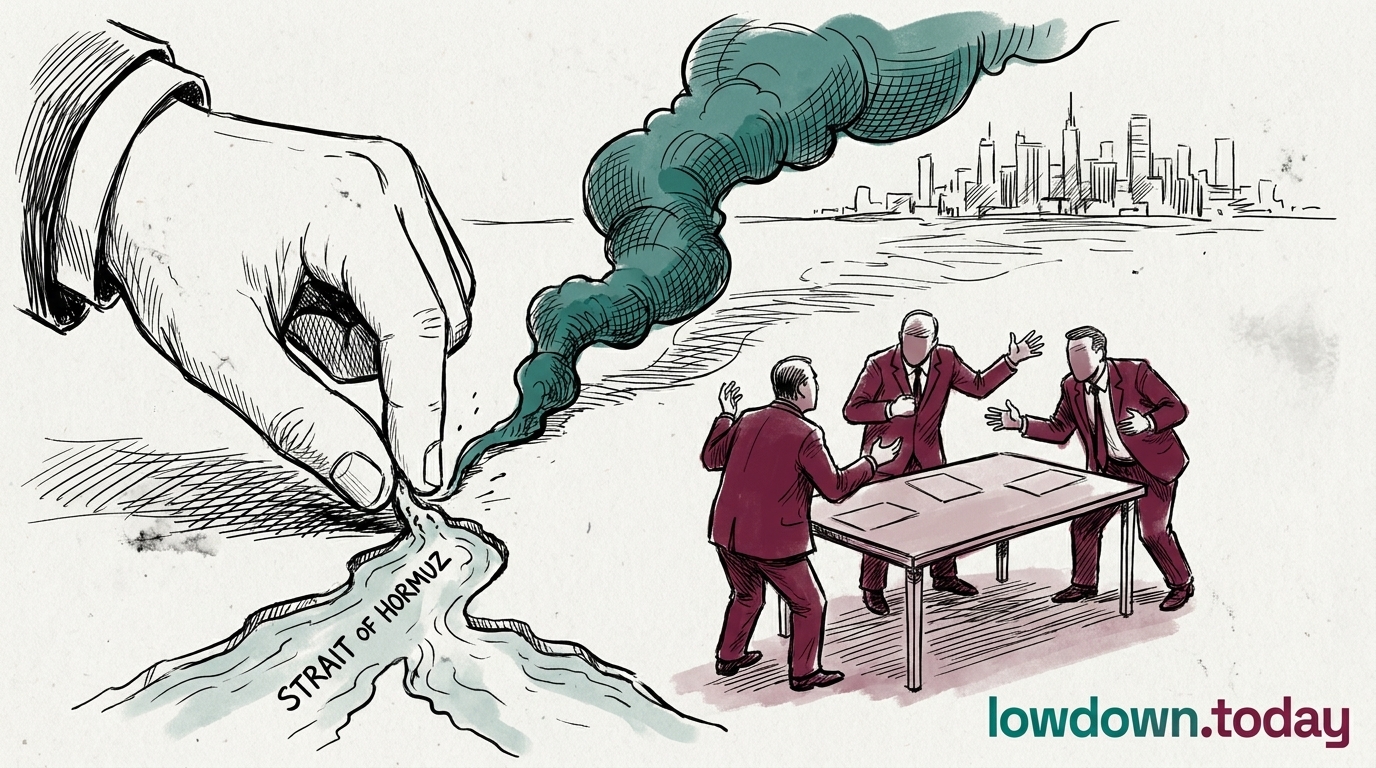
Trump vetoes Iran's only uranium exit

4 min read
14:22UTC

Asked at a 27 May Cabinet meeting whether Iran could ship its uranium to Russia or China, Donald Trump said "No, I wouldn't be comfortable", shutting the one storage route that could have bridged the deal.

ConflictDeveloping
Key takeaway

On Day 90 the only actor visibly slowing an Iran settlement is the US President, by act not word.

Donald Trump rejected both Russia and China as custodians for Iran's highly enriched uranium at a 27 May Cabinet meeting in Washington, telling reporters "No, I wouldn't be comfortable" with either 1. The answer killed the only third-country storage option anyone had floated. Iran holds roughly 440.9 kg of uranium enriched to 60%, far above reactor fuel and a short technical step from weapons-grade, at the Isfahan tunnel complex. The International Atomic Energy Agency (IAEA), the UN body that verifies nuclear material, has had no access since 28 February, so no outside party can even confirm where the stockpile now sits.

Supreme Leader Mojtaba Khamenei had ordered the material to stay inside Iran on 21 May , reversing a pre-war offer to export half and removing the export option outright. Sending it abroad under a neutral host was the workaround, and Vladimir Putin had pitched Xi Jinping in Beijing on 21 May that Russia would hold it. By barring both Russia and China without naming a fourth host, Trump struck out the last route between the US demand that the uranium leave and Iran's refusal to let it go, hardening the three-way split that had already produced contradictory accounts of the deal's nuclear terms .

The same afternoon, Trump told his negotiators "not to rush into a deal" and said Iran's hope of outlasting him "won't work because I don't care about the midterms" 2. Marco Rubio, his Secretary of State, had said 24 hours earlier the deal could be finalised that day. A fairer reading deserves its sentence: with Iran refusing both to surrender the uranium and to readmit inspectors, barring Moscow and Beijing as custodians is defensible non-proliferation rather than gamesmanship.

The ledger cuts against that reading. The White House presidential-actions index shows zero Iran instruments signed across 90 days of war 3: no ceasefire order, no use-of-force authorisation, nothing directing or limiting the naval blockade. The veto is an act, not a post, and it points the same way 90 days of silence have: away from closure.


Deep Analysis

In plain English

Iran has a stockpile of uranium enriched to 60% purity. Normal power-station fuel sits around 5%. Weapons-grade uranium needs to be about 90% pure. Iran's 60% material is not yet weapons-grade, but it is close enough that further enrichment to weapons-grade would be a relatively short technical step. The US wants Iran to get rid of this stockpile before a deal is agreed. The idea was to ship it to a third country, like Russia, for safekeeping. Trump has now said he doesn't trust Russia or China to hold it securely. So there is no agreed destination, and Iran itself has said the material is staying inside the country. Both sides have now closed off the workaround diplomats had been quietly working towards for weeks: Trump vetoed the custodian, and Khamenei barred the export. Neither move has been reversed.

Deep Analysis
Root Causes

The third-country custody impasse has two structural roots that pre-date 27 May.

First, the IAEA was locked out of Iran at the start of the conflict following the Majlis's 221-0 vote suspending all cooperation. Without IAEA inspectors, no independent party can verify where the 440.9 kg stockpile actually is, whether it has been further enriched since the lock-out, or whether a transfer has been completed honestly.

Russia and China both lack the independent inspection capacity to substitute for the IAEA. Trump's stated discomfort with both as custodians is partly a verification problem: neither country would accept intrusive IAEA-style access on its own soil to monitor the transferred material.

Second, Mojtaba Khamenei's 21 May directive ordering the stockpile to remain in Iran removed Iran's negotiating flexibility on the very item the US identified as the last sticking point. Rubio named HEU turnover as the final unresolved issue; Khamenei's directive closed the export option, and Trump's 27 May veto closed the custodian workaround, in the same week.

Escalation

The 27 May veto raises the diplomatic ceiling required to reach any agreement. Any path forward now requires either a new custodian state that Trump trusts, a mechanism for Iran to dispose of the material inside Iran itself with verified destruction, or an Iranian reversal of Khamenei's 21 May directive. None of those three options is currently on the table.

What could happen next?
  • Consequence

    With Russia and China vetoed, there is no third-country custody mechanism available. Any resumed negotiation must find a new sequencing bridge for the HEU question or defer it entirely to Phase 2.

    Immediate · Assessed
  • Risk

    Iran's 440.9 kg stockpile at 60% enrichment continues to accumulate without IAEA oversight. The breakout timeline shortens every week the IAEA remains locked out, regardless of diplomatic progress on other tracks.

    Short term · Assessed
  • Precedent

    Trump's explicit rejection of Russia and China as custodians formalises a great-power split over the Iran nuclear file. Any eventual settlement must now be US-managed or US-endorsed, eliminating multilateral burden-sharing.

    Medium term · Reported
  • Risk

    If negotiations collapse permanently, Iran's enrichment programme resumes unrestricted. The Arms Control Association estimates Iran could reach weapons-grade enrichment within weeks from the current 60% baseline.

    Long term · Suggested
First Reported In

Update #110 · Trump vetoes Iran's only uranium exit

CNBC· 28 May 2026
Read original
Causes and effects
This Event
Trump vetoes Iran's only uranium exit
The veto removes the only third-country custody arrangement that could have reconciled the US demand to surrender Iran's uranium with Tehran's refusal to give it up.
Different Perspectives
Oil markets / Lloyd's of London
Brent fell to near $87.33 on 80 per cent deal-probability pricing, but Lloyd's has not de-listed Hormuz from its war-risk register and shipping diversions continue at 139 vessels. Insurance markets are lagging futures: physical risk remains while financial markets have spent the good news before the paper exists.
India
India
Modi is expected to raise the deaths of three Indian sailors in the 11 June CENTCOM strike on the MT Settebello with Trump at G7 sidelines, the first non-party leader to put the blockade's human cost into a formal bilateral. New Delhi is also a major Iranian oil buyer whose import volumes the sanctions-relief terms will govern.
Israel (Netanyahu)
Israel (Netanyahu)
Netanyahu stated Israel is not party to the deal on 12 June; Defence Minister Katz ruled out the Lebanon withdrawal Iran's draft demands, inserting a third blocker the US-Iran negotiating channel cannot resolve. Israel's position tethers Hormuz reopening to a Lebanon settlement Washington has not brokered.
Pakistan (mediator, Sharif/Naqvi)
Sharif declared a final agreed text on 12 June before either principal confirmed it, running two Tehran visits in under a week without securing a written IRGC or Khamenei response. Islamabad's incentive to claim a diplomatic win outpaces its standing to deliver either capital's signature.
Iran foreign ministry (Araghchi)
Araghchi declared digital signing within days while setting dilute-in-Iran as a non-negotiable red line on the 440.9 kg HEU stockpile, a standing Tehran position he cannot override without authorisation from Khamenei, reachable only by courier. The FM track is sprinting to close before the IRGC reasserts control.
Trump administration / CENTCOM
Vance called the deal still TBD on 12 June while CENTCOM downed Iranian drones over Hormuz for a second consecutive night and the White House register stayed blank. Washington holds the ship-out position on HEU and has not signed an Iran instrument in over 100 days of conflict.



