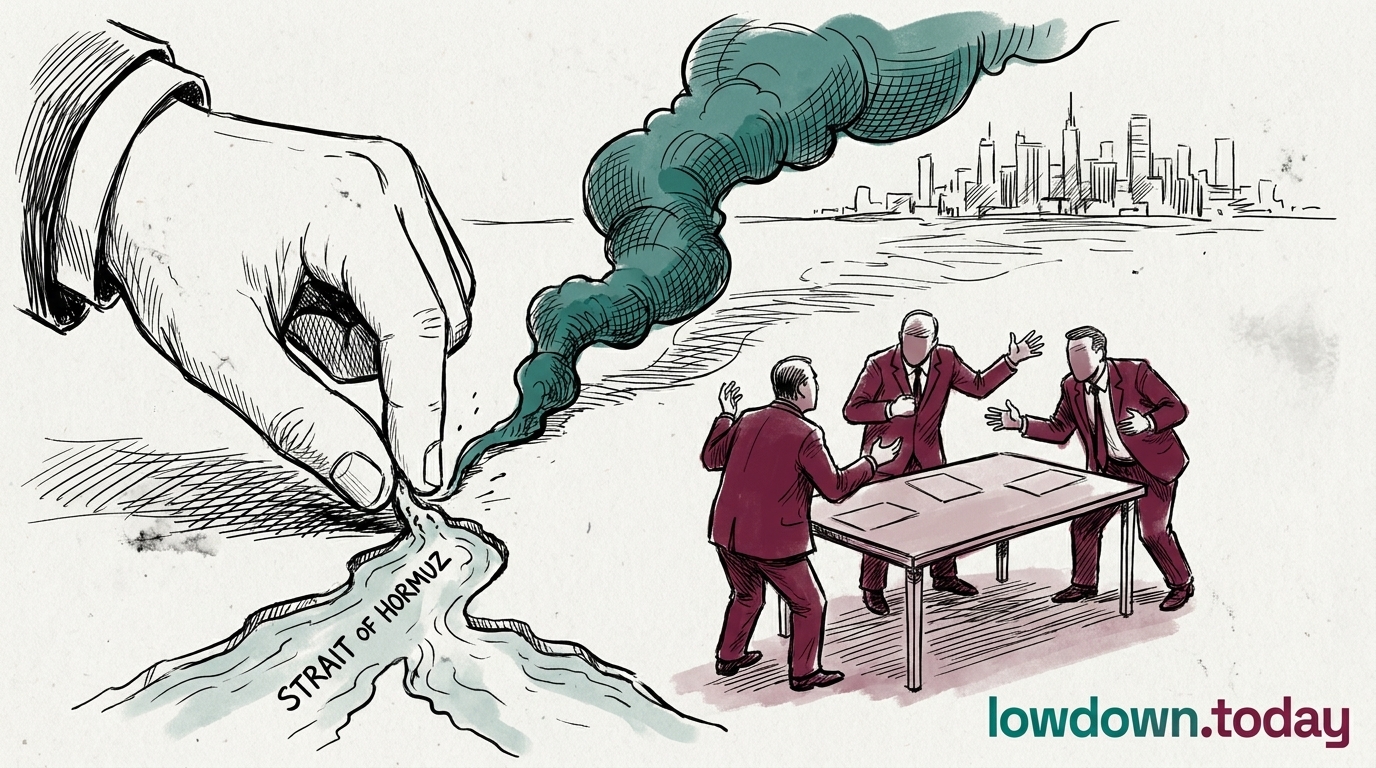
Iran's Supreme National Security Council, the SNSC, the body that co-ordinates Iran's defence and foreign policy under the Supreme Leader, issued a statement framing the unsigned war-ending memorandum as a 10-point Iranian victory, including a recognised right to enrich uranium and a US non-aggression guarantee.1 The deputy secretary, Ali Bagheri Kani, told Euronews in Farsi on 27 May that Iran's stockpile of Highly Enriched Uranium, HEU, the weapons-usable material at the core of the dispute, is "not on the agenda".2 The US text lists HEU disposal as the first priority of the 60-day window.
Tehran and Washington are now publishing incompatible versions of the same accord, an advance on the earlier three-party contradiction over nuclear terms: a formal SNSC document that sells the deal domestically as enrichment recognised and sanctions lifted, the mirror image of what Washington describes. Trump told reporters he was "not in a rush" and wanted "a couple of days" before signing.3
Trump has barred Russia and China from holding the uranium and named no replacement custodian, so the one item both texts must resolve has no agreed location. The deadlock is structural: Trump needs uranium removal to satisfy his domestic constituency, and Khamenei needs enrichment recognised to justify 90 days of war, so each side requires its own script. A reader inside either government can now point to an official version that says the opposite of the other's, and a deal cannot be signed off two contradictory texts without one side conceding in public.





