Skip to content
Briefings are running a touch slower this week while we rebuild the foundations.See roadmap
Iran Conflict 2026
18APR

PGSA opens vessel portal, withholds tariff schedule

4 min read
14:57UTC

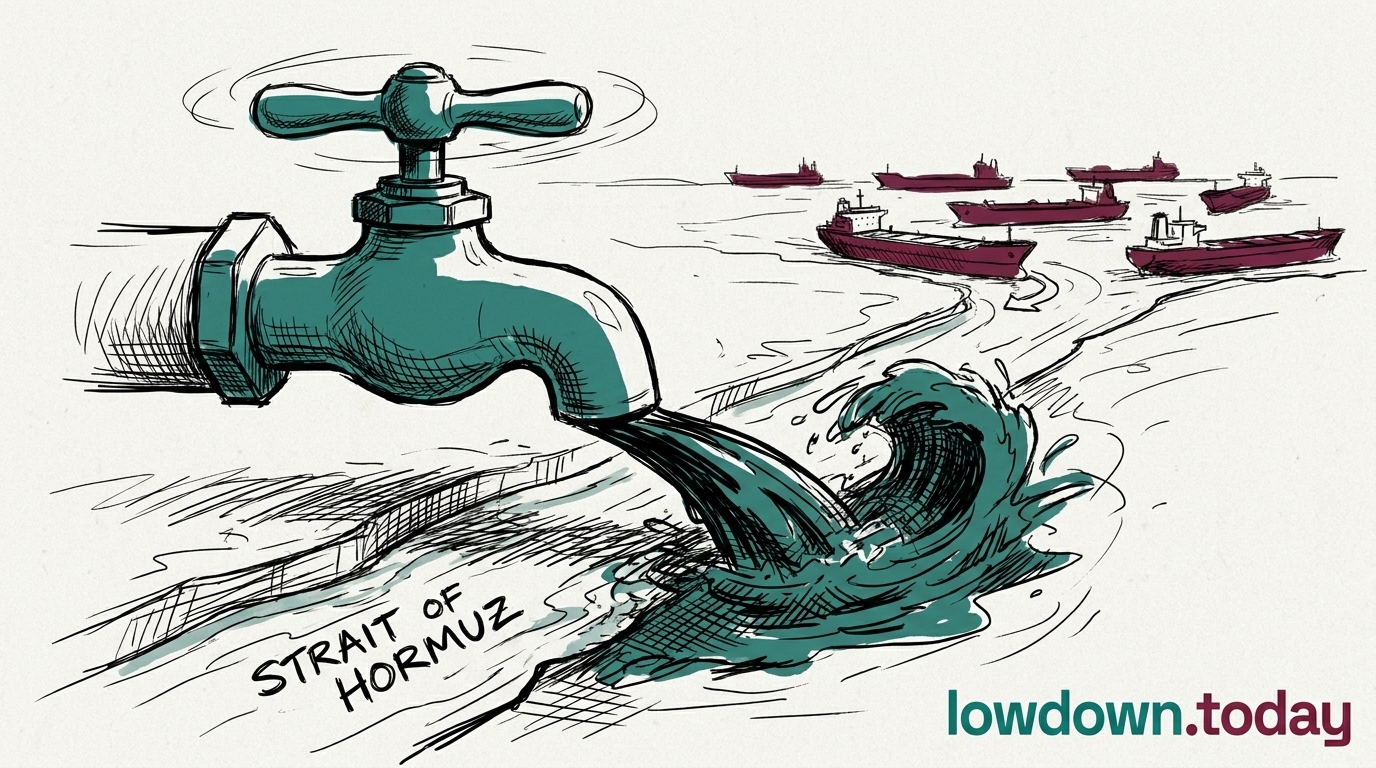
Iran's Persian Gulf Shipping Authority opened a vessel-submission portal on 18 May yet published no fee schedule by 20 May; Lloyd's of London entered no agreement.

ConflictDeveloping
Key takeaway

An unpublished tariff preserves case-by-case IRGC leverage and keeps Lloyd's war-risk cover closed across the Hormuz corridor.

Iran's PGSA (Persian Gulf Shipping Authority) opened a vessel-submission portal and an X account on 18 May 2026 , four days after the 16 May announcement that "full details" would follow "soon" . By 20 May no fee schedule had been published. The PGSA derives its authority from the Majlis-backed Hormuz toll bill enacted in early May and has positioned itself to Lloyd's of London as the sole lawful authority for Hormuz passage certification.

Windward Maritime Intelligence reports up to $2 million per transit paid in yuan, a $1 per barrel cargo toll, and Bitcoin payments to IRGC-linked wallets 1. No contract has surfaced. Lloyd's has not entered any agreement with PGSA; underwriters have informally signalled war-risk cover will not reopen until written rules of engagement exist somewhere, from either Iran or the 26-nation Hormuz coalition .

Iran also extended a bilateral guided-passage architecture with Iraq, Pakistan, Qatar, India and Oman, the latter confirmed by Baghaei on 18 May . Six India-flagged vessels conducted a coordinated cluster transit under Iranian operational assurances on 17 May, and Windward logged dark-AIS (Automatic Identification System) activity surging roughly 600 per cent between 19 April and 3 May. Vessels paying IRGC wallets in bitcoin or yuan go transponder-dark for the crossing, running outside the paper record PGSA is nominally building.

Deep Analysis

In plain English

Iran controls the Strait of Hormuz, the narrow channel through which roughly 20% of the world's oil passes. Since the war began, Iran has been charging ships to cross through. In May, Iran set up an official authority, the Persian Gulf Shipping Authority (PGSA), to handle the toll collection formally. They even launched a website. But as of 20 May they still have not published what the toll costs. Ships are paying up to $2 million per crossing, sometimes in Chinese currency, sometimes in cryptocurrency, with each deal individually negotiated. Shipping insurance companies, including Lloyd's of London, say they will not reopen their cover for ships crossing until someone publishes written rules. Without insurance, freight costs stay high, which means the goods those ships carry cost more everywhere.

Deep Analysis
Root Causes

The Majlis-enacted Hormuz toll bill gave the PGSA statutory authority but did not fix its fee schedule. This structure was deliberate: a legislative mandate for toll-collection combined with executive discretion over pricing preserves maximum leverage at the point of negotiation while giving Iran a legal argument that the tolls are sovereign maritime fees rather than extortion.

Lloyd's refusal to engage the PGSA reflects not hostility to the toll concept but the structural impossibility of pricing open-ended discretionary fees. War-risk underwriters model expected loss against premium income; without a known per-voyage rate there is no loss expectation to price against. The 600% dark-AIS surge compounds this: the fleet Lloyd's cannot see is the fleet Lloyd's cannot price.

What could happen next?
  • Consequence

    Lloyd's informally conditioning war-risk cover on written governance from any Hormuz party means the tariff vacuum directly prolongs the Brent premium and shipping-cost elevation for every European economy importing via Hormuz.

    Short term · 0.8
  • Risk

    Two parallel payment systems (PGSA formal permits and IRGC-linked Bitcoin wallets) running simultaneously create a compliance minefield for shipping companies: paying IRGC-linked wallets may violate OFAC sanctions while refusing to pay blocks transit.

    Immediate · 0.75
  • Opportunity

    Iran's bilateral guided-passage architecture with Iraq, Pakistan, Qatar, India and Oman creates a de facto regional maritime governance layer that could become a foundation for a published multilateral tariff regime if the broader conflict settles.

    Medium term · 0.5
First Reported In

Update #103 · Senate 50-47; UNSC at Barakah; no US paper

Windward Maritime Intelligence· 20 May 2026
Read original
Different Perspectives
Lloyd's of London underwriters
Lloyd's held its Hormuz war-risk rate at $10-14 million per voyage; underwriters need a UN Security Council resolution or formal PGSA de-listing before repricing, not a Senate testimony. The PGSA remains on the SDN list under EO 13224, so any vessel transiting a nominally reopened strait still deals with a sanctioned counterparty.
Saudi Arabia and Gulf states
Brent crude at $95-97 on 2-3 June reflects Gulf producers benefiting from the conflict premium; a genuine Hormuz deal would likely cut that premium by $10-15 per barrel. Riyadh's $87 per barrel budget breakeven means the current price is comfortable, reducing the Gulf's urgency to push for a rapid settlement.
China
China
OFAC's Nobitex designation leaves China's informal bilateral currency-swap lines with Iran as the CBI's remaining rial-defence mechanism; Chinese financial institutions face secondary-sanctions risk if they interact with successor wallets. Beijing's MOFCOM Blocking Rules protect mainland refineries from direct designation but do not shield informal swap-line counterparties.
Lebanon / Hezbollah
Lebanon / Hezbollah
Lebanon's Washington delegation demanded full Israeli withdrawal and the return of 1.2 million displaced; Hezbollah deployed an FPV drone that killed an Israeli soldier at Yohmor while talks ran, demonstrating it can impose costs even at Israel's deepest penetration point. Lebanon's government cannot deliver the Hezbollah disarmament guarantee Israel demands.
Israel / Benjamin Netanyahu
Israeli forces seized Beaufort Castle above the Litani on 1-2 June and advanced to within 10 km of the Zaharani river while ceasefire delegations sat in Washington; the advance ran entirely outside the Beirut-only truce Netanyahu accepted on 1 June. Each kilometre taken raises Israel's withdrawal price before any permanent text is signed.
Iran: Foreign Ministry and domestic population
Araghchi rang six capitals in 48 hours to reopen talks the SNSC had suspended, calling the IRGC line 'speculation'; at home, 37 political prisoners were executed since 19 March while students marched in Tehran, Mashhad and Hamadan. The diplomatic thaw has not eased the state's wartime repression tempo.