Skip to content
Briefings are running a touch slower this week while we rebuild the foundations.See roadmap
Iran Conflict 2026
11APR

Chinese ships pass; others are seized

4 min read
11:03UTC

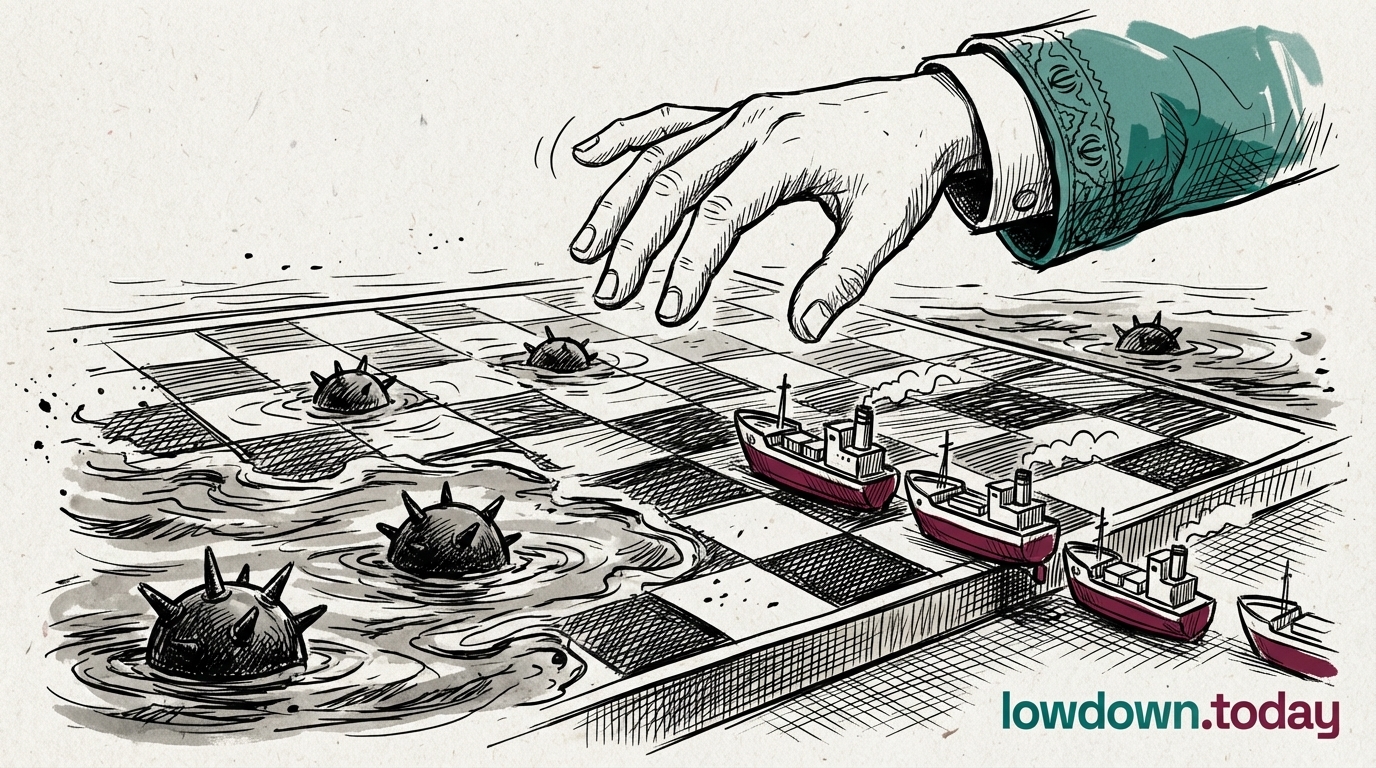
Fortune reported that vessels claiming Chinese or Muslim ownership receive de facto IRGC protection through the Strait of Hormuz while all others face interdiction or attack — formalising a two-tier passage system in the world's most important oil chokepoint.

ConflictDeveloping
Key takeaway

Iran's two-tier passage system is the first functional challenger to US-guaranteed freedom of navigation at a major chokepoint since 1945.

Fortune reported that ships claiming Chinese or 'Muslim' ownership are receiving de facto IRGC protection from interdiction in the strait of Hormuz, while vessels without those affiliations face warning shots, drone strikes, or seizure. The IRGC named and struck the Marshall Islands-flagged tanker Louise P on the stated grounds that 'it belongs to the US' ; it struck the tanker Prima after the vessel ignored transit warnings . Both attacks were publicly claimed, with victims identified by name. Ships flying the right flags pass unmolested.

The two-tier system did not emerge overnight. Reuters reported earlier that China had entered direct formal negotiations with Tehran for guaranteed passage — an evolution from the ad hoc AIS flag-switching that Chinese-linked tankers began using in the war's first days . Iran's Foreign Ministry escalated further on Day 10, warning all tankers passing through Hormuz 'must be very careful' while the situation remains insecure — the first time the threat moved from IRGC operational channels to formal diplomatic messaging. The statement placed every shipowner on notice: protection is available, but it runs through Tehran and Beijing.

The commercial consequences are already measurable. Tanker traffic through Hormuz is down approximately 70%. Kuwait declared Force majeure on all oil exports, removing a further 300,000 barrels per day . VLCC freight rates hit an all-time high of $423,736 per day — and that figure reflects the cost for vessels willing to transit at all. For those that cannot claim Chinese or Muslim affiliation, the strait is functionally closed. Saudi, Kuwaiti, and Iraqi crude has no alternative export route at comparable volume; the East-West Pipeline (Petroline) across Saudi Arabia carries a maximum of roughly 5 million barrels per day, well below the 17-21 million barrels that normally transit Hormuz.

The partition of Hormuz gives Beijing structural leverage that outlasts the war. China imported approximately 11 million barrels per day in 2025, over half of it from Gulf producers. If Chinese-affiliated vessels are the only ones moving freely through the strait, Beijing becomes the de facto gatekeeper of Gulf oil access — not through military control, but through a bilateral arrangement with Iran that no other power can replicate. European and Japanese refiners, already facing spot prices that swung $30 in a single session on Day 10, confront not just a price shock but a supply architecture that preferences a competitor. the strait is no longer simply open or closed. It is open for Chinese-linked commerce and closed to everyone else, enforced by Iranian interdiction and backed by Chinese naval presence.

Deep Analysis

In plain English

The Strait of Hormuz is the narrow waterway through which roughly 20% of the world's oil flows. Iran is now deciding which ships can pass safely. Ships with Chinese connections or Muslim-majority country ownership are being allowed through. Ships connected to Western companies or countries are not. This reverses how global trade has functioned since the Second World War, when the US Navy guaranteed that any commercial vessel could sail international waters regardless of origin. Iran is offering its own alternative guarantee — but only to political allies. For ordinary people, this means that where goods come from and who owns the ships carrying them may increasingly determine what those goods cost.

Deep Analysis
Synthesis

The two-tier passage system is a live stress test of the post-1945 US-guaranteed freedom of navigation order. If IRGC-backed selective passage persists beyond this conflict without a coercive US response analogous to Operation Praying Mantis, it establishes the precedent that state actors can offer competing passage guarantees based on political alignment. That precedent has structural implications for every maritime chokepoint globally — Malacca, Bab-el-Mandeb, the Turkish Straits — not only Hormuz.

Root Causes

China purchases over 80% of Iran's oil exports under existing sanctions, making Beijing Tehran's indispensable economic patron. The IRGC protection arrangement formalises that dependency under military conditions — Iran cannot antagonise Chinese shipping interests without losing its primary revenue source. The arrangement is therefore as much a product of Iran's financial constraints as it is strategic design: Tehran cannot afford to treat its only major buyer as a neutral party.

Escalation

The two-tier system has a self-reinforcing commercial logic. Western-linked shipping faces compounding cost disadvantages — higher war risk premiums, longer re-routing distances, potential interdiction — that accelerate the structural shift of Gulf crude purchases towards Asian buyers. This reshapes the oil market's customer base independently of the war's military outcome, creating durable economic facts that persist after any ceasefire.

What could happen next?
1 precedent2 consequence1 risk1 meaning
  • Precedent

    IRGC-selective passage represents the first successful operational challenge to undifferentiated US-guaranteed freedom of navigation at a major global chokepoint.

    Long term · Suggested
  • Consequence

    Western shipping companies face a structural cost disadvantage in Gulf crude procurement, accelerating the eastward shift of Middle Eastern oil market customers.

    Medium term · Assessed
  • Risk

    Gulf Arab states whose vessels face maximum interdiction risk may request US naval escort, creating direct US-Iran confrontation scenarios in the strait.

    Short term · Suggested
  • Consequence

    Shipping company ownership will be restructured to qualify for Chinese-linked protection status, creating new beneficial ownership opacity in maritime commerce.

    Short term · Assessed
  • Meaning

    Iran's ability to offer a competing passage guarantee reveals that US freedom of navigation enforcement in Hormuz is now conditional rather than absolute.

    Immediate · Assessed
First Reported In

Update #31 · Iran moves to heavy warheads; China deploys

Fortune· 10 Mar 2026
Read original
Causes and effects
This Event
Chinese ships pass; others are seized
The selective passage regime transforms Hormuz from a contested waterway into a geopolitically partitioned one, giving China preferential access to Gulf energy while import-dependent economies in Europe and East Asia face sustained supply disruption.
Different Perspectives
Iran human rights monitors (Amnesty International, Iran HRM, Hengaw)
Monitors documented 30 women held on capital moharebeh charges in a basement prison ward, Benyamin Naqdi's death sentence with a forced-confession broadcast, and 39 political executions since February. Iran's security courts have processed protest cases at uninterrupted wartime tempo regardless of the diplomatic track.
Lloyd's of London (war-risk underwriters)
Lloyd's held its Hormuz war-risk designation at $10-14 million per voyage while Brent fell 19%, maintaining a structural divergence from futures pricing. Underwriters require a UN Security Council resolution or government certification letter, not diplomatic optimism, before de-listing the strait.
Oman (Sultan Haitham's government)
Muscat issued a mine alert in its own territorial waters while denying any Hormuz toll plan after US Treasury threatened sanctions. A suspected mine in Omani waters on the same weekend as US financial pressure forces Muscat to demonstrate sovereignty without appearing to choose sides.
China (PRC)
China (PRC)
Beijing sent scholars rather than its defence minister to Shangri-La for the second year running and addressed Taiwan and multilateralism without mentioning Iran. China maintains its bilateral energy corridor protection with Tehran while refusing the diplomatic exposure of a public position at multilateral forums.
Iran Supreme National Security Council
The SNSC framed the unsigned MOU as a 10-point Iranian victory with enrichment already recognised, and the foreign ministry rejected Trump's nuclear conditions within hours. Tehran treats each unsigned day as validation that Iran has retained its stockpile without surrendering it.
Trump administration (CENTCOM/White House)
Trump posted three non-negotiable public conditions while CENTCOM disabled a commercial ship and Hegseth threatened resumed strikes from Singapore. The administration treats the unsigned MOU as leverage to extract maximum Iranian concessions before any ceasefire instrument is committed to paper.