Skip to content
Briefings are running a touch slower this week while we rebuild the foundations.See roadmap
Iran Conflict 2026
8APR

Rubio hosts first Israel-Lebanon talks since 1993

4 min read
09:27UTC

Lowdown Newsroom

ConflictDeveloping
Key takeaway

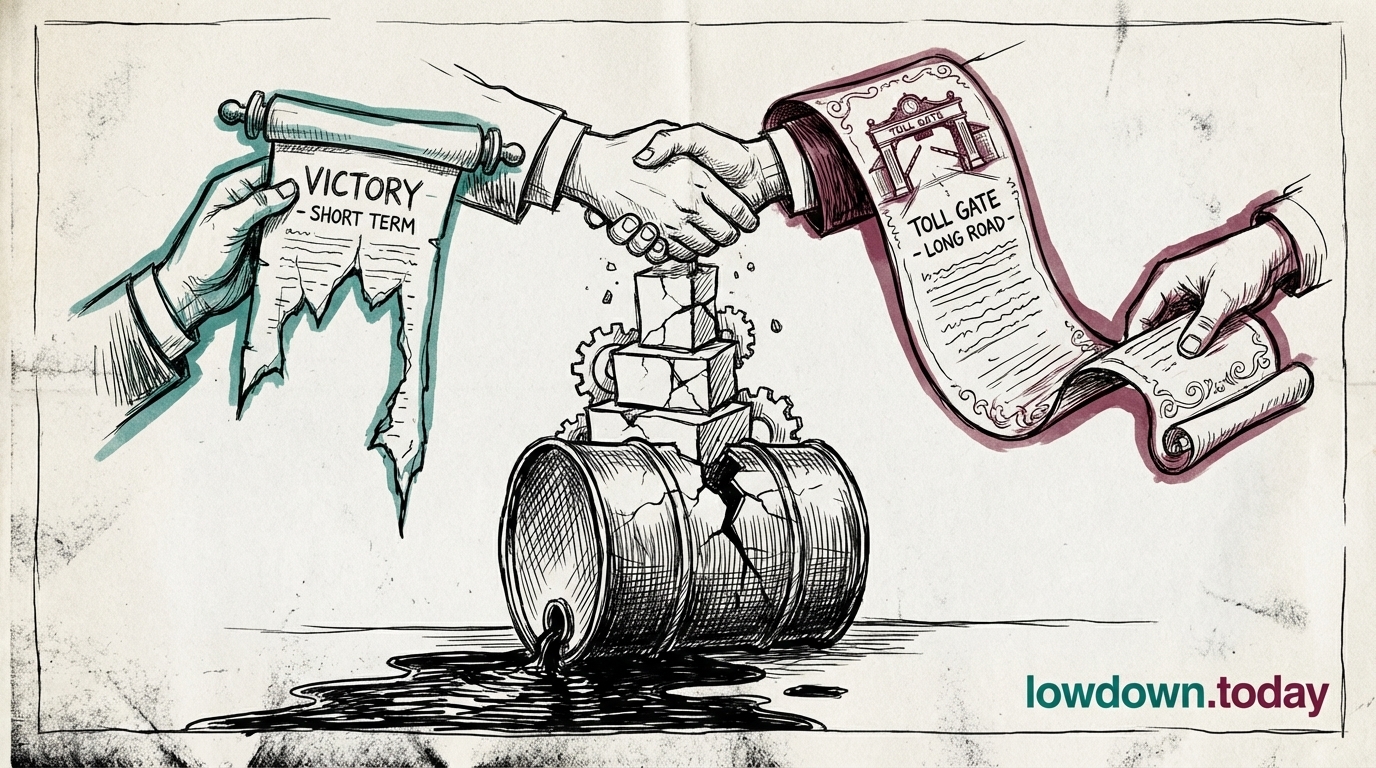
The US owns the Lebanon pen; Europe owns the Hormuz pen; both are being drafted this week.

Secretary of State Marco Rubio met Israeli Ambassador Yechiel Leiter and Lebanese Ambassador Nada Hamadeh Moawad at the State Department on Tuesday, alongside State Counsellor Michael Needham and the US Ambassador to Lebanon. The department's readout called it 'the first major high-level engagement between the governments of Israel and Lebanon since 1993.' The talks proceeded over the public veto Naim Qassem had issued two days earlier, when the Hezbollah secretary-general called them 'futile' and paired the demand with a salvo of more than ten drones intercepted by the IDF (Israeli Defence Forces) .

The readout's operative language is harder than the ceasefire text it sits behind. The United States 'expressed its support for the Government of Lebanon's plans to restore the monopoly of force and to end Iran's overbearing influence.' Any agreement, the readout insists, 'must be reached between the two governments, brokered by the United States, and not through any separate track.' That last clause is direct language aimed at European and Gulf mediators. It asserts a US monopoly on the Lebanon channel at the same hour Paris and London are asserting a multilateral monopoly on the Hormuz channel.

Washington now holds the Lebanon pen; Europe is two days from holding the Hormuz pen. Hezbollah's domestic calculation narrows: collapsing the cabinet to punish a government that has entered direct US-brokered talks is politically costly, but so is acquiescing to a framework that names Iran as the problem. The group's drone salvo was the escalation it could afford this week. The next step, continued rocket fire from Lebanese territory or a wider cross-border incident, would test how much of the cabinet's mandate to 'restore the monopoly of force' survives first contact with the group it is aimed at.

Deep Analysis

In plain English

For the first time since 1993, diplomats from Israel and Lebanon were in the same room in Washington for official government talks. The US brought them together, and the meeting's readout; the official summary; was unusually direct: the US said any deal must be made between the two governments, brokered by the US alone, and no other country or group should be involved. Hezbollah, the Iranian-backed armed group that effectively runs parts of Lebanon, had publicly demanded the talks be cancelled. They went ahead anyway. Hezbollah even fired more than ten drones at Israel in the days before the meeting, apparently trying to make the Lebanese government back down. It didn't. The meeting matters not because a deal was reached, but because the US locked in its ownership of the Lebanon track at the exact moment France and the UK are trying to do the same for the Hormuz track.

Deep Analysis
Root Causes

The structural condition enabling the trilateral is Lebanon's formal banning of Hezbollah's military activities and expulsion of the Iranian ambassador; the first such government action in post-civil-war history. That decision, driven by the Lebanese cabinet's calculation that Hezbollah's isolation was preferable to continued war damage, gave the Lebanese government political standing to appear alongside Israel at the State Department without the previous domestic constraint.

Hezbollah's veto failed because it no longer controls the Lebanese government's diplomatic calculus the way it did before 2024. The Lebanese state's residual dependence on Washington for reconstruction financing; approximately $4 billion in pledged post-war infrastructure support; gives Rubio a structural leverage that Qassem cannot match from his current position.

What could happen next?
  • Consequence

    US 'not through any separate track' language formally closes the Qatari back-channel to Hezbollah on Lebanon, concentrating brokerage risk in Washington's hands

    Immediate · 0.75
  • Risk

    Hezbollah's escalation ladder remains active: the drone salvo on 14 April failed to stop the talks, meaning Qassem's next move may be a larger strike calibrated to force the Lebanese government to withdraw

    Short term · 0.7
  • Precedent

    The 'first major high-level engagement since 1993' framing creates a public benchmark; any Hezbollah action that collapses the track will be reported against that baseline, increasing its political cost for Tehran

    Medium term · 0.8
First Reported In

Update #69 · Cooper joins the instrument gap

US State Department· 15 Apr 2026
Read original
Different Perspectives
Islamabad (Pakistan Armed Forces and Foreign Ministry)
Munir's cancellation reflects Islamabad's assessment that no bridging formula survives the collision of Khamenei's uranium directive, Rubio's Hormuz red line, and the sequencing gap simultaneously; Naqvi's relay role signals continued Pakistani engagement without a mandate to close any of the three gaps.
Lloyd's of London war-risk market
Published PGSA coordinates give underwriters the cartographic input to model tanker route exposure inside the claimed zone; OFAC's Sunday GL V ruling determines whether Hengli-Singapore dollar-clearing routes carry secondary-sanctions risk from Monday, adding a compliance layer to the existing kinetic war-risk premium.
Hengaw Human Rights Organisation
Zaleh's trial lasted 'only a few minutes' before a conviction on PDKI membership charges at Naqadeh; the pattern of solitary detention, coerced confession, and minutes-long hearing is consistent with wartime political-charge architecture the organisation has documented across the Kurdish northwest.
Gulf Arab states (UAE, Bahrain, Kuwait)
The UAE has not published counter-coordinates to the PGSA's Hormuz zone map, leaving Emirati silence as the maritime-law response to Iran's charted boundary claim. Abu Dhabi's published position now defaults by omission toward implied acceptance of the zone's cartographic fact.
Beijing's Ministry of Commerce
MOFCOM's blocking order covers Hengli and four other designated refineries on the mainland but does not extend to the dollar-clearing layer in Singapore, making Sunday's GL V expiry the first live test of whether Beijing's sanctions-defiance architecture reaches the place where dollars settle.
The White House
The White House
Trump's verbal track on Iran has produced no signed Iran-specific presidential instrument across 84 days; both financial-sector EOs signed on 19 May are unrelated to Hormuz or the IRGC. Rubio's public naming of the Hormuz toll architecture as a deal-killer is the administration's most concrete new position this week.