Skip to content
Briefings are running a touch slower this week while we rebuild the foundations.See roadmap
Iran Conflict 2026
28MAR

Israel strikes Tehran at record scale

4 min read
17:06UTC

Al Jazeera's correspondent described Sunday's Israeli bombardment of the Iranian capital as the largest of the war, with simultaneous attacks across Isfahan, Karaj, Ahvaz, and Bandar Abbas.

ConflictDeveloping
Key takeaway

Simultaneous strikes across four cities signal systematic targeting of Iran's defence-industrial base, not battlefield attrition.

Israel struck Tehran on Sunday in what Al Jazeera's correspondent described as attacks 'unprecedented in size and volume' 1. Explosions hit eastern Tehran near the Shahid Babaei Expressway. Simultaneous strikes landed across Isfahan, Karaj, Ahvaz, and Bandar Abbas. A hospital was struck in Ahvaz. One person was killed at a radio station in Bandar Abbas 2. The attacks came fewer than 24 hours before Trump claimed productive talks with Iran — the military and diplomatic tracks moving in opposite directions.

The geographic spread tracks Iran's military-industrial map. Isfahan houses a newly disclosed underground enrichment facility that the IAEA has been denied access to inspect . Karaj contains centrifuge component manufacturing under Western sanctions. Ahvaz sits in Khuzestan, Iran's oil-producing heartland and a province with a substantial Arab minority Tehran has long treated as a security concern. Bandar Abbas is the principal Iranian port on the strait of Hormuz and headquarters of the IRGC Navy's southern command. The target selection is consistent with a campaign working systematically from nuclear infrastructure to naval chokepoints, across the full breadth of the country.

CENTCOM's updated totals frame the pace: 9,000 targets struck in 25 days, up from 8,000 the previous week , with 140 vessels destroyed and over 9,000 combat flights flown. CENTCOM Commander Adm. Brad Cooper said Iran NOW fires missiles 'one or two at a time' versus dozens at the war's start — a shift Cooper characterised as 'desperation.' The IRGC's own account contradicts this: it announced its 70th wave of Operation True Promise 4 on Saturday , claiming continued offensive capacity. Both characterisations serve their respective audiences. What the strike data makes plain is that the tempo has increased, not plateaued, between week three and week four.

The hospital hit in Ahvaz adds to a civilian toll the Iranian Red Crescent puts at over 81,000 damaged building units — hospitals, schools, and emergency facilities — with nine hospitals NOW non-operational 3. HRANA, an independent human rights organisation, has documented at least 1,407 civilian deaths including 214 children, calling this 'an absolute, absolute minimum' 4. Iran's health ministry reported approximately 210 children killed and more than 1,500 under-18s injured. The IDF's stated operational timeline extends through Passover in mid-April, with contingencies beyond . Tehran's civilian infrastructure — already degraded after 25 days — faces at minimum four more weeks of bombardment at an increasing rate.

Deep Analysis

In plain English

Israel attacked four Iranian cities at once — not just Tehran but also Isfahan, Karaj, and Ahvaz. Those cities are not chosen randomly. Isfahan hosts Iran's major missile production facilities and nuclear sites. Karaj contains nuclear research centres. Ahvaz sits in Khuzestan province, the heart of Iran's oil industry. Attacking all four simultaneously suggests Israel is attempting to destroy Iran's capacity to manufacture weapons and sustain its economy, not merely degrade its front-line military. This is a qualitatively different kind of campaign from what has come before.

Deep Analysis
Synthesis

Trump's diplomatic announcement and Israel's 'unprecedented' strikes occurred simultaneously, creating a strategic paradox. The actor best positioned to enforce a deal is signalling restraint while its closest regional partner escalates. Iran cannot simultaneously accept a US framework and absorb Israeli strikes without a domestic political cost that makes acceptance impossible for Ghalibaf or any interlocutor.

Root Causes

Israel's simultaneous escalation during Trump's diplomatic announcement reflects a calculated exploitation of the diplomatic window as military cover. Tel Aviv has historically operated on the premise that US-brokered pauses reduce the international cost of sustained strikes — a pattern visible in 2006 Lebanon and 2014 Gaza, where ceasefire negotiations ran concurrently with intensified operations.

Escalation

The geographic target set maps directly onto Iran's defence-industrial and energy base: nuclear and missile production in Isfahan, nuclear research in Karaj, oil infrastructure in Khuzestan. This objective cannot be achieved in a single campaign cycle, implying sustained multi-city operations regardless of diplomatic progress. Israel's escalation trajectory is structurally independent of the US diplomatic window.

What could happen next?
  • Meaning

    Simultaneous strikes on four cities mark the transition from degrading Iranian military capacity to dismantling its defence-industrial and energy base as a strategic objective.

    Immediate · Assessed
  • Risk

    Iranian domestic pressure to respond decisively grows with each strike on civilian-proximate infrastructure, narrowing the political space for Ghalibaf to negotiate.

    Short term · Assessed
  • Risk

    Strikes on Ahvaz risk damaging Khuzestan oil production infrastructure, which could push prices back toward $126 independent of Hormuz developments.

    Short term · Suggested
  • Precedent

    Simultaneous multi-city strikes on a major regional state sets a new threshold for conventional warfare between non-nuclear states in the post-Cold War era.

    Long term · Assessed
First Reported In

Update #46 · Trump delays strikes; oil crashes to $99

Al Jazeera· 24 Mar 2026
Read original
Causes and effects
This Event
Israel strikes Tehran at record scale
The most intensive single day of Israeli strikes on Tehran came hours before Trump claimed diplomatic progress. CENTCOM's updated total of 9,000 targets in 25 days and the destruction of a hospital in Ahvaz show the air campaign accelerating into its fourth week, not pausing for diplomacy.
Different Perspectives
Gulf shipping and insurance markets
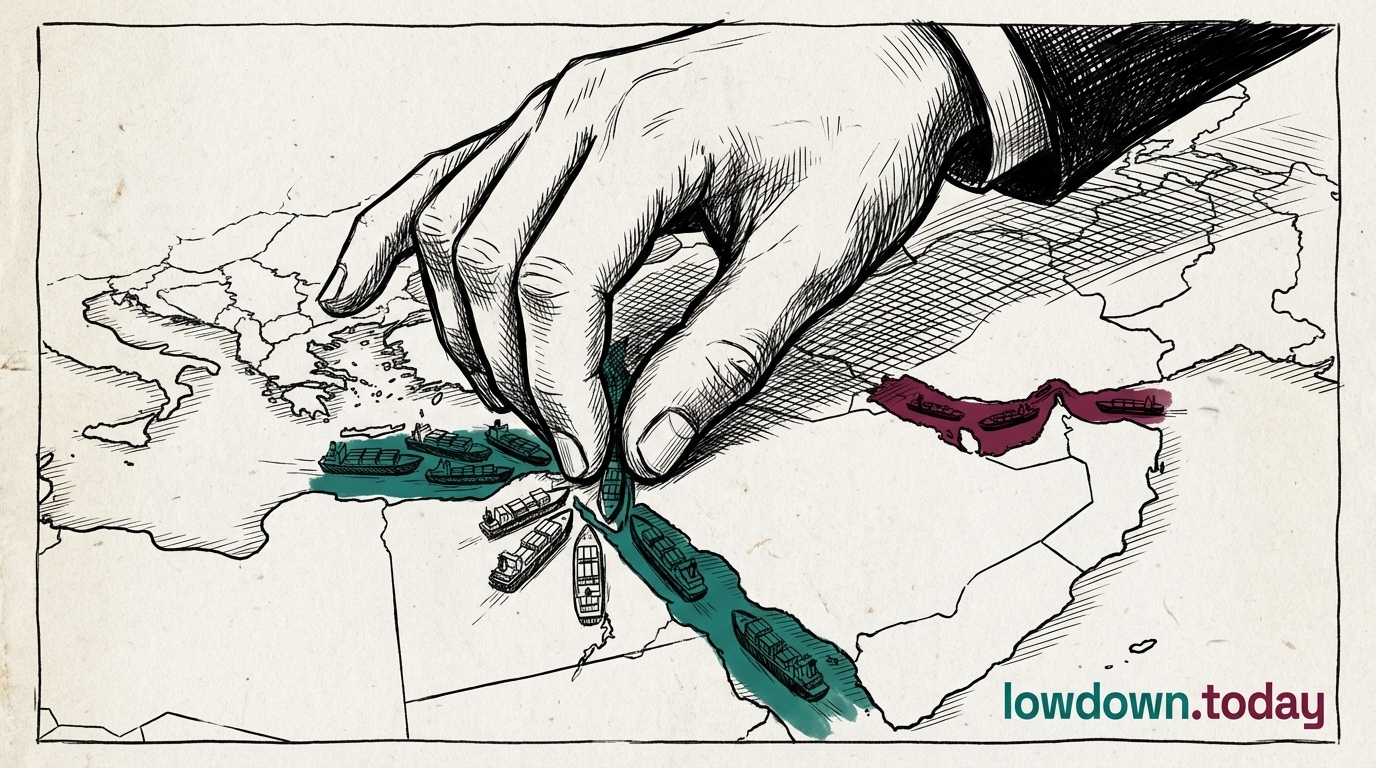
With Hormuz and Bab el-Mandeb both hostile at once, war-risk underwriters face their first dual-chokepoint pricing problem; the rerouting hedge that absorbed one closure is gone for Israeli-linked hulls. Any deal that reopens Hormuz without a Houthi stand-down clause delivers only partial shipping relief.
Russia and China
Russia and China
Russia and China met IAEA chief Grossi jointly in Geneva on 5 June to coordinate an advance blocking position against Washington's censure resolution, the first documented instance of proactive pre-session obstruction rather than reactive post-vote dissent. Beijing's move came four days after OFAC designated Shanghai Qianye Energy under Iran energy sanctions.
Saudi Arabia
Saudi Arabia
Saudi Arabia was left out of the emergency $4.01 billion Patriot waiver Qatar received on 2 May as its own PAC-3 stocks ran near-empty from intercepting Iranian salvoes over Aramco facilities. Riyadh is on a standard 18-month FMS queue behind a production line booked through 2030, with no equivalent priority to Qatar's Al Udeid basing role.
Houthis (Ansar Allah)
The Houthis declared a complete ban on Israeli Red Sea navigation on 8 June and struck Jaffa, their first attack on Israeli territory since April, seven days after the Tasnim authorisation to activate other fronts including Bab el-Mandeb. The declaration put both chokepoints under hostile authority simultaneously.
Iran
Iran
Iran agreed the 9 June mutual halt after the Mahshahr exchange and coordinated with Russia and China to block Washington's IAEA censure resolution, using the Board as a second front while the bilateral pause held on the military one. Tehran's acceptance of the Lebanon carve-out contradicts the linkage position it stated on 1 June.
Benjamin Netanyahu and the IDF
Israel struck the Karun Petrochemical plant at Mahshahr on 8 June over Trump's explicit objection, then agreed a halt with Iran the following day scoped on Israeli terms with Lebanon carved out. Netanyahu's posture is that the IDF will not accept Iranian missile factories as off-limits regardless of US diplomatic timelines.