Skip to content
Briefings are running a touch slower this week while we rebuild the foundations.See roadmap
Iran Conflict 2026
28MAR

Iran reads MOU; reply window to 9 May

4 min read
17:06UTC

Foreign Ministry spokesman Esmaeil Baqaei said on 7 May Tehran was 'still considering' the seven-point US Memorandum of Understanding delivered through Pakistan, with a written reply window that expires on 9 May.

ConflictDeveloping
Key takeaway

Tehran's reply to a seven-point US text routed through Islamabad must arrive in writing by 9 May.

Esmaeil Baqaei, Iran's Foreign Ministry spokesman, said on 7 May that Tehran was "still considering" the US Memorandum of Understanding (MOU) delivered through Pakistan and would relay its response to Pakistani mediators once complete 1. Pakistani Foreign Ministry spokesman Tahir Andrabi said: "We remain positive, we remain optimistic, and we hope the settlement will be soon rather than later." The US set a two-day window for a written response from delivery; that window expires on 9 May.

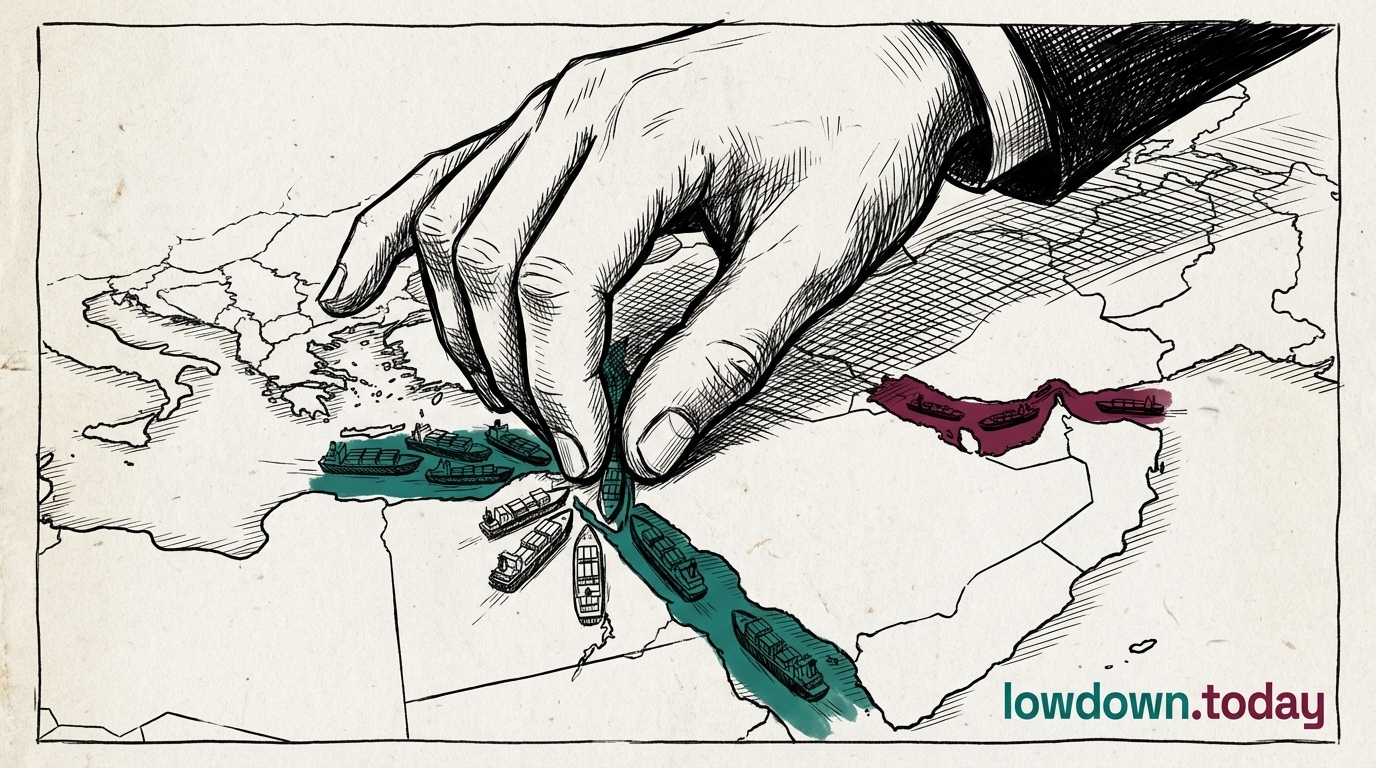
The Nation (Pakistan) detailed the seven points of the document on 7 May 2. They are: a 12-year enrichment moratorium, transfer of Iran's highly-enriched uranium (HEU) to the United States, US sanctions lifting, release of Iran's frozen overseas assets, Hormuz reopening that ends the PGSA toll system once the agreement is signed, extension of the 16 April Lebanon ceasefire, and a 30-day window for full agreement negotiations after signing.

The routing matters as much as the contents. Pakistani Foreign Minister Ishaq Dar's office passed the document to Abbas Araghchi's ministry rather than across a State Department table, the channel Marco Rubio had been working before he rejected Hormuz-first sequencing on 1 May . Trump's decision to route a paper that begins with Hormuz reopening through Islamabad, rather than through Foggy Bottom, produced the document on Baqaei's desk.

The sequencing inverts what Rubio rejected. By putting Hormuz reopening alongside HEU transfer in the same paper, the MOU asks Iran to give up two distinct leverages at once. The Pakistani route lets Trump accept that frame without it appearing on State Department letterhead, while binding Iran to surrender the chokepoint in the same instrument that releases sanctions.

The 9 May expiry is a political deadline more than a legal one. Iran can transmit a counter-text rather than a yes or no, and the IRGC's missile-and-boat strike on US destroyers has already complicated Araghchi's room for manoeuvre. The Foreign Ministry's authority over the IRGC ends at Article 110 of the Iranian constitution, which is why Baqaei's review can proceed in Tehran while the destroyers Project Freedom paused take fire two hundred miles south. Whether Iran's reply arrives before 9 May, and whether Ali Khamenei's office endorses it rather than just Araghchi's ministry, are the two questions the coming day will answer.

Deep Analysis

In plain English

The United States sent Iran a seven-point peace proposal, carried by Pakistan as a go-between, on 7 May. Iran's foreign ministry confirmed it had received the document and was reading it, with a deadline to reply of 9 May. The document asks Iran to stop collecting tolls on ships passing through the Strait of Hormuz, hand over its highest-grade uranium to the US, and agree to a 12-year pause on uranium enrichment. In return, the US offers to lift its economic sanctions and release money Iran has held frozen abroad. Iran has not said yes or no yet.

Deep Analysis
Root Causes

The MOU asks Iran to surrender Hormuz transit control and its highly-enriched uranium stockpile simultaneously, in exchange for sanctions relief and frozen-asset release that require US domestic legislative steps Iran cannot verify in advance.

Iran has seen this reversibility asymmetry before. The 2018 US withdrawal from the JCPOA demonstrated that a US president can exit a nuclear agreement by executive action in a single day, while Iran spent months unwinding commitments it had complied with for three years. Tehran's hesitation reflects an accurate reading of that structural gap, not an unwillingness to deal.

What could happen next?
  • Risk

    If Iran's reply arrives as a counter-text rather than an acceptance, the 9 May deadline becomes the start of a further negotiating round rather than a resolution, and markets will price the continuation of the blockade.

    Immediate · 0.8
  • Consequence

    Khamenei's endorsement (or absence from) Iran's reply will be the single most diagnostic signal for whether the IRGC is bound by whatever the Foreign Ministry sends.

    Short term · 0.85
  • Risk

    The MOU's Lebanon ceasefire extension provision is the head most exposed by the IDF Dahiyeh strike (ID:3094); if the ceasefire collapses before 9 May, the seven-point structure loses one of its most politically salient deliverables.

    Immediate · 0.75
First Reported In

Update #91 · MOU in Tehran, missiles in the strait

Washington Times· 8 May 2026
Read original
Different Perspectives
IAEA
IAEA
Director General Rafael Grossi appeared in person at the UNSC on 19 May and warned that a direct hit on an operating reactor 'could result in very high release of radioactivity'. The session produced a condemnation record but no resolution, and the Barakah perimeter was already struck on 17 May.
Hengaw (Kurdish rights monitor)
Hengaw documented three judicial executions and the detention of Kurdish writer Majid Karimi in Tehran on 19 May, establishing Khorasan Razavi province as the newest geography in Iran's wartime judicial record. The organisation's Norway-based operation continues to surface a domestic repression track running in parallel with every diplomatic and military development.
India
India
Six India-flagged vessels conducted a coordinated cluster transit under PGSA bilateral assurances during the 17 May window, paying no yuan tolls. New Delhi's inclusion in Iran's state-to-state passage track insulates Indian energy supply without requiring endorsement of the PGSA's yuan-toll architecture or alignment with the US coalition.
Pakistan
Pakistan
Pakistan is the only functioning diplomatic bridge between Tehran and Washington. Its role is relay, not mediation in the settlement sense: it conveyed Iran's 10-point counter-MOU in early May, relayed the US rejection, and is now passing 'corrective points' in the third documented exchange of this sub-cycle without either side working from a shared text.
UK and France (Northwood coalition)
Twenty-six coalition members have published no rules of engagement eight days after the Bahrain joint statement; Lloyd's underwriters have conditioned war-risk reopening on written ROE from either Iran or the coalition. Italian and French mine-countermeasures deployments are operating on the in-water clearance task CENTCOM Admiral Brad Cooper's 90% mine-stockpile claim does not address.
Saudi Arabia
Saudi Arabia
Riyadh has not publicly commented on the Barakah strike or the 50-47 discharge vote. Saudi output feeds the IEA's $106 base case; the $5 Brent premium above that model reflects institutional uncertainty no Gulf producer can compress through supply adjustment alone.