Skip to content
You can now search across every topic, entity and event.What's new
Iran Conflict 2026
14AUG

Two Hellfires into a merchant ship

4 min read
09:56UTC

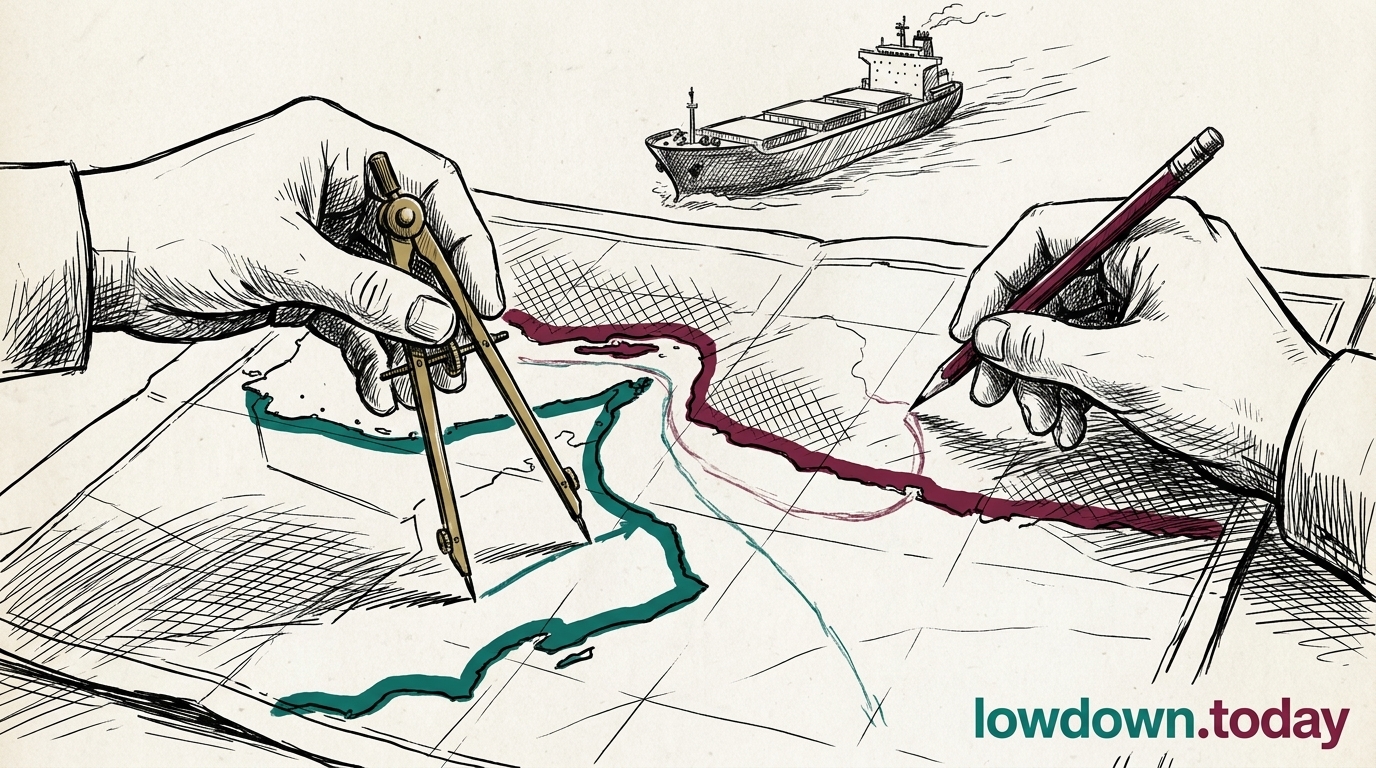
A US Navy MH-60 put two Hellfire missiles into the engine room of the Panamanian-flagged M/V Vela Nova on 11 August. Until Tuesday the blockade of Iranian ports ran on radio warnings, diversions and boarding parties.

ConflictDeveloping
Key takeaway

A US helicopter has now put missiles into a merchant hull to enforce the blockade of Iranian ports.

At 07:15 UTC on Tuesday 11 August the master of a container ship in the Gulf of Oman reported an incident involving military forces to United Kingdom Maritime Trade Operations (UKMTO), the Royal Navy cell that merchant captains signal when something happens to them at sea. Advisory 109-26 named no vessel, established no cause and recorded no casualties or damage 1. The crew reported first, and knew least.

Hours later US Central Command (CENTCOM), the American military command covering the Middle East, said what had happened to him. A US Navy MH-60, a helicopter flown from warships, had put two Hellfire missiles into the engine room of the Panamanian-flagged M/V Vela Nova, disabling her steering gear. On CENTCOM's account the vessel ignored warnings and tried to evade the blockade of Iranian ports. Its statement did not address crew casualties 2 3.

Those are two accounts of one incident, not two incidents. PortNews identified the container ship in Advisory 109-26 as the Vela Nova, about 71 nautical miles off the Pakistani coast near Gwadar, a distance that is PortNews's own and not in the advisory 4. The advisory first classified her as a tanker before correcting to container ship, which is the measure of what a first wartime report is worth. CENTCOM's running count since 14 July stands at 55 vessels redirected, three disabled and two boarded, against 49 redirected and two disabled a week earlier . The tally is climbing in the column that costs a charterer a delay, and it has now moved once in the column that costs an owner a ship.

A naval blockade of another state's ports is an act of war in customary law, and Washington has published no Security Council authority for this one. The administration's answer is that Iran closed an international strait first and set six political conditions for reopening it . Set the helicopter beside what Donald Trump said the same day: "We totally control the strait of Hormuz. We have control over it. Nobody else. Only us." 5 Mohebbi, a spokesman for the Islamic Revolutionary Guard Corps (IRGC), told Mehr that the United States has no warship left in the Persian Gulf 6; the Associated Press counts fifteen or more US warships and two aircraft carriers in the adjoining Arabian Sea 7.

Deep Analysis

In plain English

A US Navy helicopter fired two missiles into the engine room of a cargo ship called the Vela Nova in the Gulf of Oman, a sea next to the Strait of Hormuz (the narrow waterway that a fifth of the world's oil passes through). The US military says the ship ignored warnings to change course as part of a blockade on Iranian ports, so the helicopter disabled its engines rather than sinking it. CENTCOM's statement on the strike did not mention the crew. On the same day, President Trump said the US fully controls the strait, while an Iranian military spokesman said the opposite, that no US warships remain in the area at all. Independent counts back the US position: at least fifteen American warships, including two aircraft carriers, were in the wider region that day.

Deep Analysis
Root Causes

CENTCOM's blockade of Iranian ports, resumed on 14 July, gives its forces a standing rule: a vessel that ignores radioed diversion warnings becomes eligible for disabling fire. US Central Command's own tally put the blockade at 49 vessels redirected, two disabled and two boarded as of 6 August ; the Vela Nova is the pattern's latest application, not a new decision.

The contradiction between Trump's claim of total control over Hormuz and Mohebbi's claim of zero US warships has a separate structural driver: both governments are speaking days before the Iran-Oman transit track is due to advance, and each has an incentive to describe the balance of naval power on its own terms rather than concede the other side's leverage.

What could happen next?
  • Precedent

    CENTCOM's decision to strike a second commercial vessel using the same disable-the-engine-room tactic as the Lian Star (ID:3770) confirms this is now a standing blockade-enforcement procedure rather than a one-off response.

  • Risk

    Widespread AIS dark-passage behaviour, reported by Lloyd's List on 12 August, raises the chance that CENTCOM or Iranian forces misidentify a vessel before firing, since neither side can rely on transponder data to distinguish blockade-runners from ordinary traffic.

First Reported In

Update #169 · The war moved from the air to the water

Al Jazeera English· 12 Aug 2026
Read original
Different Perspectives
Zawtar municipality, Lebanon
Mayor Muhammad Ismail called the 12 August demolition of the Sheikh Naim Mahdi School the biggest blow of a month that has also taken a nursery, municipal buildings, and his own home. The school falls inside Lebanon's nominal ceasefire zone.
European Union
European Union
The EU's High Representative joined 31 other states on 13 August condemning Iran's use of the death penalty to silence dissent. The joint statement cites no single casualty figure, leaving the scale of what it condemns to three monitors that disagree with each other.
Hengaw
Hengaw
The Norway-based monitor recorded 67 Iranian executions in July alone, against the Abdorrahman Boroumand Center's full-year total of 916 and Iran Human Rights Monitor's roughly 463. None of the three reconciles its count with the other two.
Lloyd's List Intelligence and Kpler
Lloyd's List counted 78 weekly Hormuz transits to 9 August, down from 95, with non-Iranian-linked ships leaving fastest. Kpler-sourced reports for 11 August traffic diverge between outlets by more than double, leaving underwriters no single figure for the route.
United States Treasury
Treasury Secretary Scott Bessent told Newsmax on 13 August that Washington will announce measures with more detail the following week. He named no instrument, sanctions target, or effective date.
United Arab Emirates
The UAE foreign ministry named the IRGC as the perpetrator of the 13 August attack on two ADNOC vessels, called it piracy, and invoked UN Security Council Resolution 2817. The statement follows five months in which every UAE shipping claim rested on Abu Dhabi's word alone.