Skip to content
You can now search across every topic, entity and event.What's new
Iran Conflict 2026
23JUL

124m barrels of Russian crude freed

4 min read
19:27UTC

The US Treasury permitted any country to purchase Russian oil already at sea, drawing sharp rebukes from European leaders who warned Washington was dismantling the sanctions regime it built.

ConflictDeveloping
Key takeaway

Washington has formally acknowledged that energy market stability now outweighs Russian revenue denial.

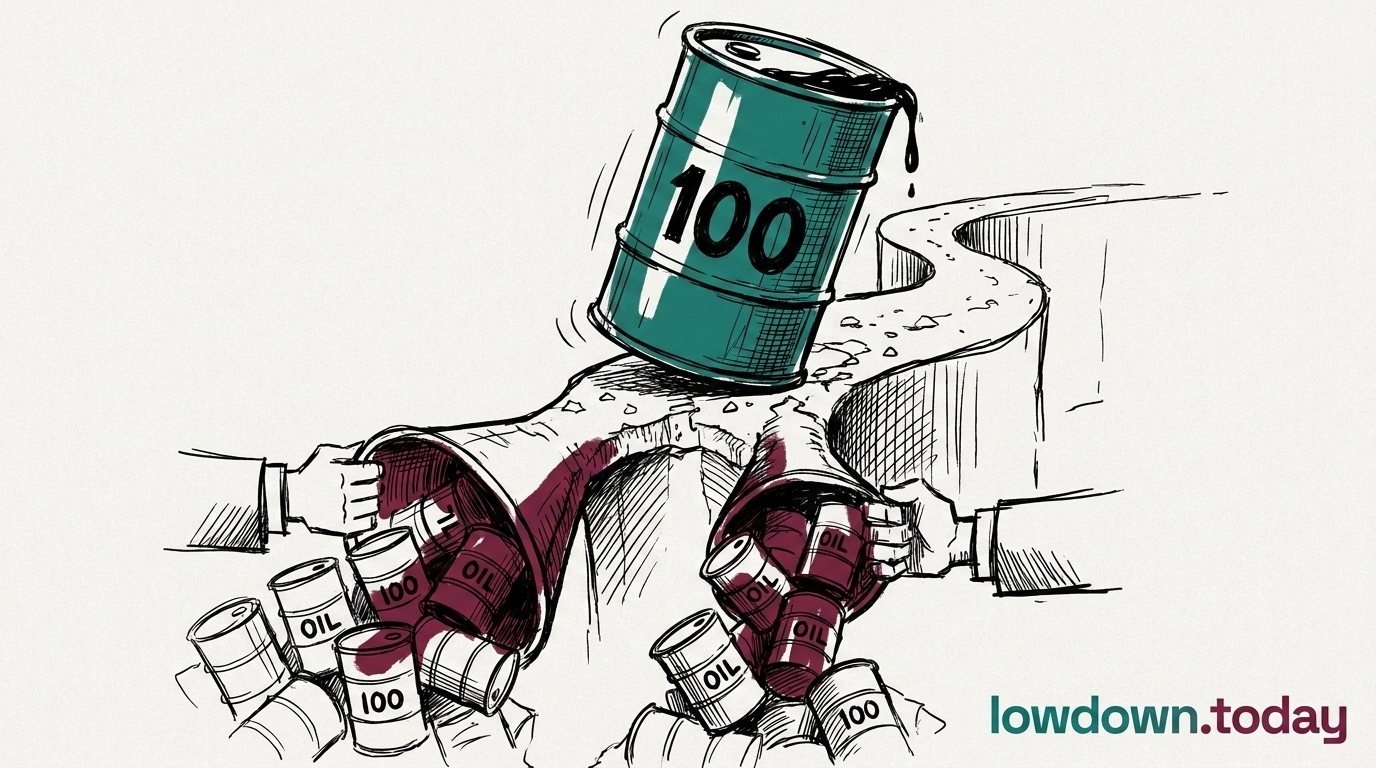
The US Treasury issued 30-day sanctions waivers on 12 March permitting any country to purchase approximately 124 million barrels of Russian oil already at sea, with the window running through 11 April 1. The waivers began on 5 March covering Indian refineries before expanding globally a week later. Treasury Secretary Scott Bessent called the measure "narrowly tailored" but told Sky News that Russian revenue gains were "an inevitability" 2.

The waivers arrive against a transformed price environment. In January, Urals crude traded below $38 per barrel against Brent at $62.50, and Russian oil revenues had fallen roughly 32% year-on-year . The Iran conflict reversed that trajectory. Brent reached approximately $103 per barrel by 18 March — a 65% increase — driven by the near-collapse of tanker traffic through the strait of Hormuz. Analysts at Rapidan Energy and Wood Mackenzie have called this the largest energy supply disruption since the 1973 oil embargo 3. The IEA's 400-million-barrel strategic reserve release — its largest-ever coordinated drawdown — failed to arrest the climb. Prices briefly touched $126 at peak.

European leaders responded in terms that left little ambiguity. German Chancellor Friedrich Merz — who told Trump on 3 March that Europe would not accept Ukraine terms negotiated without European participation — stated: "Easing sanctions now, for whatever reason, is wrong." European Council President António Costa said the move "impacts European security." Zelenskyy warned Russia could earn "$10 billion" over a fortnight. From Moscow, RDIF head and Special Presidential Envoy Kirill Dmitriev pushed the opposite direction, arguing the global energy market "cannot remain stable" without Russian oil 4.

The waivers expose a structural contradiction in Western sanctions policy. The regime was designed to constrain Russian revenue during a period of low oil prices. The Iran war has created conditions where every barrel Russia sells generates more revenue than the sanctions architecture was built to prevent — and where the US itself needs Russian crude on the market to contain domestic energy costs. The peace talks that froze when the Iran conflict began remain suspended; the sanctions leverage built for those negotiations is now eroding under the weight of an unrelated war. The 11 April expiry date will test whether the waiver was genuinely temporary or whether market pressure makes renewal politically unavoidable.

Deep Analysis

In plain English

The US government temporarily lifted rules preventing countries from buying Russian oil sitting on ships at sea. With oil prices spiking because of the Iran war, letting those cargoes sell was seen as the lesser evil. But once you issue this kind of temporary permission, it becomes very hard to withdraw — markets, shipping contracts, and payment channels all adapt to the new reality. Critics argue Russia collects the windfall either way, and the pause creates political and commercial pressure for further pauses.

Deep Analysis
Synthesis

The waiver is the first formal US acknowledgement that its dual-war economic containment strategy is self-defeating. It establishes a hierarchy — energy market stability ranks above revenue denial — that will constrain future sanctions design and provide adversaries with a replicable template: creating enough energy market disruption to force Western self-exemption from their own sanctions regimes.

Root Causes

The structural incompatibility of simultaneous Iran and Russia energy containment was inherent from the conflict's first week — no sanctions architecture designed for a single-conflict environment can restrict two major hydrocarbon producers simultaneously without triggering market failure. The G7 price cap ($60/barrel) was calibrated for a sub-$80 Brent environment; above $90, circumvention incentives for non-G7 buyers structurally exceed compliance costs, rendering the cap inoperative regardless of waiver decisions.

Escalation

The 11 April expiry falls during peak market stress — Brent at $103 and Hormuz disruption ongoing. Structural market pressure for extension materially exceeds political pressure for termination. The waiver's expansion from India-specific to global within one week signals scope creep that the Iran waiver precedent suggests will accelerate rather than reverse before expiry.

What could happen next?
  • Precedent

    Sanctions waivers issued under energy market duress establish a replicable template for future erosion whenever geopolitical pressure and market stability objectives conflict.

    Long term · Assessed
  • Risk

    If the 11 April expiry triggers an oil price spike, extension becomes politically mandatory — effectively converting a temporary waiver into a permanent accommodation.

    Short term · Assessed
  • Consequence

    EU member states maintaining harder sanctions lines than Washington face commercial disadvantage as non-G7 buyers access Russian oil with implicit US blessing.

    Immediate · Assessed
  • Meaning

    The seven-day expansion from India-specific to global waivers reveals Treasury had minimal confidence in a narrow application holding against market pressure.

    Immediate · Assessed
First Reported In

Update #5 · Trump frees 124m barrels; Russia earns €6bn

NBC News· 18 Mar 2026
Read original
Different Perspectives
India
India
India buys more Saudi crude than any other country and has 2.5 million nationals working in the kingdom, so a $100 Brent and a live strike on Saudi tankers reach New Delhi through both fuel bills and remittance risk. Neither channel has an alternative route the way Saudi Arabia's own pipeline does.
Qatar
Qatar
Qatar co-authored the four-mediator ten-day ceasefire proposal alongside Egypt, Pakistan and Oman, centred on resuming Hormuz navigation, while separately pursuing its dated compensation claim against Iran at the UN Security Council filed on 21 July. Doha is mediating and litigating in the same week.
Israel
Israel
Israeli intelligence, reported by the Wall Street Journal, assesses Iran moved thousands of centrifuges and part of its roughly 440kg enriched-uranium stock into Pickaxe Mountain after the June 2025 strikes on its three main nuclear sites. Some of the US refuelling aircraft now deploying to the region are bound for Israeli bases and Ramon Airport.
Houthis
Houthis
Yahya Saree announced the missile and drone strikes on the Encelia and Layla on 22 July as enforcement of the embargo his forces had declared by radio warning alone two days earlier. Six vessels already turned back on the broadcast; the strike shows Houthi forces will use weapons once warnings stop working.
Saudi Arabia
Saudi Arabia
Saudi Arabia's state news agency confirmed only a fire on the Encelia's bow, with the crew safe; the Layla strike remains unconfirmed by Riyadh. The kingdom built its Petroline pipeline specifically to bypass Hormuz through the Red Sea, so the tanker fire lands on the route Riyadh had already spent billions escaping.
United States
United States
Washington is weighing both ten-day proposals but wants a longer truce than either offers, and moved F-16 and F-35 jets plus refuelling aircraft into the region while it decides. That deployment, not Trump's Pickaxe Mountain remarks, is the measurable US action, buying options for the day talks fail rather than betting on them.