Skip to content
You can now search across every topic, entity and event.What's new
Iran Conflict 2026
23JUL

Oman's Hormuz fee splits its authors

3 min read
19:27UTC

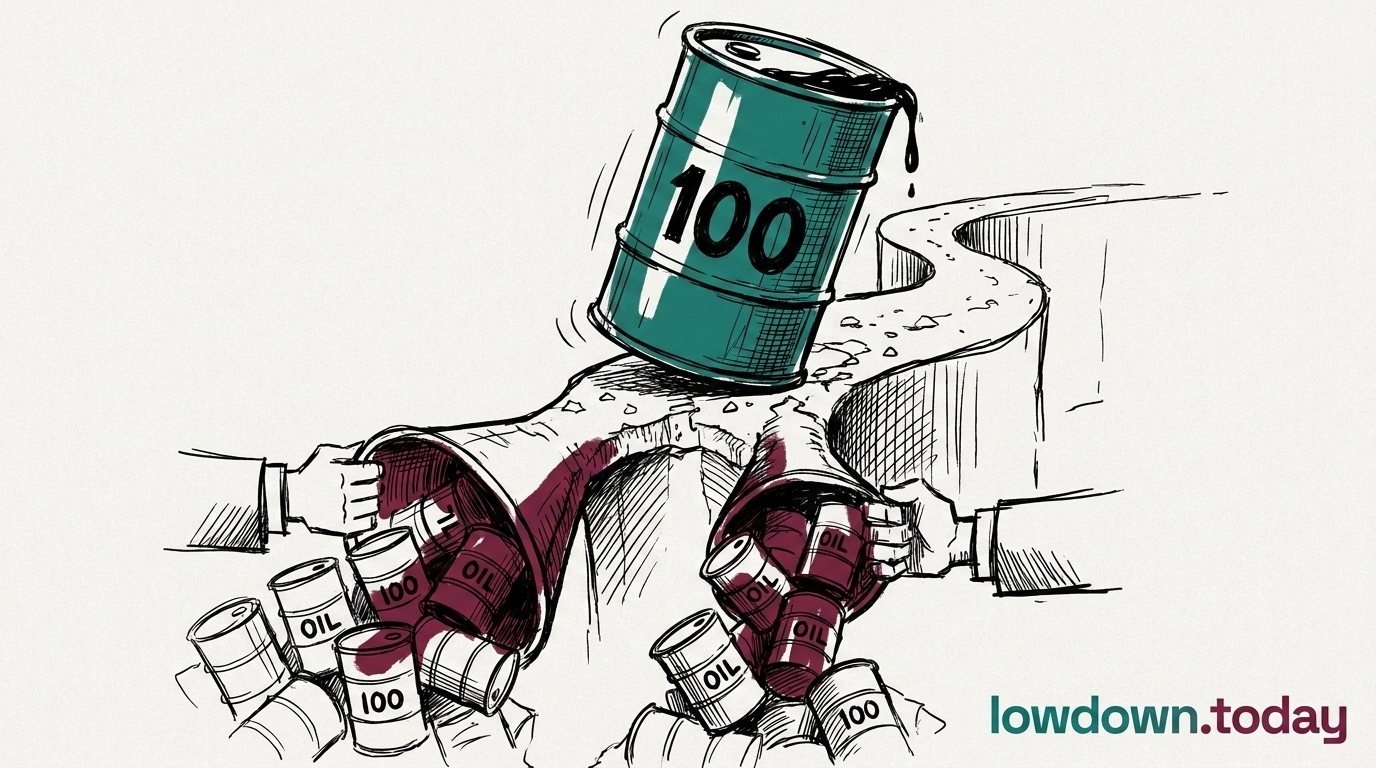
Oman handed the US a plan to charge "service fees" for Strait of Hormuz passage; Iran's Gharibabadi calls the same charges compulsory, and the White House says Iran cannot toll an international waterway.

ConflictDeveloping
Key takeaway

Oman and Iran describe one Hormuz fee in opposite terms, with the toll-free window expiring in August.

Oman handed the United States and its allies a written proposal for running the Strait of Hormuz on 30 June, according to a regional diplomat and a US source 1. The plan would let shipping companies pay "service fees", explicitly not tolls, modelled on the voluntary contributions vessels make in the Malacca and Singapore Straits 2. Hormuz carries roughly a fifth of the world's seaborne oil, so who charges for passage and on what basis is a question with global freight costs attached. The proposal is not finalised, and US negotiators have concerns they mean to raise with Muscat 3.

Three parties now describe one waterway in three ways. Oman calls the charges voluntary; Iran's deputy foreign minister Kazem Gharibabadi calls them compulsory and warns of unilateral action if the talks fail 4. Washington rejects both readings: White House spokeswoman Anna Kelly said "Iran cannot toll the strait, which is an international waterway" 5, restating the zero-fees line Marco Rubio and the Gulf states set out in Manama days earlier .

The Islamabad memorandum of 16 June set 60 days of toll-free passage, and Oman's fees would take over once that window and the US oil licence, General License X, both lapse in the third week of August . Tehran says it is covering the cost of the current free window from its own treasury, though Middle East Eye's reading of the memorandum text finds it names no cost-bearer, only Iran's "best efforts" 67.

The Malacca and Singapore model Oman copied runs on voluntary user contributions administered by a private Japanese foundation, with no power to compel a ship to pay. Grafting that onto a strait where a co-signatory calls the fee mandatory imports the ambiguity rather than settling it. Abbas Araghchi's claim of Iran's "sole" oversight was always rhetoric: the same memorandum gave Oman an equal seat and a joint fee committee , and its two authors now cannot agree what their own instrument means.

Deep Analysis

In plain English

The Strait of Hormuz is the narrow sea passage between Iran and Oman that roughly a fifth of the world's oil moves through. Oman has proposed that shipping companies using the strait pay a voluntary fee, similar to how ships already pay towards patrol costs in the Malacca Strait between Malaysia, Indonesia and Singapore. Iran says the same fee should be compulsory, and its deputy foreign minister has warned Iran could act on its own if it isn't. The White House says no country can charge ships just for passing through an international waterway. The dispute is really about who has the authority to charge for using the strait at all, and neither side has published an actual price.

Deep Analysis
Root Causes

Muscat ratified UNCLOS in 1989, and Article 26 of that treaty bars any charge on foreign ships for the mere act of passage through a strait. Oman's 'voluntary contribution' label keeps its proposal inside the treaty Muscat is bound by, rather than the mandatory toll Article 26 would forbid.

Iran signed UNCLOS in 1982 but never ratified it, so the same prohibition does not bind Tehran. That is why Iran's deputy foreign minister can call an identical fee 'compulsory' without contradicting any treaty obligation of his own government.

Escalation

Iran's 'unilateral action' warning follows a pattern the topic has already established. Verbal threats over the Hormuz corridor preceded the actual IRGC strikes on the Ever Lovely and Kiku , both hit within 48-72 hours of a warning about the same southern lane . On that base rate this is not an idle threat, though the target this time is a fee dispute rather than a routing dispute.

What could happen next?
  • Risk

    Iran's threat of unilateral action over the fee dispute follows the same warning-then-strike pattern seen with the Ever Lovely and Kiku attacks, raising the chance of a fresh IRGC move against shipping within days rather than weeks.

  • Precedent

    If shippers adopt Oman's voluntary model while ignoring Iran's compulsory version, Hormuz ends up running two competing fee regimes on one waterway, an outcome with no clean precedent at any other strait.

First Reported In

Update #142 · Doha: three stories, no signed paper

CNN· 1 Jul 2026
Read original
Different Perspectives
India
India
India buys more Saudi crude than any other country and has 2.5 million nationals working in the kingdom, so a $100 Brent and a live strike on Saudi tankers reach New Delhi through both fuel bills and remittance risk. Neither channel has an alternative route the way Saudi Arabia's own pipeline does.
Qatar
Qatar
Qatar co-authored the four-mediator ten-day ceasefire proposal alongside Egypt, Pakistan and Oman, centred on resuming Hormuz navigation, while separately pursuing its dated compensation claim against Iran at the UN Security Council filed on 21 July. Doha is mediating and litigating in the same week.
Israel
Israel
Israeli intelligence, reported by the Wall Street Journal, assesses Iran moved thousands of centrifuges and part of its roughly 440kg enriched-uranium stock into Pickaxe Mountain after the June 2025 strikes on its three main nuclear sites. Some of the US refuelling aircraft now deploying to the region are bound for Israeli bases and Ramon Airport.
Houthis
Houthis
Yahya Saree announced the missile and drone strikes on the Encelia and Layla on 22 July as enforcement of the embargo his forces had declared by radio warning alone two days earlier. Six vessels already turned back on the broadcast; the strike shows Houthi forces will use weapons once warnings stop working.
Saudi Arabia
Saudi Arabia
Saudi Arabia's state news agency confirmed only a fire on the Encelia's bow, with the crew safe; the Layla strike remains unconfirmed by Riyadh. The kingdom built its Petroline pipeline specifically to bypass Hormuz through the Red Sea, so the tanker fire lands on the route Riyadh had already spent billions escaping.
United States
United States
Washington is weighing both ten-day proposals but wants a longer truce than either offers, and moved F-16 and F-35 jets plus refuelling aircraft into the region while it decides. That deployment, not Trump's Pickaxe Mountain remarks, is the measurable US action, buying options for the day talks fail rather than betting on them.