
Skip to content
You can now search across every topic, entity and event.What's new
Iran Conflict 2026
1JUL

Day 124: Doha: three stories, no signed paper

2 min read
11:26UTC

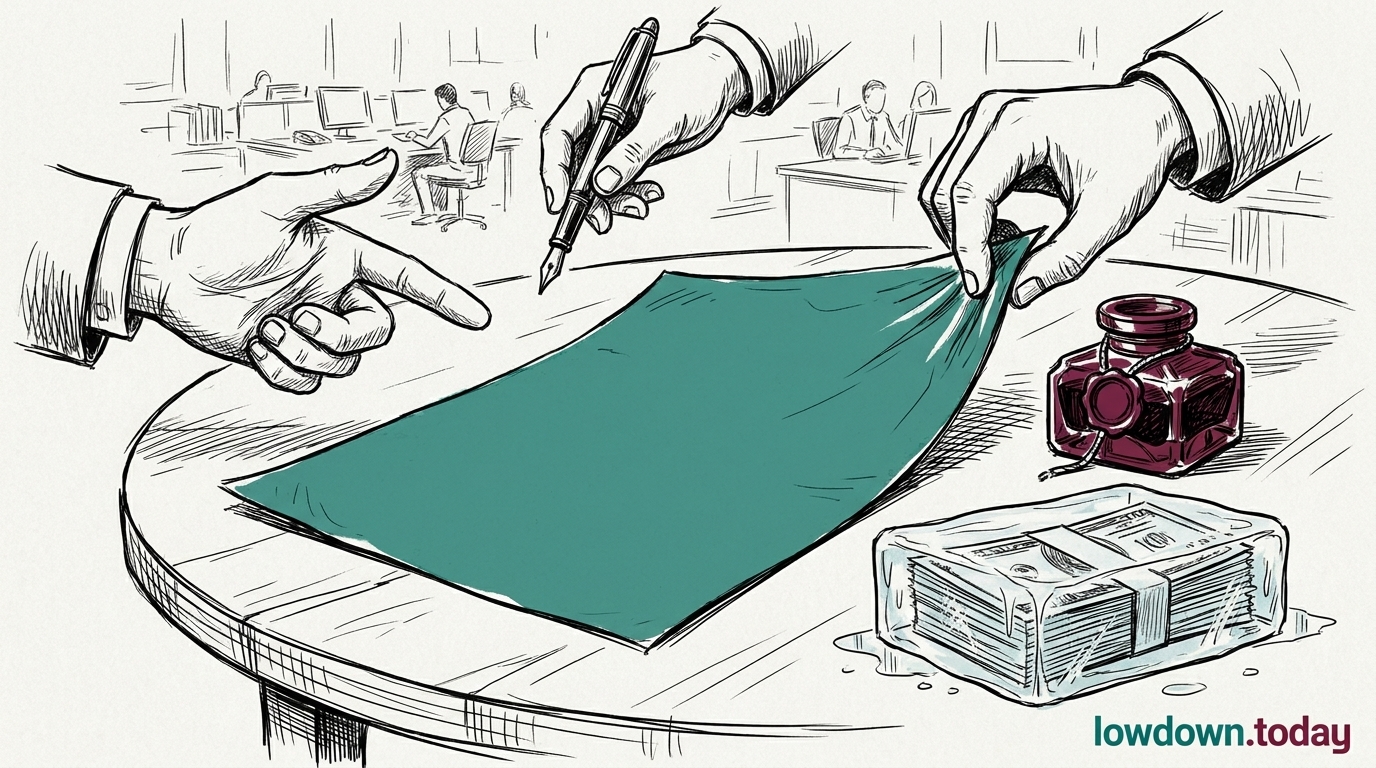
Washington, Tehran and Doha gave three contradicting accounts of the same talks on 1 July: the US called them positive, Iran denied any meeting was planned, and Qatar said the $6bn stays frozen until progress. Oman tabled a Hormuz transit fee its own co-signatory Iran calls compulsory. Trump demanded cheaper petrol on Truth Social while signing nothing on Iran.

Key takeaway

Oman is fighting itself: the fee authority it signed with Iran contradicts the fee pitch it made to Washington.

This briefing mapped
Loading map…
Diplomatic
Economic
Domestic
Humanitarian

Trump called the Doha talks positive and said Iran requested them; Baghaei said Tehran will not meet the Americans at any level; Qatar said Witkoff and Kushner met mediators, not Iranians.

Sources profile:This story draws on mixed-leaning sources from Qatar, United Arab Emirates and 1 more
QatarUnited Arab EmiratesUnited States

Washington, Tehran and Doha each described the same 1 July talks differently. The US called them positive, Iran's Baqaei ruled out any meeting soon, and Qatar said Iran's $6 billion stays tied to progress.

It shows how little the shuttle format actually pins down two weeks after last month's ceasefire deal. Each capital can describe the same closed session however its own audience needs to hear it. 

Oman handed the US a plan to charge "service fees" for Strait of Hormuz passage; Iran's Gharibabadi calls the same charges compulsory, and the White House says Iran cannot toll an international waterway.

Sources profile:This story draws on neutral-leaning sources from United States and United Kingdom
United StatesUnited Kingdom
LeftRight

Oman handed Washington a Hormuz strait fee plan on 30 June, styled on voluntary Malacca Strait charges. Iran's deputy foreign minister called the same fee compulsory and threatened unilateral action.

The White House says Iran cannot toll an international waterway. Tehran has followed past warnings with tanker strikes before, so this fee fight could turn physical fast. 

Sources:CNN·Middle East Eye·Antiwar.com (relaying The New York Times)·Press TV (Iranian state media)

Trump ordered petrol retailers on Truth Social to cut prices to $2.50 a gallon and claimed oil was heading south, but signed nothing on Iran; Brent held near $72 and General License X kept Iranian crude flowing to China.

Sources profile:This story draws on neutral-leaning sources from Qatar
Qatar

Trump posted on Truth Social on 30 June ordering petrol retailers to cut prices to $2.50 a gallon immediately, claiming oil was at $68 a barrel.

No Iran, sanctions or Middle East order was signed that week. Brent actually settled near $72, not $68. That gap means the price cut has no real cost basis. 

Qom Seminary and the Assembly of Experts, two of Iran's most senior clerical bodies, came out against the US agreement within days of each other, giving Tehran's negotiators cover to deny any deal in Doha.

Sources profile:This story draws on neutral-leaning sources

Qom's Center for Management of Seminaries said on 1 July that the Iran-US deal doesn't cover all the Supreme Leader's demands. It urged officials to walk away if the US breaks its commitments.

The Assembly of Experts issued a near-identical warning just before. That gives Iran's negotiators cover to keep publicly denying any meeting with Washington in Doha the same day. 

Sources:Sharq Daily

Bahrain, Kuwait, Oman, Qatar, Saudi Arabia, the UAE and the United States jointly re-designated Hezbollah's financial network, including its quasi-bank al-Qard al-Hassan, though the US Treasury confirmed every target was already sanctioned by Washington.

Sources profile:This story draws on mixed-leaning sources from United States
United States
LeftRight

Seven governments, Bahrain, Kuwait, Oman, Qatar, Saudi Arabia, the United Arab Emirates and the US, jointly re-designated Hezbollah's financial network on 30 June. They named five entities and 16 individuals through the Terrorist Financing Targeting Center.

The US Treasury said every target was already sanctioned by Washington alone. This is coordinated Gulf pressure through local banks, not a new US sanctions instrument. 

Sources:CNN·US Treasury

Iran Human Rights put the final tally of executions for the Iranian month of Khordad at 140, six above the 134 already recorded, a verification catch-up rather than fresh killings.

Sources profile:This story draws on neutral-leaning sources

Iran Human Rights finalised its Khordad execution count at 140 on 30 June. That's six more than the 134 it had already recorded for the Iranian month that ended 21 June.

The group says this is a verification-lag revision, not fresh killings since Khordad ended. Cases simply took longer to confirm, and Iran's judiciary publishes no official count to check that against. 

Closing comments

Sideways. The 29 June 2026 verbal stand-down followed IRGC missile and drone strikes on Kuwait's Ali Al Salem air base and Bahrain's Fifth Fleet headquarters on 28 June, which killed a Qatari civilian by shrapnel, the war's first Gulf-state civilian death; Washington chose a spoken halt over a negotiated one because the strikes, not diplomacy, forced its hand. The next forcing point is Oman's own contradiction: the IRGC has already struck the Ever Lovely and Kiku within 48 to 72 hours of prior Hormuz warnings, so if Iran enforces the 23 June committee's compulsory reading before Washington accepts any fee at all, a further tanker warning-then-strike is the specific mechanism to watch, not a general drift toward war.

AI-assisted, human-edited under the editorial responsibility of Bannermedia Ltd. Reviewed by Ed Woodcock on 1 July 2026. Editorial standards.

Different Perspectives
United States
United States
The White House said Doha's technical talks were 'positive and progressing' while signing no Iran, sanctions or Middle East instrument between 29 June and 1 July, and told Oman it 'cannot toll' the strait as an international waterway. That gap between claimed progress and signed paper is the actionable signal, not the rhetoric.
Iran
Iran
Iran's Baqaei ruled out any US meeting 'at any level' in Doha and its deputy foreign minister Gharibabadi called Oman's Hormuz fee compulsory, while two clerical bodies said the US deal falls short of the Supreme Leader's demands. Public denial gives Tehran's negotiators cover to keep talking behind the scenes without looking like they conceded anything to Washington.
Qatar
Qatar
Qatar's al-Ansari confirmed Witkoff and Kushner met only mediators, not Iranian officials, and kept Iran's $6 billion in frozen assets conditional on 'advancement of negotiations' rather than releasing it as Pezeshkian claimed on 29 June. As custodian of the money and host of the only working channel, Qatar's account is the one both Washington and Tehran must live with.
Oman
Oman
Oman handed Washington a Hormuz service-fee plan styled on the voluntary Malacca Strait model on 30 June, a softer pitch of the same fee-setting authority Sultan Haitham had already signed with Iran's Araghchi on 23 June. That double framing lets Muscat keep both Washington's tolerance and Tehran's trust without Bessent's 28 May sanctions threat reviving against it.
Hezbollah
Hezbollah
Hezbollah rejected a Gulf-brokered disarmament framework within hours on 27 June, and three days later seven governments, five of them Gulf monarchies, re-designated its financial arms al-Qard al-Hassan and Bayt al-Mal instead. Pressure has shifted from its weapons to its money because the weapons pressure failed outright.