Skip to content
You can now search across every topic, entity and event.What's new
Iran Conflict 2026
23JUL

Islamabad talks open in separate rooms

3 min read
19:27UTC

The first formal US-Iran negotiating session since 1979 opened at the Serena Hotel in Islamabad on Saturday with both delegations staying in separate rooms. Pakistani officials physically walked messages between them.

ConflictDeveloping
Key takeaway

Vance and Ghalibaf are in the same hotel but will not meet, by design.

Vice President JD Vance arrived at Nur Khan air base on Friday leading a 30-member US delegation that includes Steve Witkoff and Jared Kushner . Iran sent Parliament Speaker Mohammad Bagher Ghalibaf and Foreign Minister Abbas Araghchi. Both delegations are staying at the Serena Hotel, where Saturday's talks are taking place, in separate rooms; Pakistani officials physically walk messages between them, and no face-to-face meeting is contemplated 1.

The historical precedent cited by Pakistani officials is the 1988 Geneva Accords on Afghanistan, when Afghan and Pakistani delegations never met directly. Zamir Akram, a former Pakistani ambassador to the United Nations, described Islamabad's own success bar on the record: "breathing space, not expecting anything big" 2. Pakistani diplomats logged more than 25 high-level contacts in the run-up to the summit.

Ghalibaf went to meet Prime Minister Shehbaz Sharif before any contact with the Americans, and Iranian state television said the "timing of talks with the US delegation will be determined after preconditions are clarified" through the Pakistani mediators 3. This is the same Ghalibaf who rejected the ceasefire framework earlier in the week and whose presence in the room gives the Supreme Leader's inner circle a pre-built justification for walking out . The format is designed to survive failure, not to produce success.

Deep Analysis

In plain English

The US and Iran have not held formal talks since the 1979 Iranian revolution made them enemies. In Islamabad, both sides are staying in the same hotel but in separate rooms — Pakistani officials physically walk messages back and forth between them, like a diplomatic version of passing notes through a classroom. This format is called a 'proximity talk'. It was chosen because both sides want to keep talking, but neither can afford to be seen sitting across a table from the other without facing severe domestic backlash. Pakistan's own goal, by its own admission, is simply to keep the conversation going — not to reach an agreement.

Deep Analysis
Root Causes

The proximity format reflects a specific domestic political constraint on both sides. For Iran, direct contact with the US would require the Supreme Leader's explicit public sanction — which Mojtaba Khamenei has not given — while the presence of Ghalibaf rather than Araghchi alone signals the format was designed to maintain deniability for the leadership.

For the US, the Witkoff and Kushner inclusion despite prior Iranian exclusion requests signals Washington is prioritising internal coalition management over Iranian comfort. Neither side entered Islamabad intending a breakthrough; both entered intending to demonstrate good faith without committing to it.

What could happen next?
  • Precedent

    The Islamabad format establishes that the US and Iran can conduct structured indirect communication after 47 years of no formal diplomatic channel — a floor, not a ceiling, for future contact.

  • Risk

    Pakistan Defence Minister Khawaja Asif's deleted post calling Israel 'a cancerous state' prompted Netanyahu's office to declare Pakistan cannot serve as a neutral arbiter, undermining the format's legitimacy before substantive exchanges begin.

First Reported In

Update #65 · Iran lost its own minefield

Al Jazeera· 11 Apr 2026
Read original
Different Perspectives
India
India
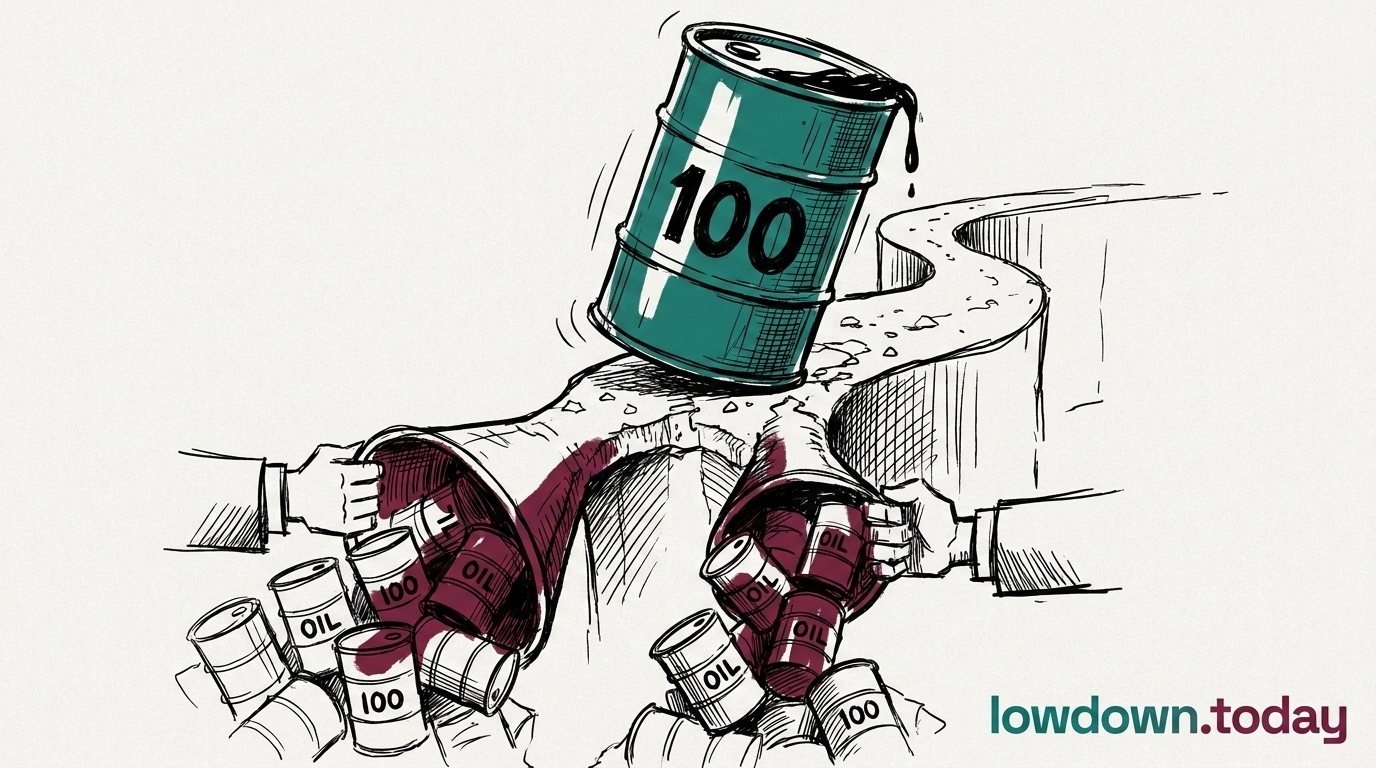
India buys more Saudi crude than any other country and has 2.5 million nationals working in the kingdom, so a $100 Brent and a live strike on Saudi tankers reach New Delhi through both fuel bills and remittance risk. Neither channel has an alternative route the way Saudi Arabia's own pipeline does.
Qatar
Qatar
Qatar co-authored the four-mediator ten-day ceasefire proposal alongside Egypt, Pakistan and Oman, centred on resuming Hormuz navigation, while separately pursuing its dated compensation claim against Iran at the UN Security Council filed on 21 July. Doha is mediating and litigating in the same week.
Israel
Israel
Israeli intelligence, reported by the Wall Street Journal, assesses Iran moved thousands of centrifuges and part of its roughly 440kg enriched-uranium stock into Pickaxe Mountain after the June 2025 strikes on its three main nuclear sites. Some of the US refuelling aircraft now deploying to the region are bound for Israeli bases and Ramon Airport.
Houthis
Houthis
Yahya Saree announced the missile and drone strikes on the Encelia and Layla on 22 July as enforcement of the embargo his forces had declared by radio warning alone two days earlier. Six vessels already turned back on the broadcast; the strike shows Houthi forces will use weapons once warnings stop working.
Saudi Arabia
Saudi Arabia
Saudi Arabia's state news agency confirmed only a fire on the Encelia's bow, with the crew safe; the Layla strike remains unconfirmed by Riyadh. The kingdom built its Petroline pipeline specifically to bypass Hormuz through the Red Sea, so the tanker fire lands on the route Riyadh had already spent billions escaping.
United States
United States
Washington is weighing both ten-day proposals but wants a longer truce than either offers, and moved F-16 and F-35 jets plus refuelling aircraft into the region while it decides. That deployment, not Trump's Pickaxe Mountain remarks, is the measurable US action, buying options for the day talks fail rather than betting on them.