Skip to content
You can now search across every topic, entity and event.What's new
Iran Conflict 2026
23JUL

Vance Arrives for First Iran Talks

2 min read
19:27UTC

JD Vance, US Vice President

ConflictDeveloping
Key takeaway

Both delegations are structurally compromised before the first session begins.

JD Vance arrived in Islamabad on Friday leading a 30-member US delegation to the Serena Hotel for Saturday's opening session, the first principal-level bilateral contact between the United States and Iran since 1979. The JCPOA (Joint Comprehensive Plan of Action) was negotiated through multilateral channels with no direct meetings at this level. Saturday's format, if it holds, is structurally new.

Steve Witkoff and Jared Kushner are back in the room. Their removal was the concession that unlocked the ceasefire , yet The White House reinstated both, a signal that either the terms will not favour Tehran or that domestic US optics outweigh Iranian red lines. Abbas Araghchi, Iran's Foreign Minister, confirmed attendance but said he arrives "with complete distrust."

The Iranian delegation now includes Mohammad Bagher Ghalibaf, who rejected the ceasefire framework on 9 April , creating a de facto Majlis (parliamentary) veto inside the negotiating room. With no shared legal text, no verification mechanism, and a compromised venue, Saturday must produce something written to have lasting effect. Rhetorical agreement without text is indistinguishable from the current state of affairs.

Deep Analysis

In plain English

The US vice president flew to Pakistan to meet Iranian officials face to face — something that has not happened at this level in nearly 50 years. But two of the Americans in the room were previously kicked out of earlier talks at Iran's insistence, and one of the Iranian officials publicly rejected the ceasefire just two days ago. The meeting is the most senior US-Iran contact since 1979, happening under the worst structural conditions of any such meeting in that period.

Deep Analysis
Root Causes

Iran's requirement that Witkoff and Kushner be excluded from talks stemmed from their association with the Abraham Accords and Gulf normalisation deals that Tehran reads as explicitly anti-Iranian regional architecture. Reinstating them signals the White House does not consider Iranian domestic political sensitivities a binding constraint.

The 47-year gap in direct US-Iran engagement reflects structural enmity rooted in the 1979 hostage crisis, the US support for Iraq in the 1980-1988 war, and Iran's categorisation as a state sponsor of terrorism. Neither side has the institutional machinery or diplomatic staff fluent enough in the other's political culture to conduct fast-moving bilateral talks reliably.

Escalation

High risk of talks producing no shared text, compressing all remaining diplomacy into 11 days before the 22 April ceasefire expiry.

What could happen next?
  • Risk

    A failed Saturday session leaves only 11 days to the 22 April ceasefire expiry with no legal framework and no fallback process.

    Immediate · Assessed
  • Consequence

    Witkoff and Kushner's reinsertion has already been read by Tehran as proof the White House is not bound by its own prior concessions — eroding the credibility of any new US commitment made in Islamabad.

    Short term · Assessed
  • Precedent

    If principal-level talks proceed without a shared agenda or mediating text, they establish a pattern where seniority substitutes for process — and where failure can be mutually blamed on the other side.

    Medium term · Assessed
First Reported In

Update #64 · Islamabad talks open already cracked

Bloomberg· 10 Apr 2026
Read original
Different Perspectives
India
India
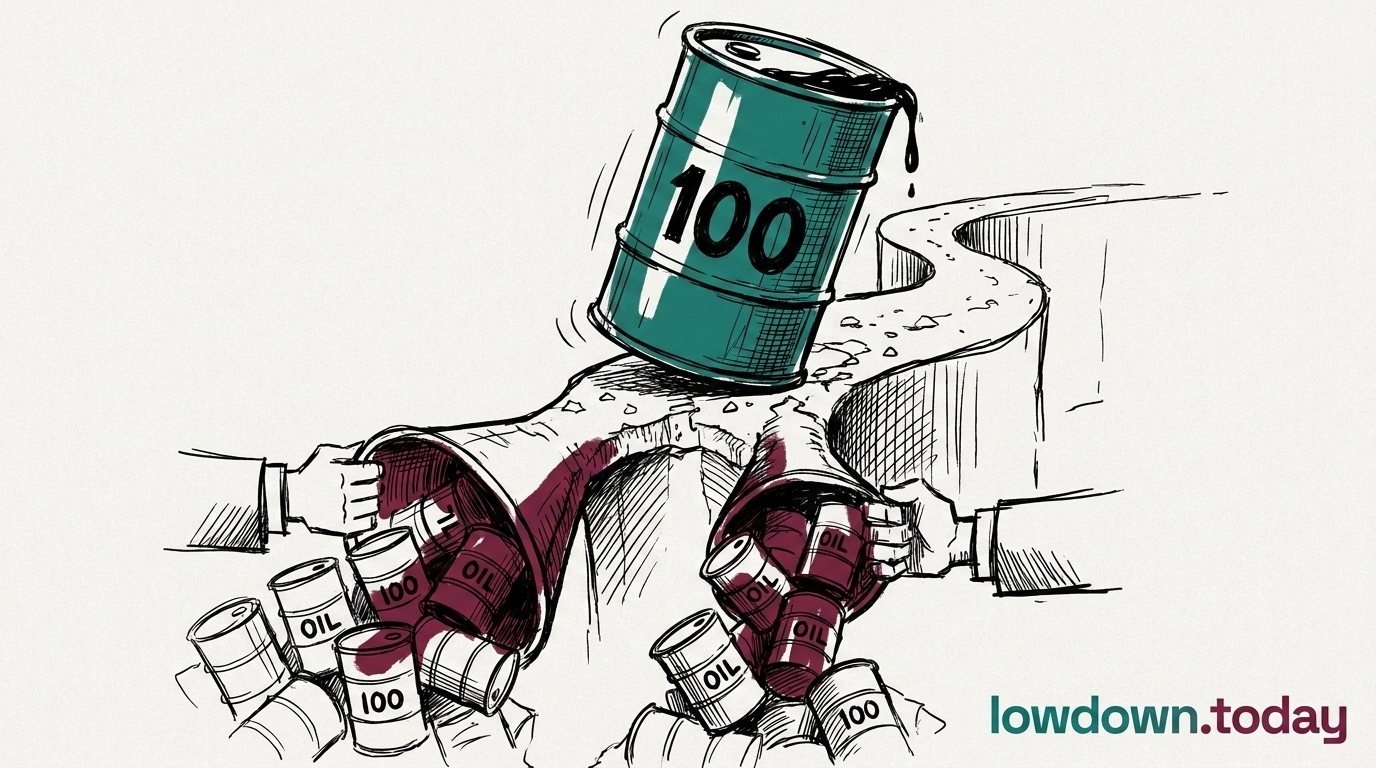
India buys more Saudi crude than any other country and has 2.5 million nationals working in the kingdom, so a $100 Brent and a live strike on Saudi tankers reach New Delhi through both fuel bills and remittance risk. Neither channel has an alternative route the way Saudi Arabia's own pipeline does.
Qatar
Qatar
Qatar co-authored the four-mediator ten-day ceasefire proposal alongside Egypt, Pakistan and Oman, centred on resuming Hormuz navigation, while separately pursuing its dated compensation claim against Iran at the UN Security Council filed on 21 July. Doha is mediating and litigating in the same week.
Israel
Israel
Israeli intelligence, reported by the Wall Street Journal, assesses Iran moved thousands of centrifuges and part of its roughly 440kg enriched-uranium stock into Pickaxe Mountain after the June 2025 strikes on its three main nuclear sites. Some of the US refuelling aircraft now deploying to the region are bound for Israeli bases and Ramon Airport.
Houthis
Houthis
Yahya Saree announced the missile and drone strikes on the Encelia and Layla on 22 July as enforcement of the embargo his forces had declared by radio warning alone two days earlier. Six vessels already turned back on the broadcast; the strike shows Houthi forces will use weapons once warnings stop working.
Saudi Arabia
Saudi Arabia
Saudi Arabia's state news agency confirmed only a fire on the Encelia's bow, with the crew safe; the Layla strike remains unconfirmed by Riyadh. The kingdom built its Petroline pipeline specifically to bypass Hormuz through the Red Sea, so the tanker fire lands on the route Riyadh had already spent billions escaping.
United States
United States
Washington is weighing both ten-day proposals but wants a longer truce than either offers, and moved F-16 and F-35 jets plus refuelling aircraft into the region while it decides. That deployment, not Trump's Pickaxe Mountain remarks, is the measurable US action, buying options for the day talks fail rather than betting on them.