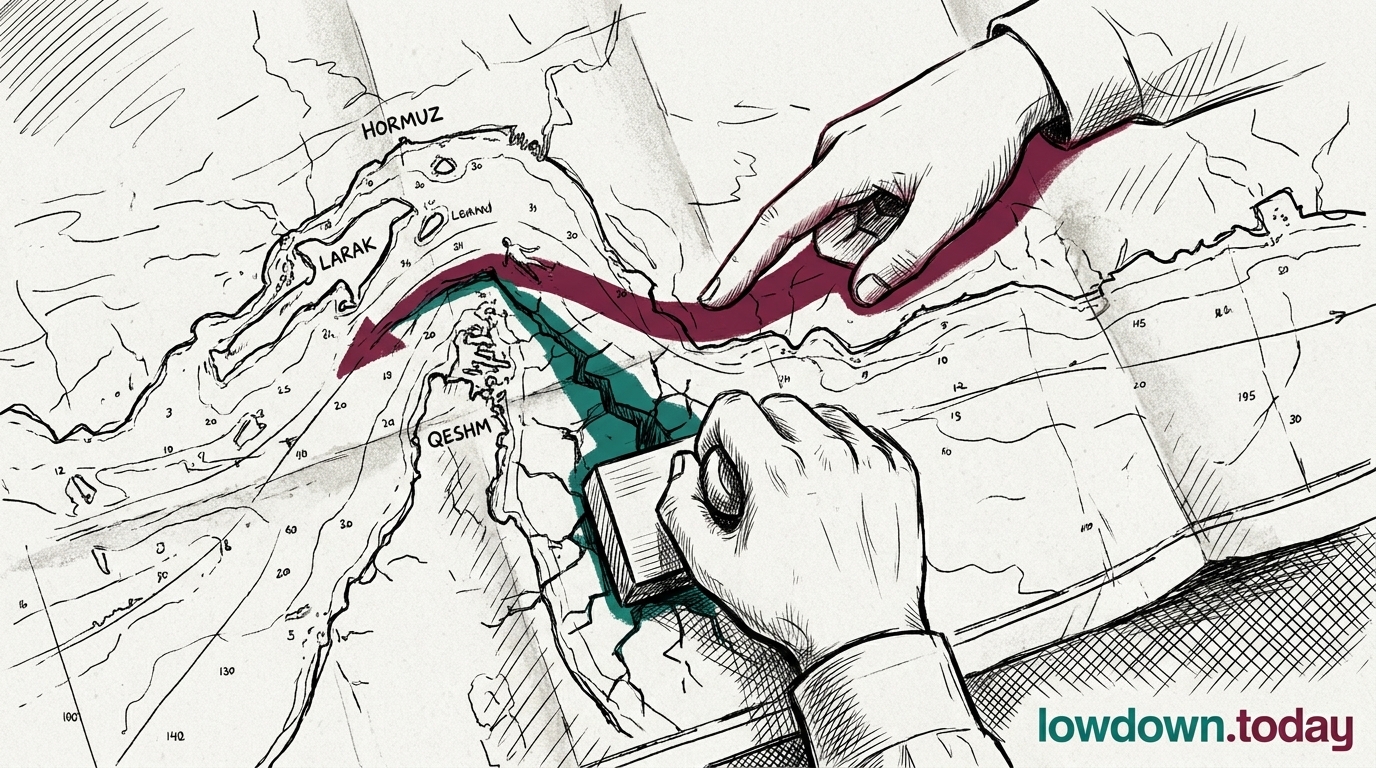
Marco Rubio, the US Secretary of State, and the six foreign ministers of the Gulf Cooperation Council (GCC) issued a communique in Manama on Thursday 25 June welcoming the end of hostilities and the "restoration of free and secure navigation" through the strait of Hormuz, with no tolls and no fees1. The GCC is The Gulf bloc of Saudi Arabia, the UAE, Qatar, Kuwait, Bahrain and Oman, founded in 1981. Rubio told the ministers there was "zero support among Gulf countries for any toll or fee" and confirmed the Bahrain session did not discuss any Iran reconstruction fund2.
The communique tied lasting Gulf security to three Iranian concessions: an end to missile and drone attacks, a halt to militia support, and no interference in state sovereignty. It is a direct answer to Tehran's posture, and it builds on Rubio's no-tolls declaration in the UAE two days earlier, which set the agenda for the Manama meeting.
The document implicitly rejects both the IRGC toll scheme and the Iran-Oman committee that would set the rates. Yet the contradiction sits inside the bloc itself. Oman, a GCC member, signed the Muscat fee committee with Iran on 23 June, two days before adding its name to a communique opposing exactly those fees. Rubio's "zero support" line papers over a coastal state already co-governing the tariffs the bloc says it will not accept.
That split matters because Oman holds the southern shore of the strait and the Oman-IMO corridor runs through its territorial waters. A no-fees front that includes the one member negotiating a bilateral fee mechanism with Iran is a declaration of intent, not an enforced policy. The bloc agrees on the principle and divides on the signatory who can deliver it.


