Skip to content
You can now search across every topic, entity and event.What's new
Iran Conflict 2026
8JUL

GCC backs free passage, splits on Oman

4 min read
10:44UTC

Rubio and the six GCC foreign ministers issued a Manama communique on 25 June welcoming free Hormuz navigation with no tolls, while GCC member Oman had co-signed an Iran fee committee two days earlier.

ConflictDeveloping
Key takeaway

The GCC's no-fees stance collides with Oman, the member already signing Hormuz fees with Iran.

Marco Rubio, the US Secretary of State, and the six foreign ministers of the Gulf Cooperation Council (GCC) issued a communique in Manama on Thursday 25 June welcoming the end of hostilities and the "restoration of free and secure navigation" through the strait of Hormuz, with no tolls and no fees 1. The GCC is the Gulf bloc of Saudi Arabia, the UAE, Qatar, Kuwait, Bahrain and Oman, founded in 1981. Rubio told the ministers there was "zero support among Gulf countries for any toll or fee" and confirmed the Bahrain session did not discuss any Iran reconstruction fund 2.

The communique tied lasting Gulf security to three Iranian concessions: an end to missile and drone attacks, a halt to militia support, and no interference in state sovereignty. It is a direct answer to Tehran's posture, and it builds on Rubio's no-tolls declaration in the UAE two days earlier , which set the agenda for the Manama meeting.

The document implicitly rejects both the IRGC toll scheme and the Iran-Oman committee that would set the rates. Yet the contradiction sits inside the bloc itself. Oman, a GCC member, signed the Muscat fee committee with Iran on 23 June , two days before adding its name to a communique opposing exactly those fees. Rubio's "zero support" line papers over a coastal state already co-governing the tariffs the bloc says it will not accept.

That split matters because Oman holds the southern shore of the strait and the Oman-IMO corridor runs through its territorial waters. A no-fees front that includes the one member negotiating a bilateral fee mechanism with Iran is a declaration of intent, not an enforced policy. The bloc agrees on the principle and divides on the signatory who can deliver it.

Deep Analysis

In plain English

On Thursday, US Secretary of State Marco Rubio met the foreign ministers of the six Gulf Arab states in Bahrain and they agreed on a joint statement: there should be no fees or tolls on the Strait of Hormuz, the water should be free for ships to use. One of those six states, Oman, had already signed a deal with Iran just two days earlier to set up a joint committee that would manage Hormuz fees. Oman agreed in Bahrain that there should be no fees, while having just agreed in Muscat that it would help set them. This matters because Oman is Iran's preferred negotiating partner and has often acted as a go-between. Iran will almost certainly treat the Oman bilateral deal as the real agreement and the GCC statement as diplomatic theatre.

Deep Analysis
Root Causes

Oman's structural position explains the contradiction. Muscat is the only GCC member that shares a coastline and maritime boundary directly with Iran, maintains a long history of back-channel mediation between Tehran and Washington, and is economically dependent on keeping Hormuz commercially functional rather than politically closed.

Oman cannot afford to subscribe to a zero-fees position that Tehran would punish by directing ships away from Oman's territorial waters and into the IRGC-governed channel.

The GCC's consensus structure created the paradox. Communiques require unanimity, so Oman's signing of the Manama text was necessary for the bloc to have any statement at all. The GCC has no enforcement mechanism for bilateral member-state deals that deviate from collective positions; the bloc can condemn but not compel. Rubio's 'zero support' line therefore describes the GCC's stated position while the operative reality is a member state co-governing the fees the bloc says it opposes.

What could happen next?
  • Consequence

    Oman's dual signing has functionally created two competing Hormuz governance frameworks within the GCC: the bloc's stated zero-fees position and Muscat's operational fee-committee role; whichever Iran chooses to work with will determine the post-60-day transit cost structure.

  • Risk

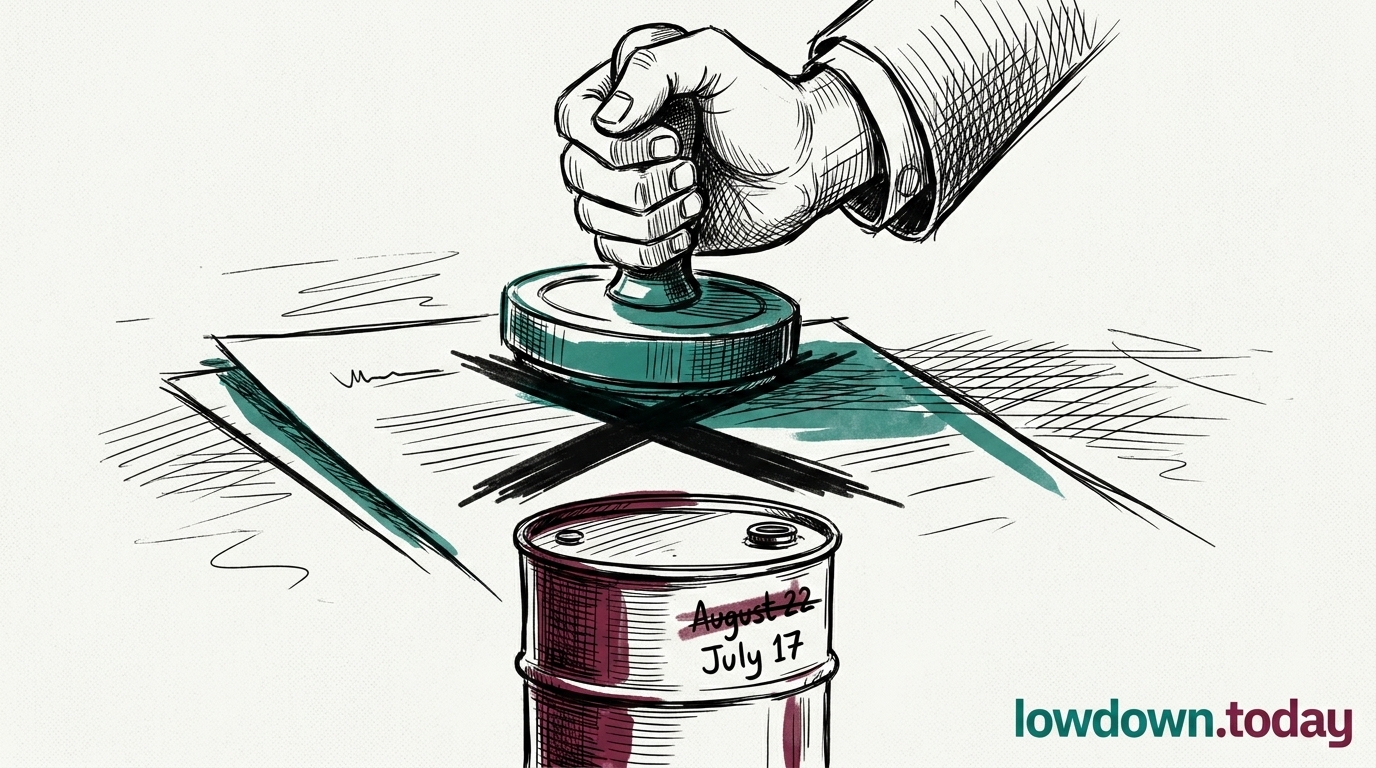
    If the Iran-Oman committee publishes a tariff before GL X expires on 21 August, it will have established a de facto fee standard that the GCC communique opposed but cannot enforce, splitting the bloc's stated position from the operational reality.

First Reported In

Update #138 · Three flags over Hormuz, none enforced

Al Jazeera· 25 Jun 2026
Read original
Different Perspectives
Oil market and P&I insurers
Brent cleared $87 intraday only once CENTCOM's blockade became physical rather than declared, even though P&I Clubs had already excluded Hormuz war risk a week earlier on 7 July: capital hedged ahead of enforcement, but prices moved only after it.
UAE reporting
UAE reporting
UAE reporting placed the Omani tanker deaths at one seafarer against the International Maritime Agency's count of two, the first time in this war that a Gulf state's casualty figures have diverged from an international monitor's.
Jordan
Jordan
Iranian strikes reached Jordan again on 14 July as part of the Gulf-wide retaliation for the Hormuz blockade, extending the conflict's geographic footprint to a state with no direct stake in the strait itself.
Bahrain
Bahrain
Bahrain sounded air-raid sirens on 14 July during Iran's Gulf-wide retaliation, the same day CENTCOM's blockade order and fourth night of strikes pushed the conflict's physical reach into the wider Gulf littoral.
Kuwait
Kuwait
Kuwait intercepted Iranian missiles and drones on 14 July as Tehran's blockade retaliation reached Gulf states beyond Iran's immediate shoreline, confirming Kuwaiti airspace now sits inside Iran's retaliatory envelope.
Oman
Oman
Oman absorbed the war's first tanker casualties in its own waters on 14 July, with two supertankers disabled and seafarers killed, putting the sultanate's shipping lanes directly in the path of the blockade fight for the first time.