Skip to content
You can now search across every topic, entity and event.What's new
Iran Conflict 2026
8JUL

Day 131: The first thing Washington signed on Iran: a revocation

2 min read
10:44UTC

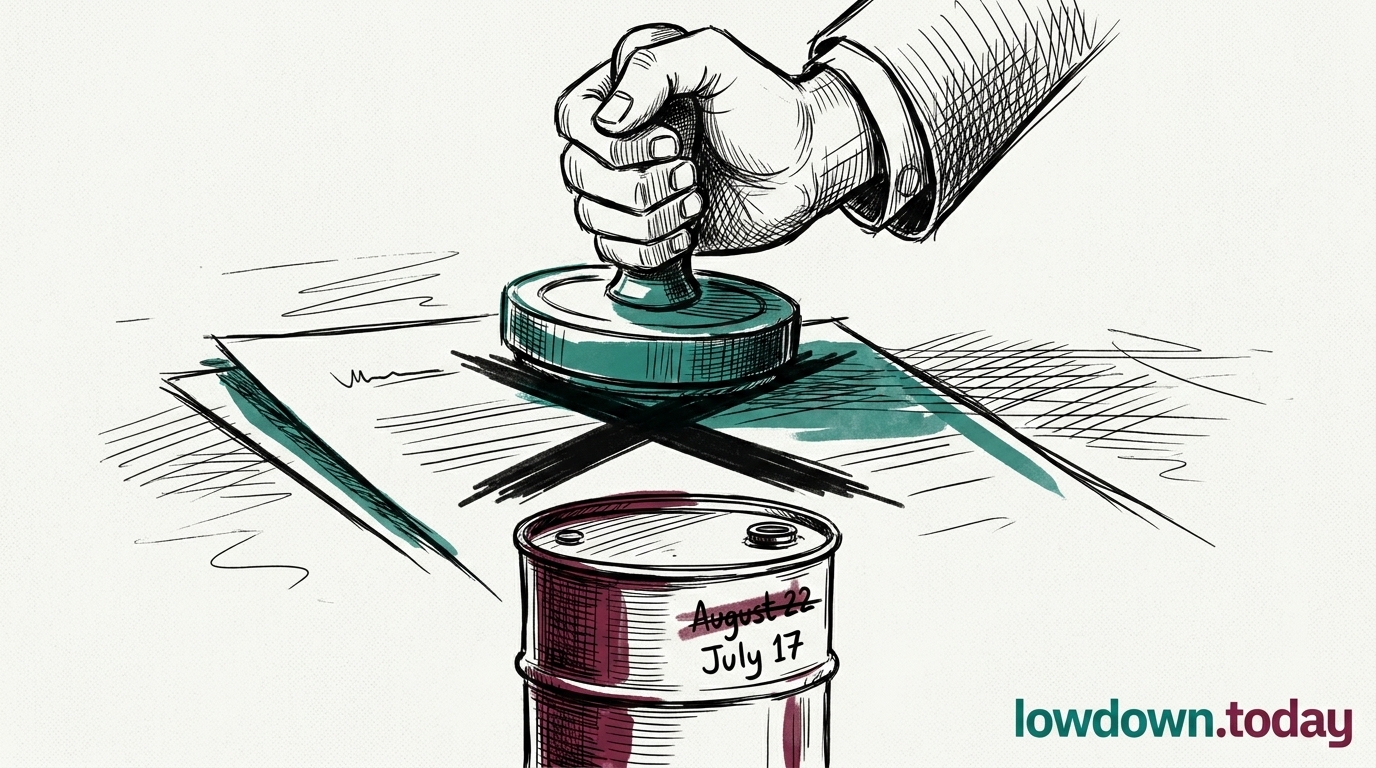
Washington answered the Al Rekayyat strike with its first signed Iran instrument of the war, and it revoked relief rather than granting it. OFAC cancelled the 22 June oil waiver five weeks early, hours after CENTCOM hit more than 80 targets. Oil rose about 6 per cent, its sharpest jump since the war's opening weeks.

Key takeaway

Washington's first signed Iran instrument of the war revokes relief and lands beside a strike, not a deal.

This briefing mapped
Loading map…
Regulatory
Military
Economic
Diplomatic

OFAC revoked the 22 June Iranian oil waiver on 7 July and replaced it with a wind-down-only licence expiring 17 July, the first instrument Washington has signed on Iran in this war.

Sources profile:This story draws on centre-left-leaning sources from Qatar
Qatar
Sources:Al Jazeera

CENTCOM struck more than 80 Iranian targets in four hours on 7 July; Iran's two accounts of its Gulf reply differ by a factor of ten.

Sources profile:This story draws on mixed-leaning sources from United States and United Kingdom
United StatesUnited Kingdom
LeftRight

CENTCOM struck more than 80 Iranian targets over four hours on 7 July, hitting air defences, command networks, coastal radar and over 60 IRGC small boats.

Iran claimed retaliatory strikes on US-linked sites in Bahrain and Kuwait and said it downed a US MQ-9 drone, though its English and Farsi damage claims sharply diverge. 

Brent crude rose about 6 per cent to roughly $78.67 a barrel on 8 July, its biggest jump since the war's opening spike in March.

Sources profile:This story draws on centre-right-leaning sources from United Arab Emirates
United Arab Emirates
Sources:The National

Trump called the interim Iran agreement over and a waste of time, while Tehran said US and Israeli actions had gutted it; neither side has formally withdrawn.

Sources profile:This story draws on neutral-leaning sources from United States
United States

Trump called the US-Iran interim agreement 'over' and 'a waste of time' on 7 July. Iran's foreign ministry said US and Israeli actions had made key parts of the deal ineffective.

Parliament speaker Ghalibaf called the strikes and oil-waiver revocation major violations. Neither government has formally withdrawn from the 18 June memorandum, leaving its status unresolved ahead of expected late-July Doha talks

JMIC held the Strait of Hormuz at a severe threat level through 7 July as the IRGC hailed transponder-on vessels and directed them into the Iranian-controlled northern corridor.

Sources profile:This story draws on centre-left-leaning sources from Israel
Israel
Closing comments

Direction: up. The specific mechanism is General License X1's 17 July wind-down deadline, a Treasury clock that runs regardless of diplomacy and forces any buyer still holding cargo to complete delivery within ten days or lose dollar-clearing eligibility. The next test is whether Ghalibaf's parliamentary framing of the 7 July revocation and strikes as MoU violations converts into a formal Majlis withdrawal vote before that 17 July date, the same escalation path the Majlis already used on 11 April 2026 to suspend IAEA cooperation by 221-0.

Different Perspectives
Trump administration / OFAC
Washington paired CENTCOM's 80-target strike with OFAC's signed revocation of Iran's oil waiver on 7 July, and Trump called the interim agreement 'over' and 'a waste of time dealing with them'. It is the first Iran instrument Washington has signed in 120 days, and it withdraws relief rather than offering a deal.
Iran's foreign ministry and Ghalibaf
Iran's foreign ministry said US and Israeli actions had gutted the MoU, and parliament speaker Ghalibaf named the strikes and the oil-waiver revocation as major violations of the agreement. Framing the financial move alongside the kinetic one lets the Majlis, not the foreign ministry, control any formal withdrawal.
Japanese oil importers
Three Japanese refiners who opened crude talks with Iran on 3 July had their negotiating window shut five weeks early by General License X1's revocation. They still face a frozen marine-insurance market that had already stalled any cargo before the licence even changed.
China
China
China, which never used General License X and settles Iranian crude in yuan outside OFAC's licence regime, is untouched by the revocation. Beijing's buyers remain the only major Iranian oil customer with no exposure to Washington's dollar-clearing sanctions lever.
Nakilat (Qatar's state-linked LNG shipper)
Nakilat's Q-Flex carrier Al Rekayyat was struck by Iranian missiles in the strait on 7 July, the attack CENTCOM cited for its retaliatory strike. Qatari-linked shipping now sits inside the same war-risk exposure that has kept P&I clubs' Hormuz exclusion in force since the attack.
London P&I Clubs
London P&I Clubs
P&I Clubs kept their Hormuz war-risk exclusion in force after the Al Rekayyat strike, and Brent's 6 per cent jump on 8 July raises the odds underwriters keep it there. Without that cover clearing, licensed cargoes such as Japan's still cannot sail regardless of what OFAC permits.
