Skip to content
Welcome, thoughtbot's Giant Robots listeners!Start here
Iran Conflict 2026
24JUN

CENTCOM logs 70 Hormuz vessel redirections

3 min read
09:14UTC

CENTCOM's cumulative vessel redirections at the Strait of Hormuz reached 70, nine more than the 61 logged on 10 May at a rate of roughly 1.5 per day, while Admiral Brad Cooper's 90% mine-stockpile destruction claim remains unrevised and covers warehoused mines rather than in-water clearance.

ConflictDeveloping
Key takeaway

Cooper's 90% counts depots hit; only Italy, France and Belgium are sweeping the lanes.

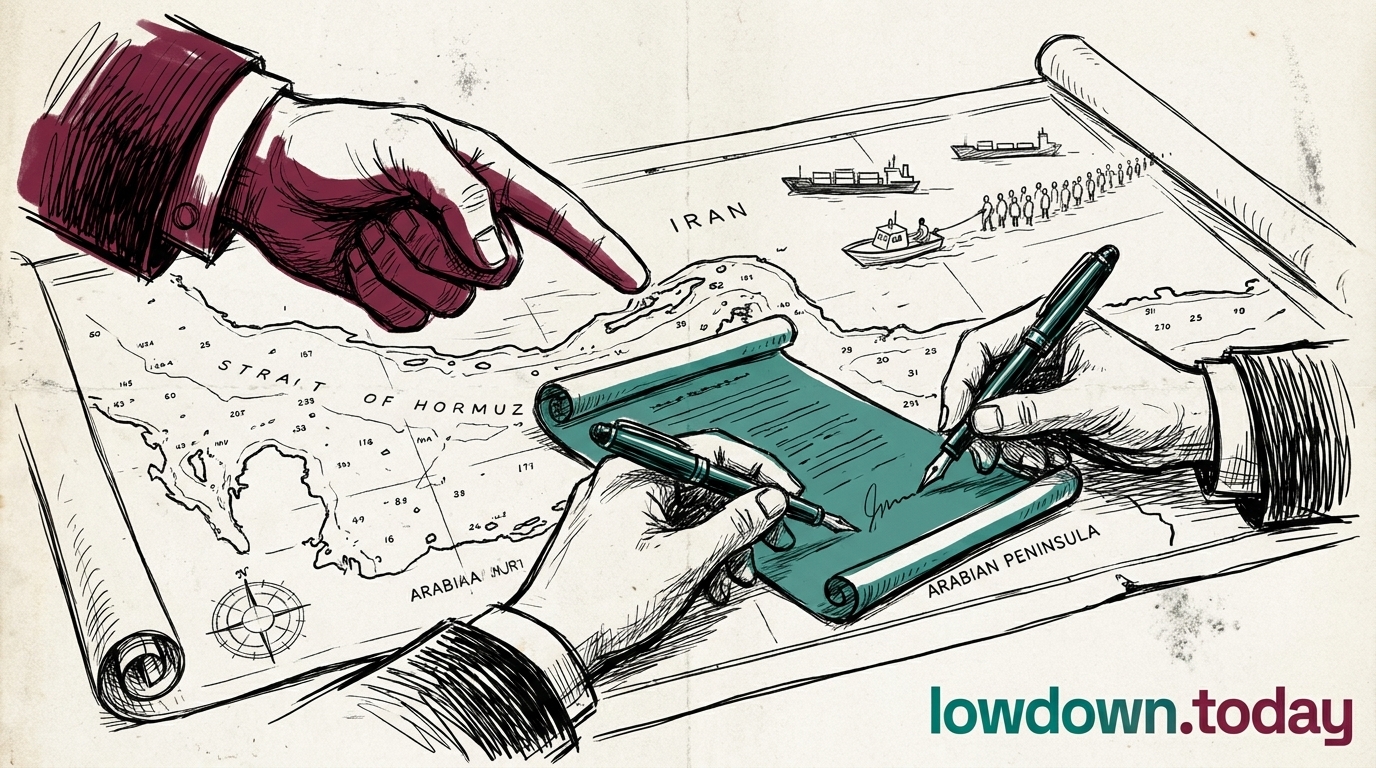
US Central Command told CBS News its cumulative vessel redirections at the Strait of Hormuz had reached 70, nine more than the 61 logged on 10 May, a rate of roughly 1.5 per day with no published change to the rules under which redirections are issued⁠1. Redirections instruct merchant vessels to alter heading or hold position when CENTCOM judges the route through the strait unsafe; they are a tempo measure of how often the operating environment is being declared hazardous.

CENTCOM commander Admiral Brad Cooper told a Washington forum on 14 May that US forces had destroyed 90% of Iran's ~8,000-unit naval mine inventory through more than 700 airstrikes. That figure has not been revised in the eight days since. CBS noted in its 19 May reporting that the 90% claim covers warehoused destruction before deployment, not in-water clearance of mines already laid in shipping lanes⁠2. Cooper has not separately quantified the second number, and CENTCOM's redirection tempo continues independently of the destruction figure.

The distinction shapes who actually clears the strait. Mines destroyed at IRGC depots before they reach the water reduce future deployments; mines already in the shipping lane have to be physically swept, and that requires hulls. Italy's two Lerici-class minehunters were the first MCM platforms forward-deployed; Belgium's Primula, Germany's Fulda and France's Charles de Gaulle now extend the European in-water capability that Cooper's strike-tally does not address. For shippers, only the second set of numbers matters, and only Italy, France and Belgium are visibly working on them.

Deep Analysis

In plain English

The US military has turned around 70 ships at the strait of Hormuz since the conflict began nine more than 10 days ago. The commander in charge, Admiral Brad Cooper, also says US forces destroyed 90% of Iran's mines before they got into the water. Here is the important distinction: the 90% figure covers mines still stored on land or in warehouses. It does not cover mines already placed in the water. Italy sent two specialised minesweeper ships to deal with those. Belgium sent minehunter BNS Primula, Germany sent minehunter Fulda, and France committed the carrier Charles de Gaulle to supply more clearance capacity. Clearing mines in open water is a different job from destroying storage facilities, and the coalition is only now building the hardware to do it.

Deep Analysis
Root Causes

The gap between Cooper's 90% warehoused-stockpile claim and the separate in-water clearance problem has a structural explanation: CENTCOM's 700+ airstrike campaign was optimised for above-ground and shallow-buried mine storage facilities, not for sub-surface moored or bottom-mine clearance in a 33 km strait with a 90-metre maximum depth.

The Larak-Qeshm corridor Iran's declared mine zone requires ship-borne MCM sonar, remotely operated mine-hunting vehicles, and divers in conditions that aircraft cannot reach.

CENTCOM's redirection-rate ceiling forms a second structural constraint. At 1.5 per day, CENTCOM requires one-to-two intercept-capable vessels on station continuously; the coalition's combined MCM and escort assets can sustain this rate but cannot significantly accelerate it without ROE that permit more aggressive enforcement actions, which requires either an AUMF or an executive authority that has not been signed.

Escalation

The 70-redirection count is a steady-state metric, not an escalation indicator. The escalation risk comes from the post-1 June legal exposure: if CENTCOM continues redirections past the WPR wind-down without an AUMF, each additional redirection becomes a cleaner congressional accountability target.

What could happen next?
  • Consequence

    CENTCOM's 70 redirections are capped by the one-to-two vessel operational requirement per interception; without ROE permitting more assertive enforcement, the rate cannot materially accelerate.

    Immediate · 0.78
  • Risk

    Post-1 June WPR wind-down, every additional CENTCOM redirection without an AUMF is legally exposed to a direct congressional challenge that could constrain the operational tempo.

    Short term · 0.72
  • Opportunity

    Italy's two Lerici MCM vessels plus Belgium, Germany and France's incoming hardware would give the coalition the in-water clearance capacity needed to reopen the strait's central lane if a ceasefire is reached a significant operational readiness gain regardless of the diplomatic timeline.

    Medium term · 0.7
First Reported In

Update #102 · Iran signs Hormuz toll; Trump posts a cancelled strike

CBS News· 19 May 2026
Read original →
Causes and effects
This Event
CENTCOM logs 70 Hormuz vessel redirections
The mines destroyed before deployment and the mines floating in shipping lanes are different problems; CENTCOM has quantified the first and is leaving the second to allied minehunters.
Different Perspectives
Office for Budget Responsibility
The OBR's 28 October forecast assumed $82 oil for 2026 and 2027, from market prices for the ten working days to 19 August, and blamed dearer wholesale energy on the war without naming Iran. It expects CPI inflation close to 4% in early 2027 even at that price.
Hengaw, Kurdish rights group
Hengaw reported the 3 November hangings of Amirhossein Maleki and Amirhossein Ebrahimi in Isfahan, saying Ebrahimi was tortured into confessing and that nine of 12 people sentenced to death in the case have now been hanged. Iran's judiciary holds that the defendants killed members of the security forces.
FINTRAC, Canada's financial intelligence unit
FINTRAC worked with the US Treasury on the 6 November designation of eight money services businesses in British Columbia, Ontario and Quebec. Treasury says the businesses still operate, some under new names, so closing them falls to Ottawa.
Abdul Qadir al-Dakhil, Governor of Nineveh
Al-Dakhil cancelled three Mosul International Airport contracts on 7 November over alleged links to armed groups, after meeting Prime Minister Ali al-Zaidi in Baghdad. He named no group or company, and said the contracts will go to international companies.
Kuwait
Kuwait
Kuwait condemned the Houthi missile fired towards the Madinah region on 5 November and restated its support for Saudi Arabia, the Qatar News Agency reported. Its state tanker company, Kuwait Oil Tankers Company, is among the Gulf state fleets on Iran's expanded Hormuz list.
Scott Bessent, US Treasury Secretary
Treasury designated an alleged Chandigarh false-flag network on 4 November and eight Canadian exchangers on 6 November, while State sanctioned alleged MANPADS intermediaries. None of the actions touches an oil buyer; they target the paper, cash and procurement around Iran's trade.

Written with AI from Lowdown's published reporting. Not individually reviewed by an editor. Editorial standards.
